






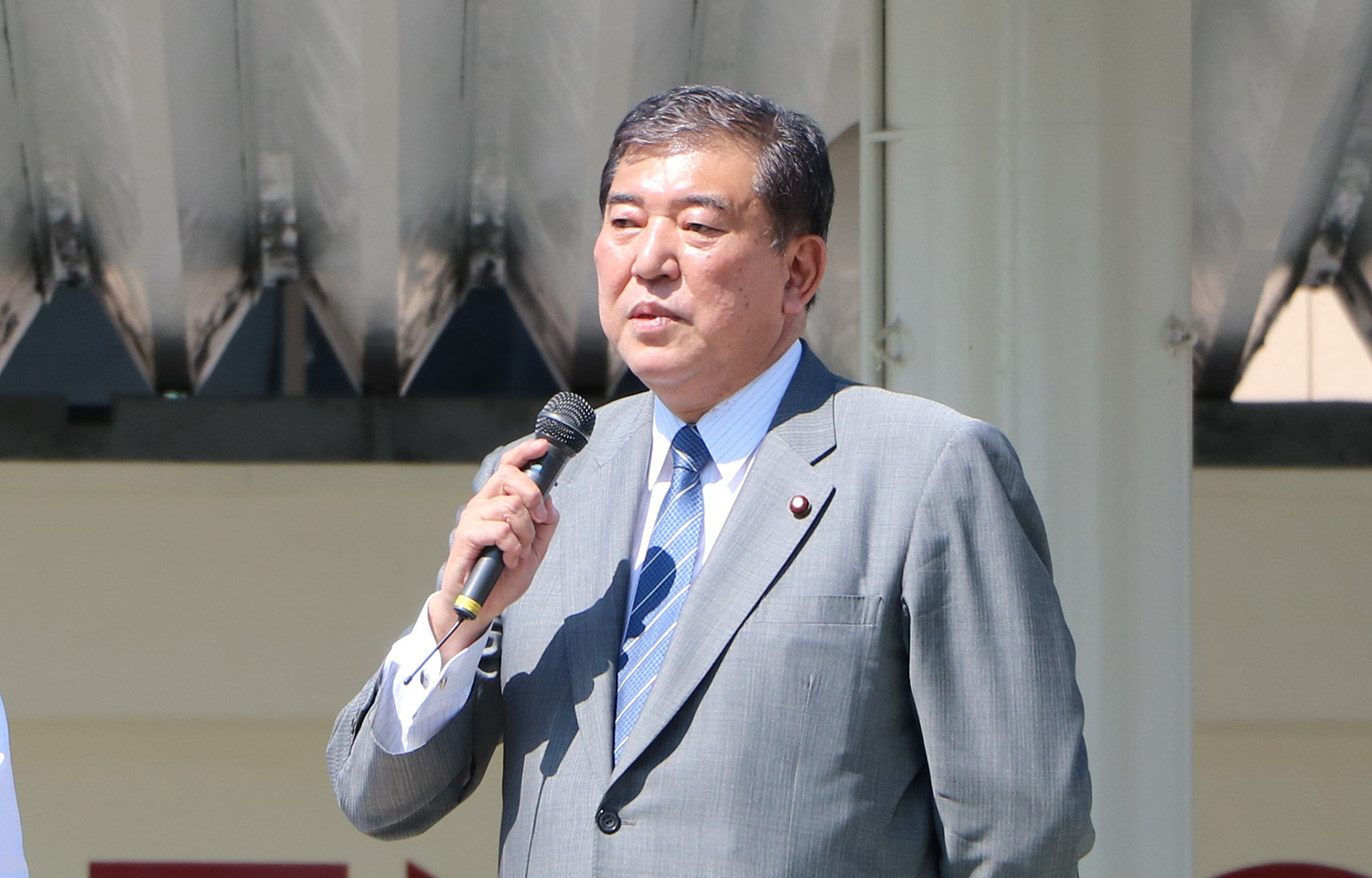
Shigeru Ishiba, Japan’s new prime minister, gave the first speech of his campaign on 15 October at the Onahama Fish Market in Iwaki, where he vowed to revitalize the area’s maritime industry, among other goals – which now face a more difficult path after a snap election saw the country's Liberal Democratic Party lose its ruling coalition.
Ishiba was elected by the Japanese parliament to the position on 1 October.
During Ishiba's speech on 15 October, he heavily emphasized a longtime talking point of his political career – reversing Japan’s excessive urbanization that has resulted in an overcrowded Tokyo and a depopulated countryside. He specifically aims to create jobs and attract young people to more rural areas with government subsidies and infrastructure investments.
“We aim to create a new region centered on agriculture, forestry, and fisheries,” he said. “I would like to pass a supplementary budget that is larger than last year's. Specifically, I’d like to transition to a high value-added economy, in which we will maximize the potential of rural agriculture, forestry and fisheries, construction, tourism, and service industries and realize the migration of 3 million people from urban areas to attractive rural areas.”
The choice of venue for the speech emphasized his determination to specifically jumpstart the economy of the Tohoku region, which was hit by an earthquake, tsunami, and nuclear disaster in 2011 and has struggled to return to economic prominence since.
In order to revive the Tohoku economy in particular, he promised to create a thriving maritime industry in Iwaki to create new jobs.
Ishiba could face a harder path to achieve those goals, as a general snap election on 27 October resulted in Japan's Liberal Democratic Party's ruling coalition losing its parliamentary majority. The country now has 30 days after the election to form a governing coalition – without which Ishiba would rule without a majority.
Ishiba has long ties to the fishing industry. He served as Japan’s minister of agriculture, forestry, and fisheries in 2008 and 2009. He was also chairman of the Liberal Democratic Party’s Basic Policy Committee on Fisheries from 1991 to 1993 and of the party’s similar Fisheries Committee in 2020.
In these roles, he stressed food security, resource management, and revitalization of rural areas such as fishing villages by supporting processing and tourism investments.
Ishiba also promoted the use of advanced technology in the fishing industry, such as through improved monitoring systems and data collection to enhance the transparency and management of fisheries. His policies sought to foster innovation within the industry, making it more competitive in both domestic and international markets.
