



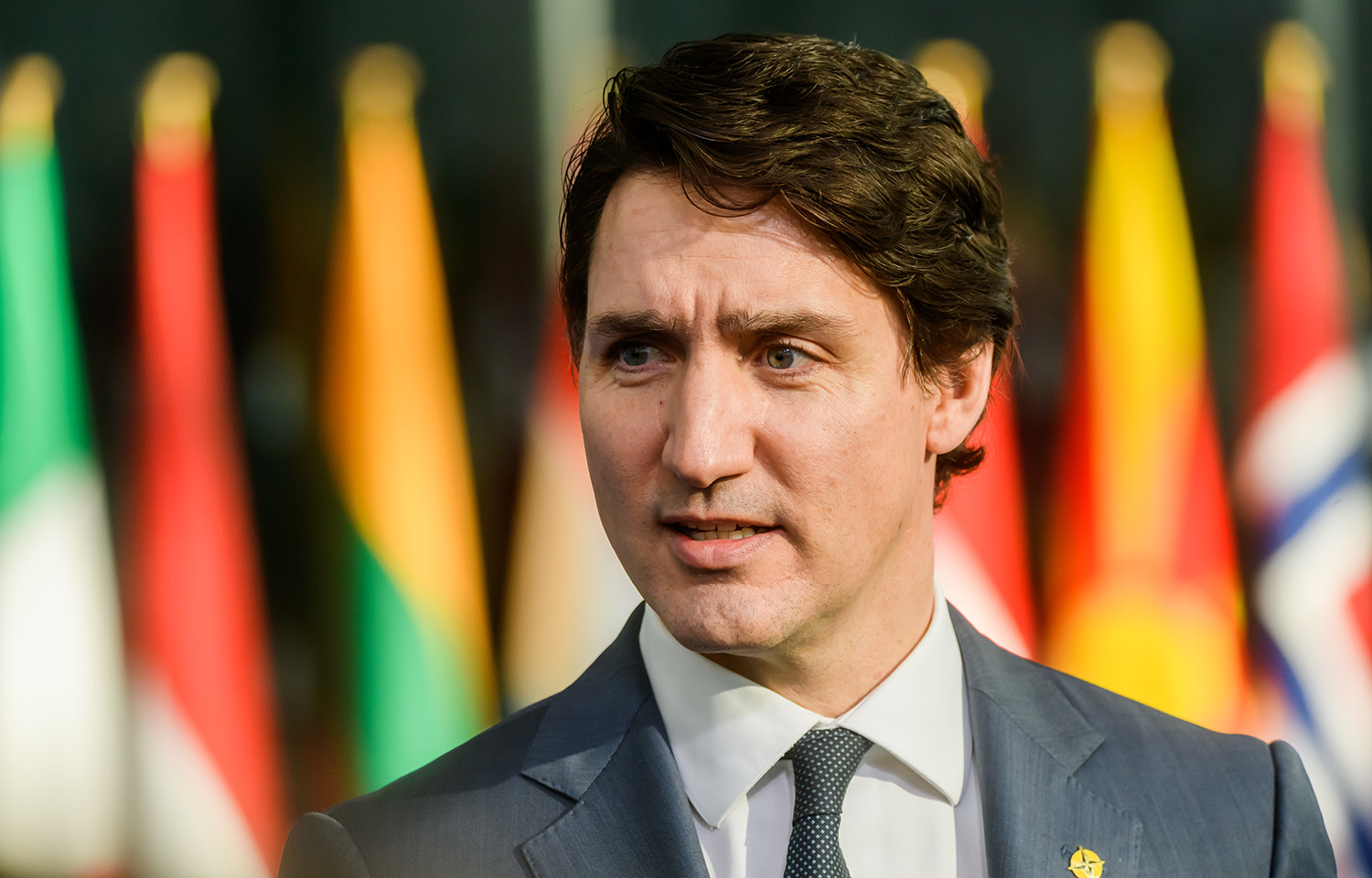
Canada Prime Minister Justin Trudeau has announced he plans to resign from the role once his Liberal Party names a successor, and asked the governor general to prorogue the country’s Parliament until 24 March.
The CBC reported his resignation Monday. Trudeau issued a speech saying that despite leading the longest session of a minority parliament in Canadian history, the lack of progress lead him to ask the Governor General to prorogue the Parliament – effectively suspending the body and ending progress on all bills.
“I intend to resign as party leader, as prime minister, after the party selects its next leader through a robust, nationwide, competitive process,” Trudeau said. “Last night, I asked the president of the Liberal Party to begin that process.”
The Fisheries Council of Canada, in a statement released in the wake of Trudeau’s announcement, called on the government to continue its work during the transition period to address what it said are pressing challenges facing the country’s wild capture fisheries.
“I must underscore that the complex issues affecting our industry cannot be placed on hold during this leadership change,” Fisheries Council of Canada Chair Alberto Wareham said. “Across our Pacific, Atlantic, and Arctic coasts, our industry faces mounting challenges from evolving environmental conditions, shifting international trade dynamics, and complex policy frameworks that demand immediate attention.”
The council called on the government to continue improving stability to access and allocations in wild capture fisheries and enhance consultation measures between industry stakeholders and federal agencies making regulatory decisions regarding fisheries.
“The FCC stands ready to engage productively with the next Liberal Party leader and their team to advance these priorities,” the council said. “Our members represent a vital sector of Canada's economy and food system, and we remain committed to ensuring their voices are heard as we navigate this transition.”
The Liberal Party, under Trudeau’s leadership, took an aggressive stance against all net-pen salmon farming, and Canadian Minister of Fisheries, Oceans, and the Canadian Coast Guard Diane Lebouthillier announced on 19 June 2024 that the country was planning to effectively ban all net-pen salmon aquaculture within the province of British Columbia, Canada within five years.
That move came on the back of a Liberal Party platform which included calls to “transition [in British Columbia] from open net pen salmon farming in coastal waters to closed containment systems by 2025.” While reality didn’t live up to the party’s plans, the current five-year timeline was still heavily criticized by the salmon farming industry as unrealistic.
Salmon farmers in B.C. had been asking for at least a six-year renewal to give companies time to get through one full-cycle of salmon production. The BC Salmon Farmers Association (BCSFA) also repeatedly pointed to government studies showing the benefits banning salmon farming would have for wild salmon were dubious – casting doubt on one of the primary reasons for the ban.
A separate study also found the government’s plan to transition to land-based or closed-pen salmon farming isn’t viable economically.
Salmon farming firm Cermaq said the proposed ban, and an earlier ban on salmon farming in the Discovery Islands, has already cost the sector 1,500 jobs.
“Over the last four years, we have worked hard to meaningfully engage in the process set out by the DFO, in support of a healthy salmon-farming sector and healthy wild salmon populations,” Cermaq Canada Managing Director David Kiemele said. “It is extremely disappointing to see that engagement has not resulted in a better understanding of our company and the realities of the limitations of certain innovation pathways.”
The BCSFA also released a report finding the ban of salmon farming could cost the country as much as CAD 9 billion (USD 6.2 billion, EUR 6 billion) in unnecessary costs.
As Trudeau plans to resign, his Liberal Party is polling poorly, according to the CBC. That could mean the Canadian government shifts to the Conservative Party, which could signal changes for fisheries and aquaculture.
Per the Conservative Party’s policy declaration, the party wants to invest in the scientific knowledge base of its fisheries and aquaculture management, and to work with provinces and territories to streamline management.
“Responsibility must come from participating regions where more decision making must be located so that wild stocks, as well as aquaculture, can be managed appropriately,” the policy declaration states.
