





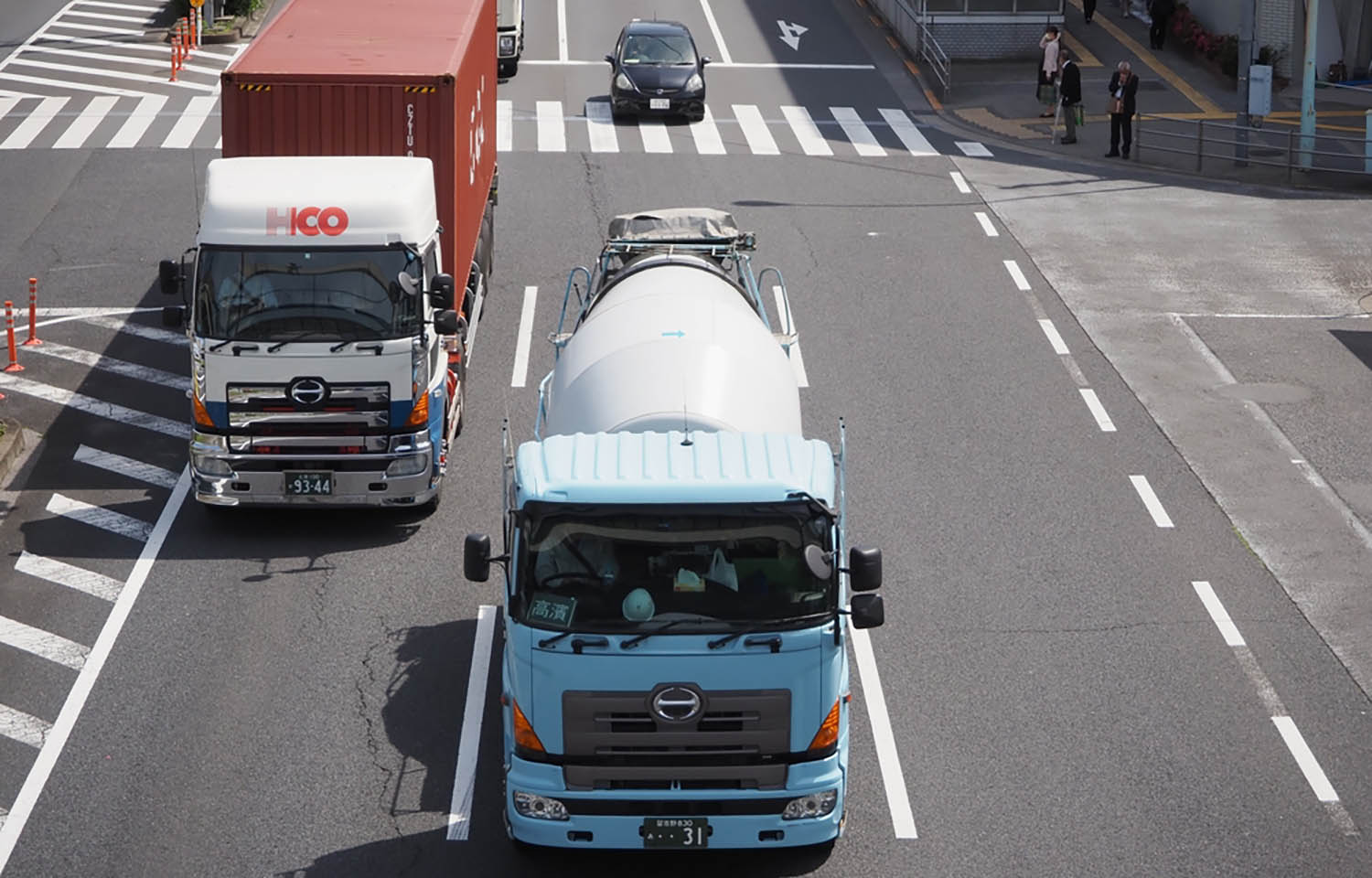
Amid a severe shortage of trucking capacity in Japan due to a labor shortage and logistics inefficiencies, two of the country’s biggest seafood companies – Nissui and Maruha Nichiro – are collaborating with three frozen food companies Nichirei, Ajinomoto Frozen Foods, and TableMark to establish a new logistics system.
“The frozen food industry faces unique challenges, such as the labor load on workers due to the low-temperature environment and the need to control product temperatures in limited storage space,” Maruha Nichiro told SeafoodSource. “In this context, we believe it is important to take measures … to improve loading efficiency.”
Not only is this partnership meant to tackle current challenges, but the companies are looking to continually build on this foundation to find effective ways to deal with future issues, such as reducing manual cargo handling and greenhouse gas emissions.
Current issues, though, continue to hamper supply chain efficiency in Japan.
The trucking industry is facing a labor shortage, and the truckers who are working currently have to wait in long queues to load and unload their trucks.
Some in the food industry have dubbed the labor shortage “the 2024 problem,” and it has mostly stemmed from a government safety regulation limiting the overtime work of truckers in Japan to 960 hours a year, or about 18 hours per week, starting from April 2024.
Besides the fact this measure has lowered trucking capacity in the short term, it is expected that fewer young people will enter the occupation in the future.
With no end to a shortage of trucking capacity in sight, delays and disruptions to the supply chain are likely to continue, affecting everything from groceries to manufactured goods. Tokyo-based Nomura Research Institute estimated that, based on current handling methods, the national logistics system would be unable to handle about 28 percent of scheduled deliveries by 2025, rising to around 35 percent by 2030.
To alleviate some of these issues, the five-company partnership is aiming to improve the loading rate of trucks and productivity at logistics sites, which would stabilize the overall supply chain network and ease the burden on truckers and logistics companies.
The companies’ plan promotes introducing a dock appointment scheduling system and spreading out shipping times to avoid congestion.
Under the plan, companies would also have to deploy enough forklifts and other equipment for quick loading, shippers would not expect truckers to conduct loading and unloading beyond what is contracted and should consider whether contracts put too much of a burden on logistics companies, and contracts would include surcharges for fuel and tolls to deal with changes in costs and allow for suspension of service in case of disasters or difficult weather conditions.
Additionally, long hauls would more often utilize intermodal shipping, such as cargo trains.
One of the five cooperating companies, Ajinomoto, has already shifted its delivery route from Tokyo to the Tohoku region from trucking to rail transportation – a move which reduced carbon emissions by 40 percent in January of 2024, compared with the same month in 2023.
Maruha Nichiro has also begun using more freight trains to transport goods to distant locations, where the company then uses trucks to transport goods beyond points where there are no rail lines.
“Maruha Nichiro is also partially switching from trucks to freight trains as a response to the 2024 problem,” the company’s PR department told SeafoodSource. “This is in preparation for the future when it will no longer be possible to transport goods by truck.”
The companies aren’t the only entities seeking solutions.
The Japanese government is planning to create a new visa category to allow skilled drivers to work in Japan. However, the visa would require a Japanese commercial driving license and conversational-level Japanese language skills, limiting the pool of candidates. This is an issue many Japanese industries are facing, especially as Japan’s population is aging.
A 2020 opinion article by UD Trucking Company, an Isuzu Motors subsidiary based in Ageo, estimates there will be a shortage of 240,000 drivers by 2027, so it is unlikely that the gap can be filled by a limited pool of foreign workers. Eventually, fully autonomous vehicles may reduce the need for some drivers, but the technology is still years away from mainstream implementation.
