






Irish fishing representatives and E.U. advisory councils are seeking to tie Norway’s access to the E.U. market – which buys around 70 percent of Norway’s farmed salmon annually – to negotiations over fishery quotas, arguing that the Norwegian seafood industry should not be able to enjoy such large access to the E.U. while also fishing unsustainably in European waters.
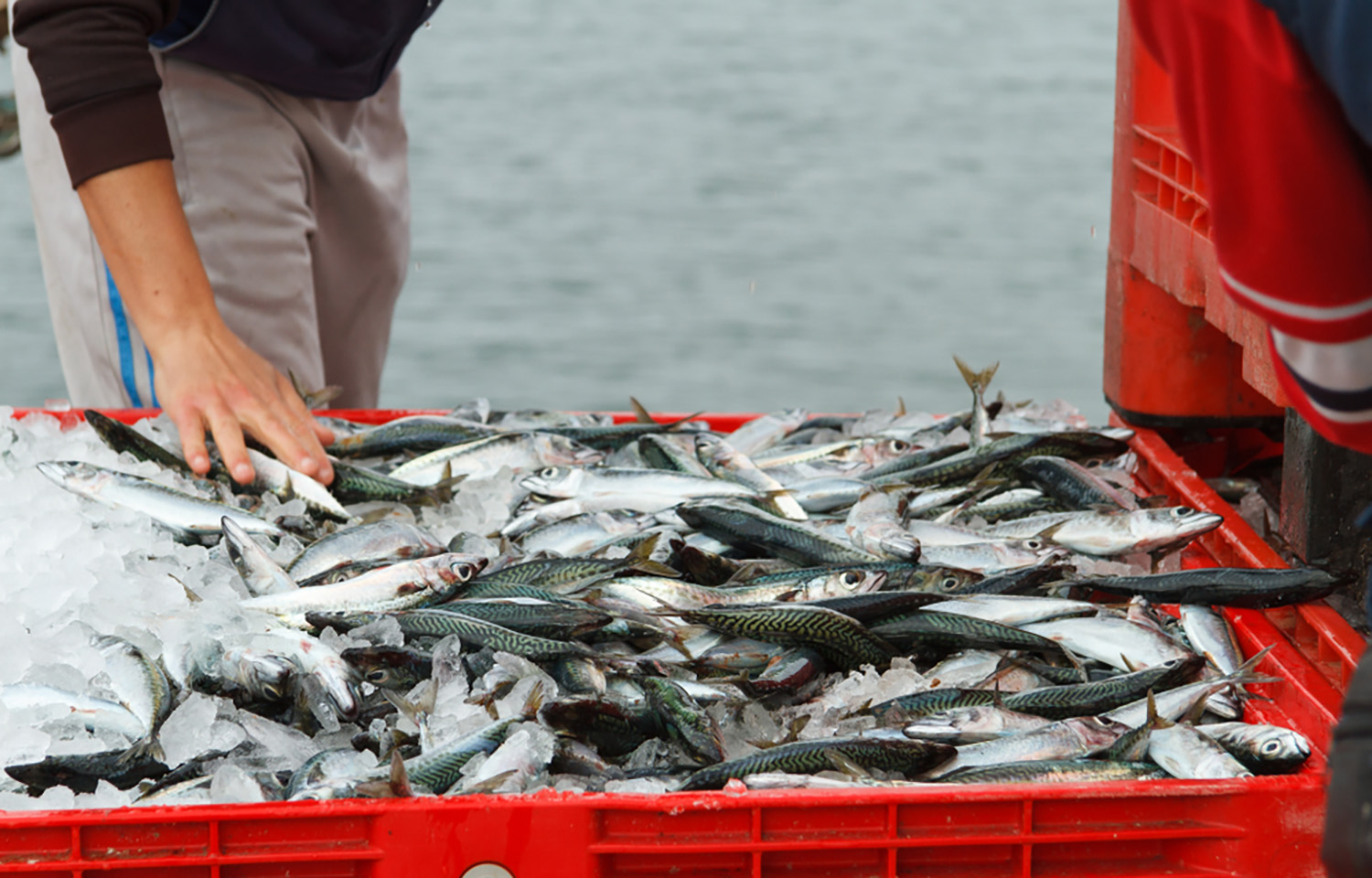
The Irish Fish Producers Organization (IFPO) specifically wants to stop Norway’s practice of setting unilateral quotas for North Atlantic mackerel stocks – a practice IFPO said continues to endanger the stock’s sustainability.
“Norway continues to flout its responsibilities in wild-caught fisheries such as mackerel,” IFPO CEO Aodh O’Donnell said.
O’Donnell said he believes one way to cull the practice is the E.U. scaling back access to its market for Norwegian farmed salmon as long as officials in Oslo are setting unilateral quotas for Northeast Atlantic mackerel stocks, which, he said, are “at variance with scientific advice.”
Instead of a unilaterally set quota, IFPO is calling for a comprehensive coastal sharing arrangement.
This type of agreement aligns with an October 2023 letter from the E.U. Pelagic Advisory Council (PelAC) calling on the E.U. Commission to take “immediate action to stop unilateral quotas which exceed scientific advice and jeopardize the sustainable management of shared stocks.”
PelAC also suggested the E.U. promote a coastal sharing agreement and use commercial measures such as tariffs or quotas on Norwegian goods, because the unilateral quotas and fishing pressure from Norway and the Faroe Islands were “putting the sustainability of the mackerel stock in question.”
Efforts to regulate Norway’s fishing practices bloc-wide, like IFPO and others are calling for, may have taken a blow due to the outcome of parliamentary elections that took place in June.
Europêche Managing Director Daniel Voces de Onaíndi worries that the rightward tilt coming out of the election may undermine the regulatory authority of the E.U. Commission and the office of the European Commissioner for the Environment, Oceans, and Fisheries.
“Nationalizing fisheries policies could result in fragmented management, with each country prioritizing its own interests,” Voces said. “This could potentially lead to overfishing or unlawful quota grabs, as seen recently with Norway's strategy and practices regarding small pelagics and cod in the Atlantic.”
Though efforts to clamp down on Norwegian mackerel fishing may have been weakened by the election’s results, many Irish fishing representatives are at least hoping the election will allow them to patrol their own waters more effectively.
Through the same nationalization of fisheries policies that could incapacitate E.U. authority, Irish fishing bodies such as IFPO are hoping they can reclaim quota that they believe is rightfully theirs.
“Our government has simply given away the livelihoods of fishermen in this country,” Irish South and West Fish Producers Organization CEO Patrick Murphy said. “Despite having some of the richest fishing grounds in Europe, Irish boats have consistently been given lower quotas of fish than those from other European countries in Irish waters. Currently, Belgian boats have a higher quota of black sole – a staple of the Irish industry – than Irish fishermen do.”
As calls to reign in Norway's fishing grow, environmental NGOs are also demanding the E.U. Commission address the sustainability of Norway's aquaculture practices.
One of those NGOs, the Coalition on Fair Fisheries Arrangements (CFFA), said it wants the E.U. to block access for unsustainable Norwegian farmed salmon, which it claims are fed on fish oil sourced from West African fisheries that are taking away resources needed for local human consumption, compromising food security in the region.
CFFA has accused feed companies supplying salmon farms of hiding behind “misleading” claims that their product is sustainable.
With the backlash rising, the Norwegian Seafood Council (NSC) told SeafoodSource that “some of the claims are incorrect, while some are misleading.”
“The Norwegian salmon industry does not purchase fishery products from The Gambia nor Senegal. Rather, fish oil and/or fishmeal sourced for Norwegian salmon farms comes from fisheries currently undergoing a fishery improvement project (FIP) in Mauritania,” NSC said.
Stakeholders in a FIP are “well aware that the relevant fishery they choose to source from has challenges,” the NSC said, explaining that Norwegian buyers bring requirements to the table before sourcing from these fisheries – including mandates that these fisheries implement better data collection on catches, among other efforts.
