




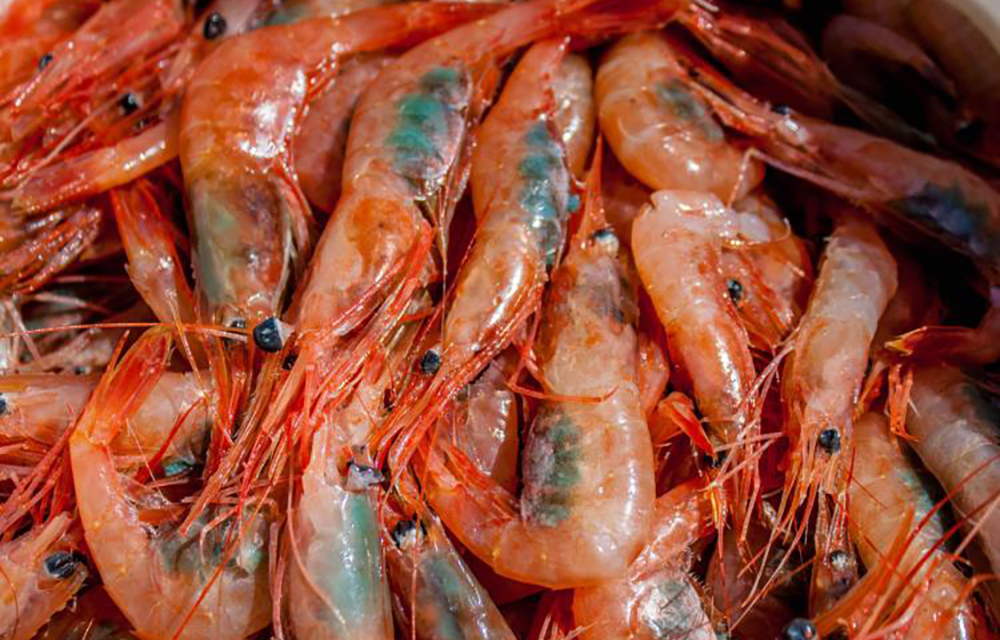
The shrimp fishery off the coast of the northeast U.S. region of New England is likely to face continued shutdowns as the stock continues to struggle.
The Atlantic States Marine Fisheries Commission (ASMFC) first voted to close the shrimp fishery in the Gulf of Maine in 2013 after the harvest that winter was the smallest since 1978. Despite the closures, the stock has not shown signs of recovery, and the fishery was closed for three more years in 2018, kept closed three years later, and in December 2024, the moratorium was extended further.
That moratorium vote also came with a limited winter research harvest, giving harvesters the opportunity to prove whether the stock had sufficiently covered to grant a quota again.
“The goal of the program is to continue the winter series of biological data for shrimp by collecting samples similar to those that might have been collected under an active commercial fishery,” the ASMFC said in a press release at the time.
Now, the Associated Press has reported that catch totals remain fairly low, and it seems likely that during the next meeting of the ASMFC, the moratorium will be extended once again.
In May 2025, the ASMFC approved Amendment 4 to the interstate fishery management plan for the Gulf of Maine shrimp stock, which acknowledged that since 2013, the stock has continued to see poor trends in terms of biomass, recruitment, and environmental indices.
“The continued poor condition of the northern shrimp stock has resulted in uncertainties in the future status of the northern shrimp resource,” Amendment 4 states.
The new amendment allows regulators to enact a moratorium for five full years – rather than year by year.
Amendment 4 said the abundance and recruitment of northern shrimp had been in decline since 2006 before the fishery was closed, and long-term environmental trends are exacerbating the issue and “amplifying the need to conserve spawning stock biomass.
“Results of each subsequent stock status report since 2013 have indicated continued poor trends in biomass, recruitment, and environmental indices, which prompted the Section to extend the moratorium each year through 2024,” Amendment 4 states.
NOAA conducted a new stock assessment in 2024 and found the stock status continued to be poor. Scientists estimated the spawning stock biomass was just 279 metric tons (MT), the lowest ever and well-below the median 4,723 MT mark. That also pales in comparison with past fishing totals; for example, in 2011, a preliminary total of 5,940 MT of shrimp were landed by fishermen.
A 2021 study found that warming ocean temperatures and squid predation were two likely causes of the decline in the northern shrimp populations. A marine heatwave in 2012 in the Gulf of Maine also led to the stock collapse in 2013.
Scientific studies have shown that the Gulf of Maine has warmed faster than 99 percent of the world’s oceans, leaving little likelihood of the stock recovering.
