




Seafood processors and traders in the United Kingdom have launched a new trade organization to advocate for the industry across a broad array of key issues.
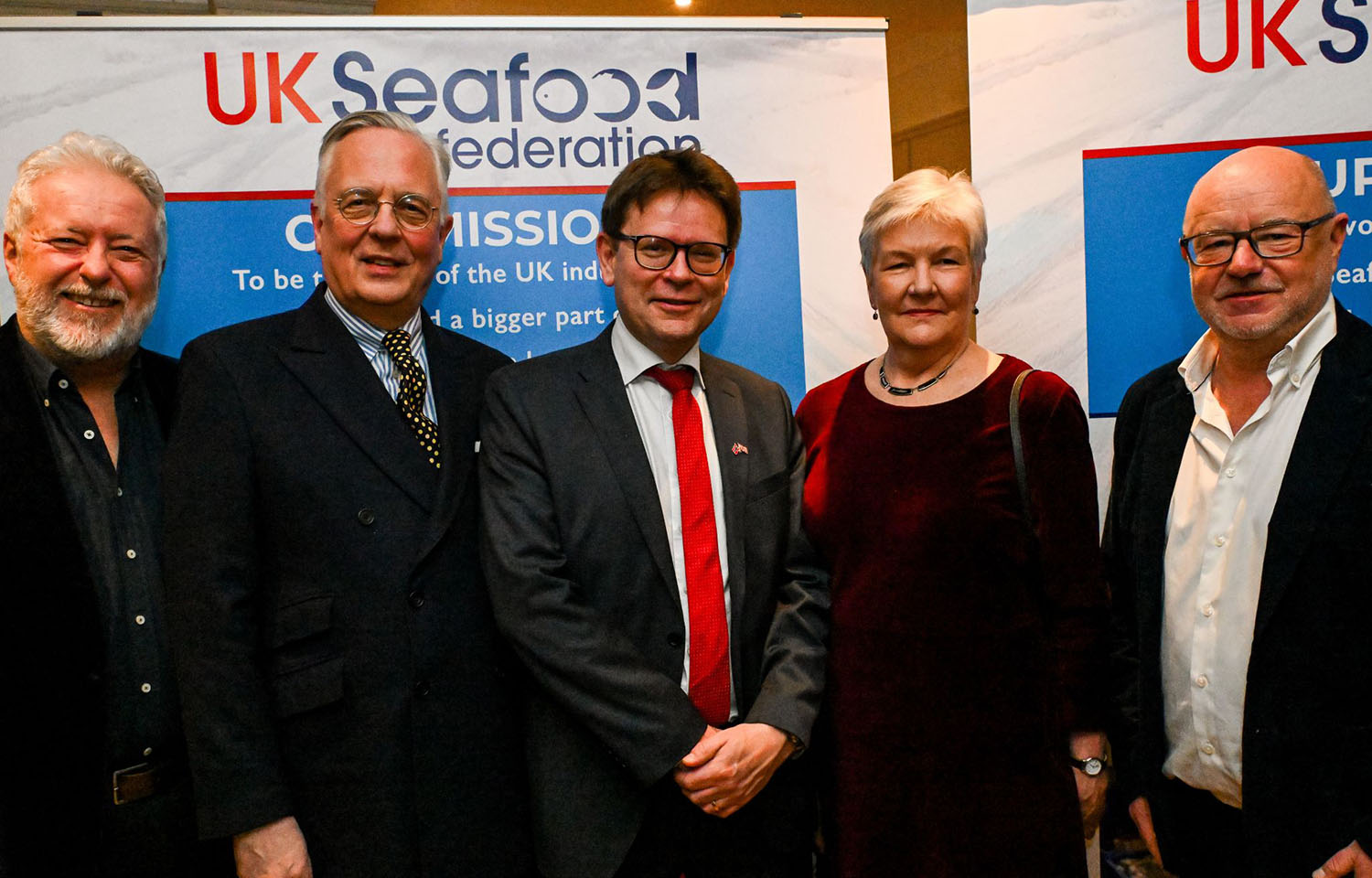
The recently launched UK Seafood Federation (UKSF) amalgamates the Provision of Trade Federation’s Seafood Industry Alliance (SIA) and Seafood Grimsby & Humber Alliance (SGHA) into a central hub to advocate for seafood processors and traders.
The new group, which will soon become a member of The European Fish Processors Association (AIPCE), is advocating for the industry on issues like trade barriers, carbon measurement, and skills development – while also providing a stronger voice to influence policy and consumer perception to safeguard the industry’s future and ensure its contribution to both the U.K. economy and food security is fully recognized.
With the stated mission “to be the voice of the U.K. industry in making seafood a bigger part of the British diet for a healthier nation and planet,” the pre-competitive collaboration said it wants to bring large and small seafood processing and trading businesses closer together and focus on finding solutions to common industry challenges. As well as delivering on UKSF’s mission, the intention is that its members will look to shape the future of the industry, and advocate for fair policies.
For the last four years or so, SIA and SGHA had worked in parallel – with the former especially focused on trade in the wake of Brexit and SGHA supporting the Grimsby and Humber cluster that represents between 60 percent and 70 percent of the U.K. seafood supply.
UKSF Chair Simon Smith, who is also vice-chair of Sofina Foods (Europe) and former chair of SGHA, told SeafoodSource that this coming together removes the workstream overlaps that had existed between SIA and SGHA, with UKSF providing a more operationally effective and cost-efficient platform to progress the industry.
It also removes any potential confusion in government circles and associated departments that may arise from having two separate voices, he said.
“It helps everybody if government ministers and Defra [the Department for Environment Food and Rural Affairs] know they're speaking to somebody that's representing the entire industry, rather than having to go to a number of different sources,” Smith said.
Leading to this point, there was also the further realization that while SGHA had started out life as a Grimsby and Humber focused organization, almost everything it was working on was of importance on a national scale, and that a number of businesses that were in the association had national footprints.
“With the business I’m involved with – Sofina and Young’s – we have almost as many processing plants in Scotland as we have in Grimsby and Humber. It’s the same for other organizations too. The issues we are discussing with government are national issues, not Grimsby issues,” Smith said.
Smith said the process to form the new organization got rolling just over a year ago as the once-separate organizations continued to build relationships across the wider U.K.
“About 18 months ago, we had a sort of lightbulb moment when we realized that we were stronger together. It just made sense that we ought to be doing this work on behalf of the entire seafood industry,” Smith said. “We'd also been developing relationships with the Scottish and Southwest clusters in recent years, so it just seemed like the right time. Since then, we’ve worked to put all the mechanics in place to make that happen, and to make it a smooth transition whereby we’re now at the point that everything has formally changed, with regards to the merger of SIA and SGHA under the new leadership of the UK Seafood Federation.”
Smith said the industry’s response has been positive so far, with three major members joining the UKSF’s ranks in the past six weeks.
“We’re really strong,” he said. “We’re now sitting at 11 members. That might not sound a lot, but those 11 members represent 60 percent of the UK seafood turnover and trade, so we've already got the lion's share of the industry within our membership and it's still early days.”
Smith said the group intends to also introduce an associate membership level, whereby smaller players can join the UKSF and benefit from the work that it’s doing.
It was SGHA that initially identified three core issues – borne out of 10 common themes – which UKSF will focus its efforts on: first, to use its strong political and public body connections to safeguard and enhance trade; second, to improve skills at all levels and within all types of organizations; and third, to instigate more effective carbon measurement and reduction.
With regards to transforming carbon footprints, in conjunction with U.K. seafood body Seafish, SGHA recently developed the new Seafood Carbon Emissions Profiling Tool (SCEPT), which is already helping U.K. businesses understand the greenhouse gas emissions (GHG) of their products.
“A huge amount of effort went into this,” Smith said. “We’ve now got this one tool for seafood that everybody is using, that everybody is happy with, and which is backed by the major retailers.”
By comparison, the U.K. meat industry is using more than 10 such tools.
“It's really beneficial to have just one tool with one set of common outputs that are very measurable, that everybody can use. Then we can turn our attention to carbon reduction, which is what we're doing now,” Smith said.
On the skills side, at the early end of career advocacy, a schools’ outreach ambassador has been deployed to better connect pupils and teachers with careers and opportunities in the seafood industry. At the other end, through close work with the University of Lincoln – which also manages the National Center for Food Manufacturing – a Future Seafood Leaders management development program has been launched, which in the past 18 months has provided qualifications for 100 industry managers professionals in Grimsby, Humber, and Scotland and benefited the businesses that they’ve returned to.
More recently, again in conjunction with the university, a campus has been opened in Grimsby that’s providing a degree course in seafood processing, as well as post-graduate projects in assisting and researching seafood processing and cold chains.
“Skills at all levels have been positively impacted, and that’s just the start,” Smith said.
However, Smith stressed the federation will only operate in pre-competitive areas – on challenges and opportunities that span the industry, and where better outcomes can be achieved by being together and sharing common purpose.
“Of course, competition has to remain – it’s paramount for the industry. So, there'll be areas that are challenges and opportunities facing U.K. processors and traders where we won't go,” he said. “But the more common agendas, certainly the ones we've been working on over the past four or five years around skills and the environmental aspects of carbon emissions, will remain the focus and our immediate challenges. Meanwhile, the trade work has never been more prominent than it is now, with the prospect of new tariffs being established across the world, and with seafood being the world's most globally-traded protein.”
Smith said to start UKSF will solely focus on its current challenges and opportunities, but is open to adding in new topics as they emerge “because we have a wider membership now and we want to hear the voices of that wider membership, so they help define what else we'll work on.”
As such, one of UKSF’s immediate priorities will be to listen to its new members and to be very clear on what the right approach is going forward to take on the new challenges that they may bring to the table.
“We want to further increase our reach in terms of membership,” Smith said. “The more members we have, and the more unified our voice is, the more successful we can be, and the more we can give back to the industry.”
