






The U.K.’s seafood-processing sector has struggled through some difficult times lately, but local advocates are pushing for a revival.
Troubling signs for the sector have included a plan introduced by Young’s Seafood to demolish its Marsden Road factory, following the company’s closure of the facility in June 2023. Iceland Seafood International also sold off its U.K. assets, including its Grimsby plant, for just GBP 1,000 (USD 1,271, EUR 1,170) to Espersen in September 2023, after suffering what it said were “colossal losses.”
More recently, Grimsby-based Seafood Products Limited entered administration in March 2024, dragging down with it Grimsby processor Saltire Salmon, which is likely to go into liquidation as a result of a GBP 1.1 million (USD 1.4 million, EUR 1.3 million) debt, according to SalmonBusiness. Additionally, Hilton Food Group's UK announced the layoff of 24 filleters in April as it continues to push for greater automation, according to Just Food.
Hilton Seafood UK, which operates two processing facilities in Grimsby that supply seafood products to U.K. retailers, as well as the Foppen smoked salmon brand, said no further layoffs are planned but the move was necessary to “rebuild profitability.”
One sign of optimism for Grimsby supporters was New England Seafood International’s announcement of a plan to expand its processing operations there, after collecting a GBP 3.8 million (USD 4.8 million, EUR 4.4 million) grant from the U.K. Seafood Fund. Espersen has also announced a plan to invest in Grimsby, including the addition of a new cold storage system, though it also has laid off 15 production jobs and merged its commercial team with its sales operations in Leeds, West Yorkshire, according to Just Food.
“As the new leadership at the plant and the U.K. sales organization are now being followed by considerable investments into production, systems, and an optimized logistic flow, Espersen demonstrates its confidence in the Grimsby plant, and the company is positive that these changes, though challenging, will lead to a more resilient future and establish a sustainable and successful operation,” it said.
A bright spot for Grimsby appeared in the release of Hilton’s 2023 fiscal year results, which showed the company’s seafood business returned to profitability, and the company’s operating profit up GBP 95 million (USD 121 million, EUR 111.6 million), or 33.5 percent. Hilton Food Group CEO Steve Murrells said the company has invested GBP 21 million (USD 26.7 million, EUR 24.7 million) in automation at one of its Grimsby plants and plans to automate the second plant forthcoming. Murrells said Hilton’s seafood business had “got our mojo back” and has a “very firm platform for growth.”
“We’ve now come through a difficult period and are well placed in what remains a difficult market,” Murrells said. “Clearly, that was a big swing and contributed a significant part of the U.K. performance, but the U.K. business also was able to perform well profitably.”
Hilton, which got into the seafood space through its purchase of Icelandic Seachill in 2017, provides natural and coated seafood to Tesco and Waitrose in the U.K. but is looking to continue to grow its international presence, having recently signed supply deals with Walmart Canada, Singapore’s Country Foods, and partnerships with Woolworths in Australia and Countdown in New Zealand.
Murrells expressed some hesitation about the commencement in May of the U.K.’s Brexit-related import charges being applied to some E.U. goods.
“It certainly will have an impact in some of the fish areas where we source outside of U.K. waters, but this is why it’s so important to drive automation through your facilities,” Murrells countered. “Those businesses that aren’t investing in automation, I think, will find life very much harder in the months and years to come.”
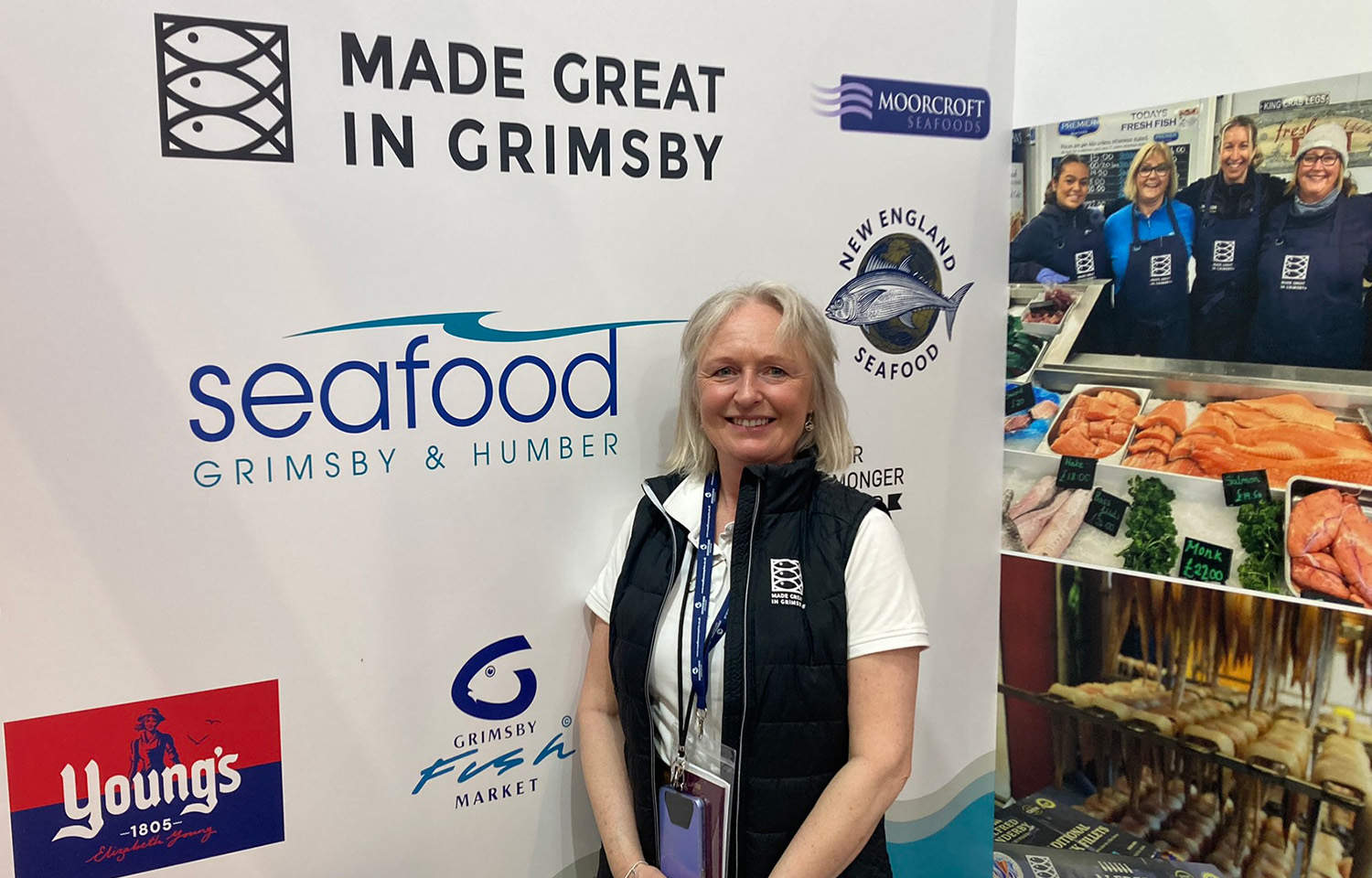
Seafood Grimsby and Humber Alliance Project Manager Julie Waites said U.K.’s processing sector has struggled to attract and retain labor, with a simultaneous trend toward automation reducing worker headcounts.
“Automation is something that’s hitting the industry now. Processing businesses are struggling to get people to do certain roles, especially filleting lines and factories,” Waites told SeafoodSource. “We do struggle getting people into the industry initially. The younger generation doesn't see that as a cool job anymore.”
Waites was recently appointed as head of the Master Fishmonger Standard, which was created by The Fishmongers’ Company, based out of the Billingsgate seafood market in London. The Seafood Grimsby and Humber Alliance hopes to expand the program into Grimsby and Humber as a means of expanding interest in the industry and skill-building locally.
“I hope to develop some more practical training courses that used to be delivered in Billingsgate and bring them to Grimsby. We need to help the younger generation become interested in the industry, and the master fishmonger standard may be an incentive to do that,” she said. “It also helps build up an understanding of sustainability and of different species and how to prepare them. So, whether you’re an aspiring chef or starting in an independent fishmonger business, they can develop the skills they need to succeed through the program. And also, when they're talking to the consumer, they have the right information, and then that helps us promote U.K. seafood as a whole to the consumer.”
The Seafood Grimsby and Humber Alliance represents the region’s seafood and trading processing cluster, comprising 70 companies with more than 5,500 employees and that, together, support a further 10,000 jobs along the value chain. The group estimated one-third of all seafood consumed in the U.K. originates in Grimsby.
In 2021, the alliance launched the Made Great in Grimsby program to raise awareness among consumers of the importance of the area to U.K. food production and has further supported Grimsby’s seafood sector through online cook-alongs on Instagram, collaboration with Seafish’s “Love Seafood” campaign, and a partnership with the National Centre for Food Manufacturing to improve local employment opportunities and enhance the industry’s innovative capabilities.
The alliance wants to add other skill- and career-building projects to its repertoire in coordination with the British Frozen Food Federation, Waites said. The alliance just hired a schools ambassador who will work with the U.K. Home Economics Department to try and get seafood on more school cafeteria menus and conduct outreach with British children to talk about the health benefits of seafood and the opportunities available in the industry.
“There are so many benefits of people starting in the factory and learning that process and then going on to middle management, senior management, and so on,” she said. “There's so many different types of jobs in the seafood industries; we just want to encourage more people to seek them out and see what interests them.”
Those opportunities now include aquaculture, with the February 2023 announcement from AquaCultured Seafood it plans to move forward with construction of a 5,000-metric-ton (MT) recirculating aquaculture system facility to grow Atlantic salmon in Grimsby. The project received approval from the North East Lincolnshire council in January 2024.
“It’s good for the local economy. It’s going be an interesting concept and project to watch, and I wish them every success,” Waites said. “It'd be great to see our own producers able to source salmon locally since just about all the businesses in Grimsby deal with salmon.”
While Britons love salmon, much of it is imported. The Seafood Grimsby and Humber Alliance is also working hard to encourage U.K. consumers to eat a more diverse selection of local seafood, Waites said.
“My biggest concern is still trying to get the U.K. consumer to eat more seafood and to try a range of seafood, particularly from our own shores. If we don't have that, we don't have anything else,” she said. “I think there's more work that can be done in the U.K. to promote and market all the different types of seafood caught and farmed in the U.K.”
Waites also said there was industry concern over problems caused by Brexit, including quota shifts that have shuffled how the U.K. fleet fishes. In April, Hull, U.K. fisheries-owned Kirkella –the country’s last long-distance fishing vessel after its sister ship Farnella was retired in 2022 – was forced to shift to Canadian waters after facing reduced quotas elsewhere due to Brexit. The Kirkella, which is jointly operated by Dutch firms Alda Seafood and Palevliet & Van der Plas, will continue to offload in Hull, according to the company.
“There are still a lot of concerns, but it’s going to be different for everybody what that main concern for them is, whether it's either to do with quotas, product availability, or market access for different countries,” Waites said. “But, overall, I am positive for the future of the U.K. seafood industry, even with all the challenges. We're planning for the future, and there's very much a long-term vision of the seafood industry remaining strong in Grimsby and Humber and across the U.K. There are some fantastic businesses in the U.K. that are very passionate and growing. We just need to keep supporting them – everyone in the U.K. needs to support them.”
