






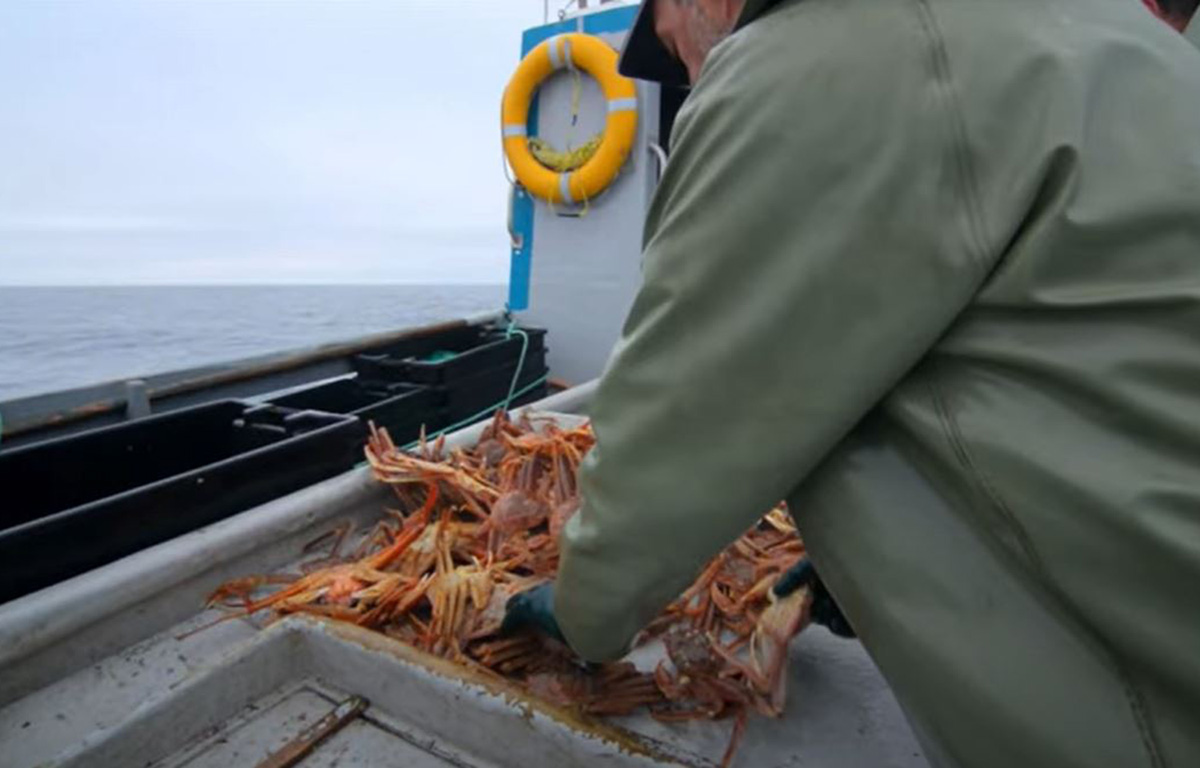
Both the Fish Food and Allied Workers Union (FFAW) and the Association of Seafood Producers (ASP) have submitted requests for a start price for the Newfoundland and Labrador, Canada snow crab season.
Each year the Newfoundland and Labrador Standing Fish Price Setting Panel chooses what minimum price seafood processors must pay snow crab harvesters during the fishing season. Both the FFAW and the ASP – which represent harvesters and processors, respectively – submit competing bids and pricing methodologies for the panel to choose from.
This year, the FFAW has submitted a CAD 4.97 (USD 3.50, EUR 3.20) start price for the season.
“This means that if harvesters in St. Anthony are delayed because of ice, they’re going to get the same price as a harvester in St. John’s who can set pots later this week,” the FFAW said in a release. “This matters because weather and other factors, like scheduling, means that some harvesters are disproportionately affected by fluctuations in price throughout the season due to factors beyond their control.”
FFAW said that finding a pricing structure took time, and that it has been pursuing a deal similar to what it achieved in 2024, which created a settlement price that was determined by receipts of the actual sales price of 5- to 8-ounce sections from the start of the fishery though three weeks after the fishery ended. That settlement price was 38.5 percent of the listed value of actual sales to Boston, which FFAW refers to as FOB Boston.
“That was an improvement from 2023, because we got pricing based on receipts – something we had been seeking for years, however we were limited by FOB Boston because we didn’t see receipts for sales to any other markets,” FFAW said.
FFAW said that this year it is seeking a higher percentage share, as the 2024 share was low compared to its historic share. It also said the percentage didn’t change as market price increased, “which is also how pricing has worked in the past; as the market price increases, harvesters tend to receive a greater share of the market.”
The union said this year its proposal is pushing for a sliding scale of 40 to 48 percent including sales receipts up to 31 October, and that has crewmembers paid directly from the processors – which are insurable earnings.
The ASP, meanwhile, has offered a starting price of CAD 4.50 (USD 3.16, EUR 2.89), with price adjustments on a weekly basis. It is also offering a settlement arrangement at a lower 39 to 41.6 percent, and a receipt period ending three weeks after season close as it was in 2024.
Both of those prices would be substantially above the start price set in 2024 and 2023. In 2024, snow crab harvesters received CAD 2.60 (USD 1.83, EUR 1.67) for their catch, which itself was up from the decade-low offer price of CAD 2.10 (USD 1.47, EUR 1.35) set in 2023. The price in 2023 was low enough it drove many fishermen to refuse to fish for six weeks, an action which later lead to the FFAW being found liable for costs related to the tie-up.
The proposals come as the ASP has actively taken the provincial government to court over delays to the snow crab fishery caused by the price-setting panel.
The snow crab fishery was originally supposed to open in the province on 1 April, however a delay in proceedings at the price-setting panel caused by “exceptional and unforeseen” circumstances involving the FFAW’s lead negotiator lead the province to delay hearings on the decision.
ASP called it an attempt to “shift the goalposts” on the pricing.
“The industry cannot function when decisions are delayed and disrupted by politics and pressure,” ASP Executive Director Jeff Loder said in a release announcing the association’s action in court. “Families, harvesters, plant workers, and entire communities depend on this fishery. This is about more than prices – it’s about stability, trust, and the rule of law.”
The CBC reported the ASP had its first day in court on 3 April, pushing for the court to quash the decision.
"If the minister's decision is quashed, and we expect it to be because he broke the law, then we're in the situation where we don't have a minister's date," Loder told the CBC. "The Supreme Court can't direct a panel date or can't direct, necessarily, a minister's date. So this is the chaos that's created when you have interference in a process."
The FFAW, meanwhile, argues ASP’s lawsuit is a waste of time.
"We think the legislation is fairly clear that he does have authority and more importantly, as a practical reality, the minister has to be able to adjust the date when there are emergency circumstances like a significant linchpin negotiator falling ill," FFAW Lawyer Ray Critch said.
