



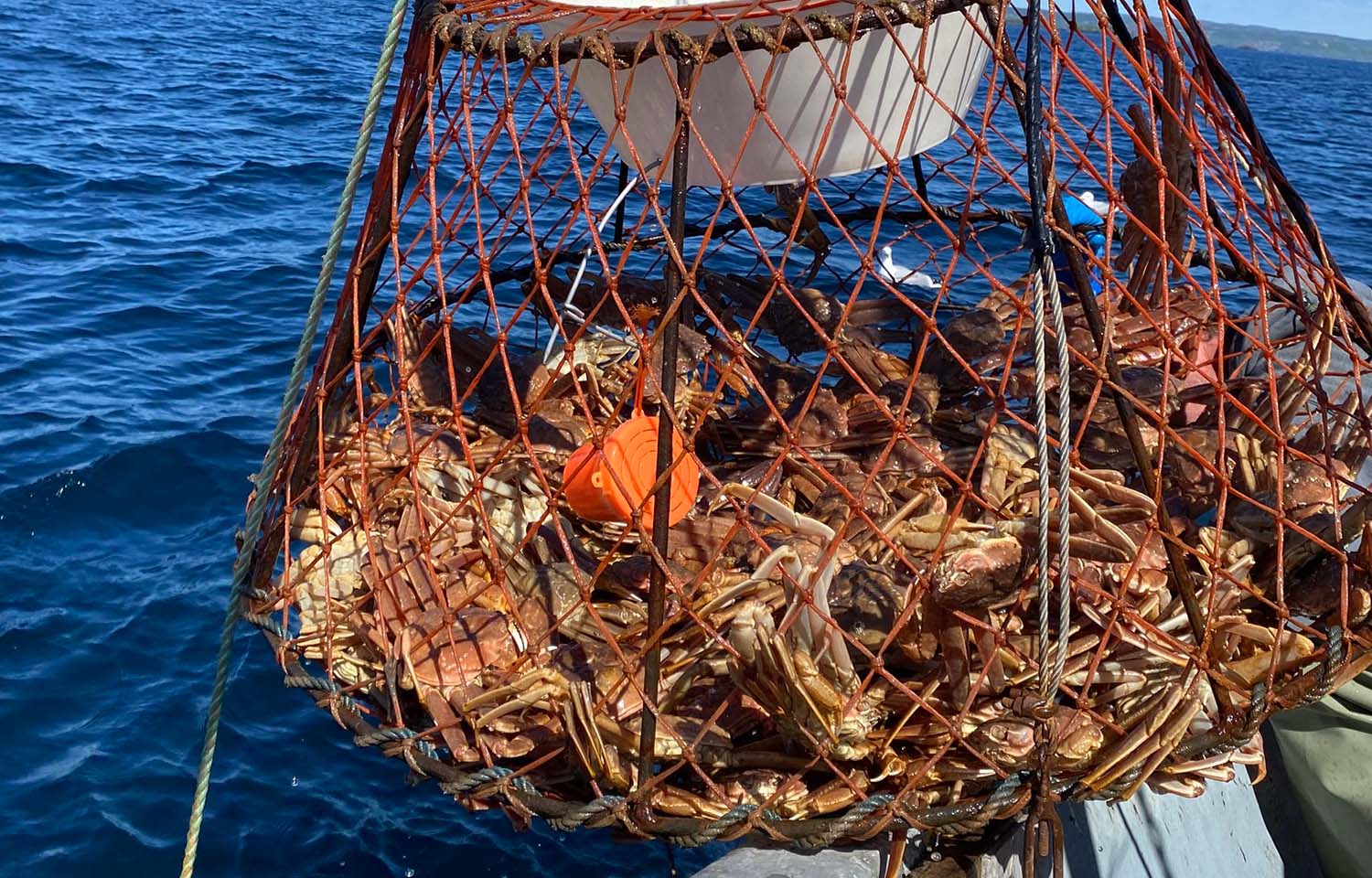
The Fish Food and Allied Workers Union (FFAW) has once again called the snow crab price setting process inadequate and claims there has been a “complete deterioration in good-faith negotiations” just days before the season is set to begin.
The FFAW had only just agreed to resume negotiations after requesting delays in the price-setting process in Newfoundland and Labrador, Canada. Under provincial law, snow crab harvesters in the province are paid a minimum price that is established by a price-setting panel, which typically receives pricing formula proposals from the FFAW and the Association of Seafood Producers (ASP).
FFAW has heavily criticized the process and said the provincial government hasn’t delivered on promises to reform the panel. It also said after 13 hours of negotiations, the ASP’s offer price was CAD 5.22 (USD 3.75, EUR 3.25), down from the CAD 5.25 (USD 3.77, EUR 3.26) presented last year and “substantially under the prices FFAW put forward, despite an even stronger market than in 2025.”
As a result of the dispute, the union said harvesters won’t deliver crab.
“Harvesters will remain resolute in their demand for basic fairness. There will be no crab processed in this province until that fairness is given,” FFAW President Dwan Street said. “A price that reflects market realities is what we’re asking for. It’s not a big ask but it is seemingly beyond the pale for ASP and their member companies.”
ASP Executive Director Lorelei Roberts disputes the claims that FFAW “walked out” of negotiations, and that both groups negotiated for over 12 hours before deciding to call it a day, with the majority of that time being productive.
“I would say for the majority of that time, there was really good dialogue, we were working really well together,” she told SeafoodSource.
Roberts said the ASP and FFAW have to work together to make the fishery successful, and that the FFAW failed to submit a price proposal to the price-setting panel by a deadline despite asking for delays.
“The day before the panel was due to meet, the FFAW asked to delay the hearing so that they could bargain,” she said.
Roberts said that request for a delay indicates the FFAW was acknowledging the process, but ended up not submitting any price proposal in time.
“The issue is that the FFAW didn’t bargain, they bargained too late when they came to the table, and they missed the deadline,” she said. “What I will say is both parties are given every opportunity to come to an agreement, and in the event they can’t come to an agreement, that’s what the panel is for.”
The union claims market reports are indicating a stronger market for snow crab in 2026, which should justify higher pay, and the ASP’s current pricing offer is too low.
“Harvesters will not accept a price that is worse than last year in a stronger market,” Street said. “The fact that ASP is putting forward a price this low tells us they have zero interest in negotiating in good faith. ASP is doubling down on the same company cartel playbook; slowly stripping owner-operators of their share of the resource through prices that simply do not line up with market realities.”
While the FFAW didn’t participate in the price-setting panel process, that process is still mandated by provincial regulations and will continue without a submission from the union. That means the panel can either select the proposal from the ASP, or come up with its own independent price for snow crab.
“We said clearly from the beginning that we would not legitimize a process that locks in an unjust price for the entire province,” Street said.
Roberts said the FFAW’s assertion that the market is improved is based on crab prices that aren’t realistic for Newfoundland snow crab, which is a commodity product rather than a specialized product like many of the other snow crab supplies.
“There’s no Newfoundland crab in the market right now,” she said. “If there’s prices out there, it’s prices for crab we don’t sell. The reality is we end up having to set a price, when we don’t even know what the market will be.”
Roberts said the market price for crab isn’t dictated internally, but by global economic forces that shape what demand will be. She said Seafood Expo North America is an opportunity for processors to gauge what buyers are interested in, and that the retail market has been pulling back and the economy is in a different state than it was in 2025.
Despite the challenges, Roberts said the ASP is confident the market will be solid and positive for both harvesters and processors in 2026.
“It’s really important for people to understand that a fishery is a shared system, harvesters need processors, and processors need harvesters,” she said. “We’re only as good as we are if we all work together, and we’re stronger when we’re together.”
