

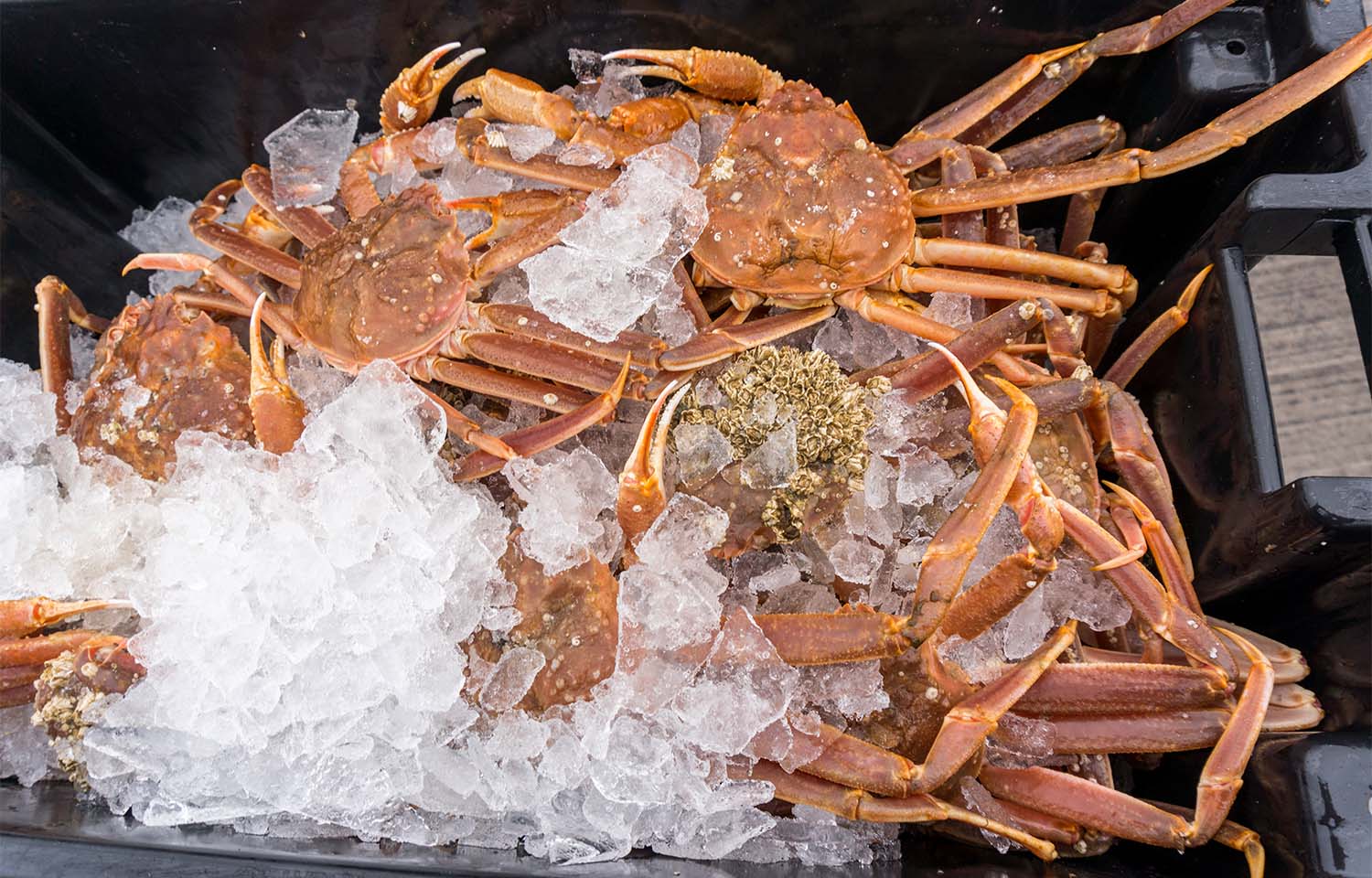
The Fish, Food, and Allied Workers Union (FFAW), which represents snow crab harvesters in the Canadian province of Newfoundland and Labrador, has halted all snow crab price negotiations until the 2026 snow crab quotas and opening date are set.
In a release, the FFAW said its Snow Crab Negotiating Working Group voted unanimously to halt any crab price negotiations until Canada Fisheries Minister Joanne Thompson announces the opening date and quotas.
“Holding off on negotiations at this time is the most responsible course of action,” FFAW President Dwan Street said in a release. "Having clarity on the 2026 management plan and seeing how the Gulf snow crab fishery performs will give harvesters a much clearer sense of where prices need to be this season.”
By law, Newfoundland and Labrador sets a minimum price for snow crab via a snow crab price-setting panel. That panel typically chooses between proposals from the FFAW and the Association of Seafood Producers, which represents processing companies in the region.
The FFAW has called on provincial authorities to reform the price-setting process, which it has heavily criticized ahead of the 2026 snow crab season. That criticism comes in the wake of multiple years of conflict over the price, which has, at times, led to harvesters tying up boats and multiple different rounds of arbitration.
The union has called for changes to the Standard Fish Price Setting Panel’s members and has been meeting with the ASP ahead of the upcoming pricing negotiations. However, those price-setting talks are apparently on ice until the quota and opening information is released.
In 2025, Canada’s Department of Fisheries and Oceans (DFO) announced the quota on 4 April, setting a TAC for the Newfoundland region of 62,883 metric tons (MT), an increase from the 57,568 MT it set in 2024. That announcement came just days before the 10 April opening date.
The DFO’s latest assessment is predicting a drop in snow crab biomass after multiple years of increases. The assessment had the FFAW criticizing the assessment process, which it said was “extremely volatile.”
“The precautionary approach [PA] model is misleading and underscores the need to revisit how this PA is calculated and applied to Newfoundland and Labrador’s vital snow crab fishery,” Street said. “Such a failure in a federal scientific process must be immediately addressed due to the catastrophic economic impacts this modeling has on management decisions.”
