






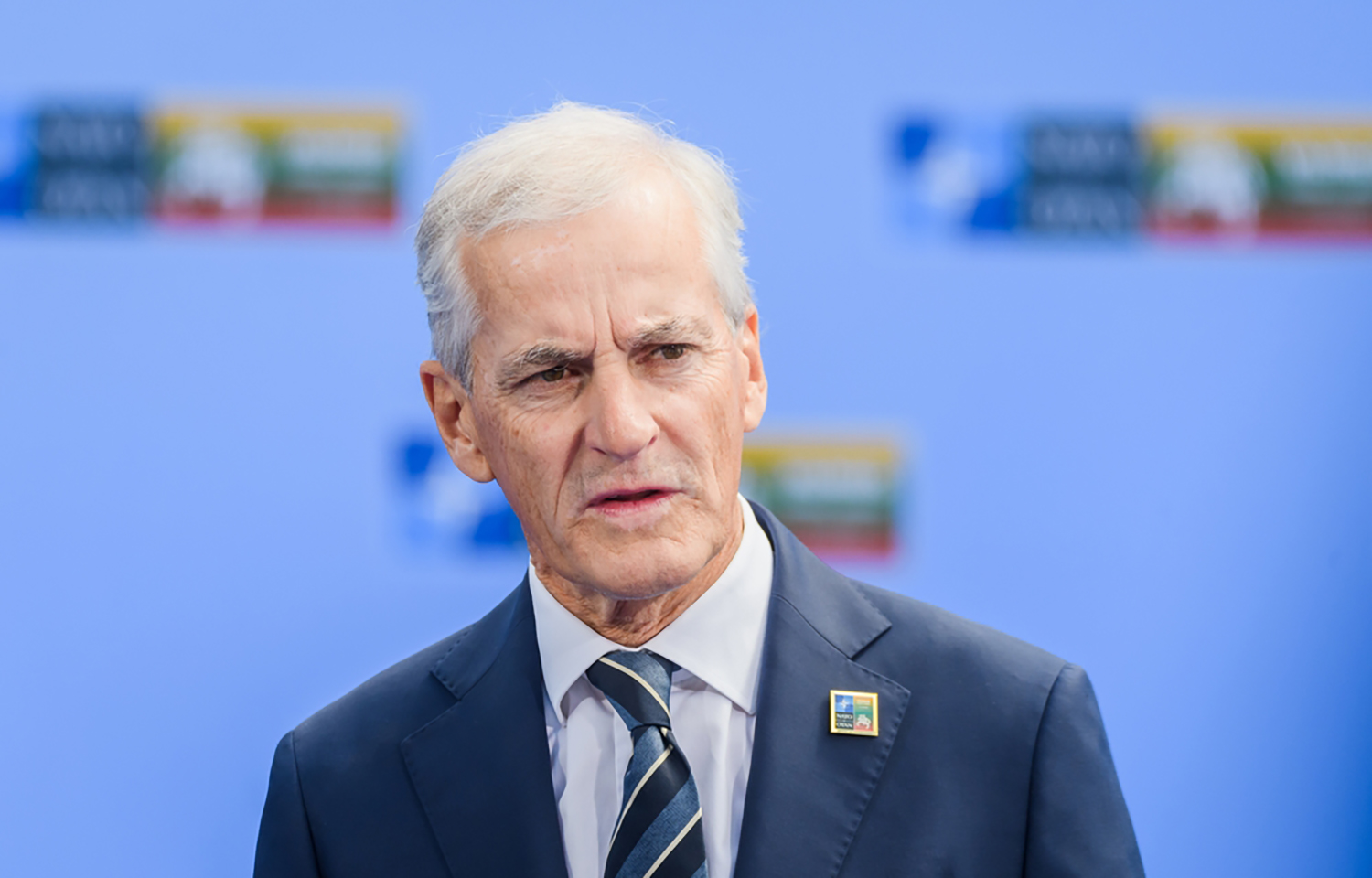
In early September, Norwegians reelected Prime Minister Jonas Gahr Støre of the Labor Party by a slim margin.
Støre’s left wing managed a slim majority of 88 members of Norway’s 169-seat parliament, while the populist Progressive Party became the largest party in opposition to Støre’s Labor Party, garnering more than 23 percent of the votes – nearly double the support it received in the last election and not far off Labor's 28 percent.
"I think this election has changed Norwegian politics," said Geir Ove Ystmark, the CEO of the Norwegian Seafood Federation, a representative association for the nation’s fisheries and aquaculture sectors. "The Social Democrats are in a tough parliamentary situation.”
Some of those right-wing gains were due to votes from fishermen in Northern Norway, according to Frank Kristiansen, the CEO of Båtsfjord Handelsstands Fiskerigruppe, which is a chamber of commerce for fish buyers across the country. Kristiansen said these fishers felt betrayed and isolated by the government as cod quotas have declined and Norway started to place sanctions on Russia, all while U.S. tariffs have generated economic uncertainty.
"Major investments have been made based on Russian traffic in the ports, which disappeared overnight, and we received no compensation. We are living in a vacuum and feel that we are not being taken care of," he told Fiskeribladet, a Norwegian industry newspaper, explaining that right-wing votes in traditionally left-leaning municipalities were largely symbolic in nature.
Although the left-wing parties combined hold a majority after the election, it does not represent a unified coalition. Therefore, the Social Democrats will be forced to negotiate to the left with the Socialist Left Party and the Green Party or to the more center-leaning Center Party to form a coalition.
The Norwegian Seafood Federation, which represents 900 companies with more than 20,000 employees, is apolitical and, therefore, did not explicitly support any side in the election, but Ystmark said that the organization is aware that a left-wing government would be more likely to increase taxes on the industry while the right wing has sought to decrease taxes.
He said he hopes the complicated composition of parliament that arose from the election will lead to deals being made somewhere in the middle.
"We need stability around taxes, the level of taxes, or the kind of taxes we should have," he said. "I believe the first thing the government will do is to seek a compromise between the conservative parties and the left-wing socialist parties.”
For the aquaculture industry, one of the main topics of concern during the election was the country’s resource rent tax, which the Norwegian government imposed in 2023.
The tax is a payment for the exclusive rights to farming in the nation’s fjords. The government, in its rationale behind imposing the tax, argued that the limited access to the fjords, which belong to the state, leads to extraordinary financial results for farming companies, which should, thus, have to pay more in taxes.
The industry has heavily criticized the reform, with Mowi CEO Ivan Vindheim saying at the time of its first circulation in parliament that a resource tax would cause “irreparable damage” to Mowi and Norway's salmon industry.
“As many as eight out of 10 are against it – from professors to small farmers along the Norwegian coastline – so there’s no lack of warning about the negative consequences of this tax proposal,” Vindheim said in early 2023.
The industry, Ystmark said, would have preferred a simpler corporate tax instead of the resource tax, which is a 25 percent tax on the profits generated during the sea-based grow-out phase of fish farming and only applies when a company’s profits exceed NOK 70 million (USD 6.4 million, EUR 5.9 million).
Ystmark said that if the Labor Party seeks a coalition with the Socialist Left Party or the Green Party, the tax will most likely remain untouched or even increase, but it could change in the aquaculture industry’s favor if Labor reaches across the aisle and seeks a compromise with the conservatives.
"I think it would be possible to tax the industry on real income and not constructed income," he said. "I believe that the government will seek pragmatic and good cooperation both with the industry and the union to find good ways to regulate the aquaculture industry.”
