



On 31 July, U.S. President Donald Trump signed an executive order that raised the tariff rates on Norway and Iceland, among other countries, from 10 percent to 15 percent.
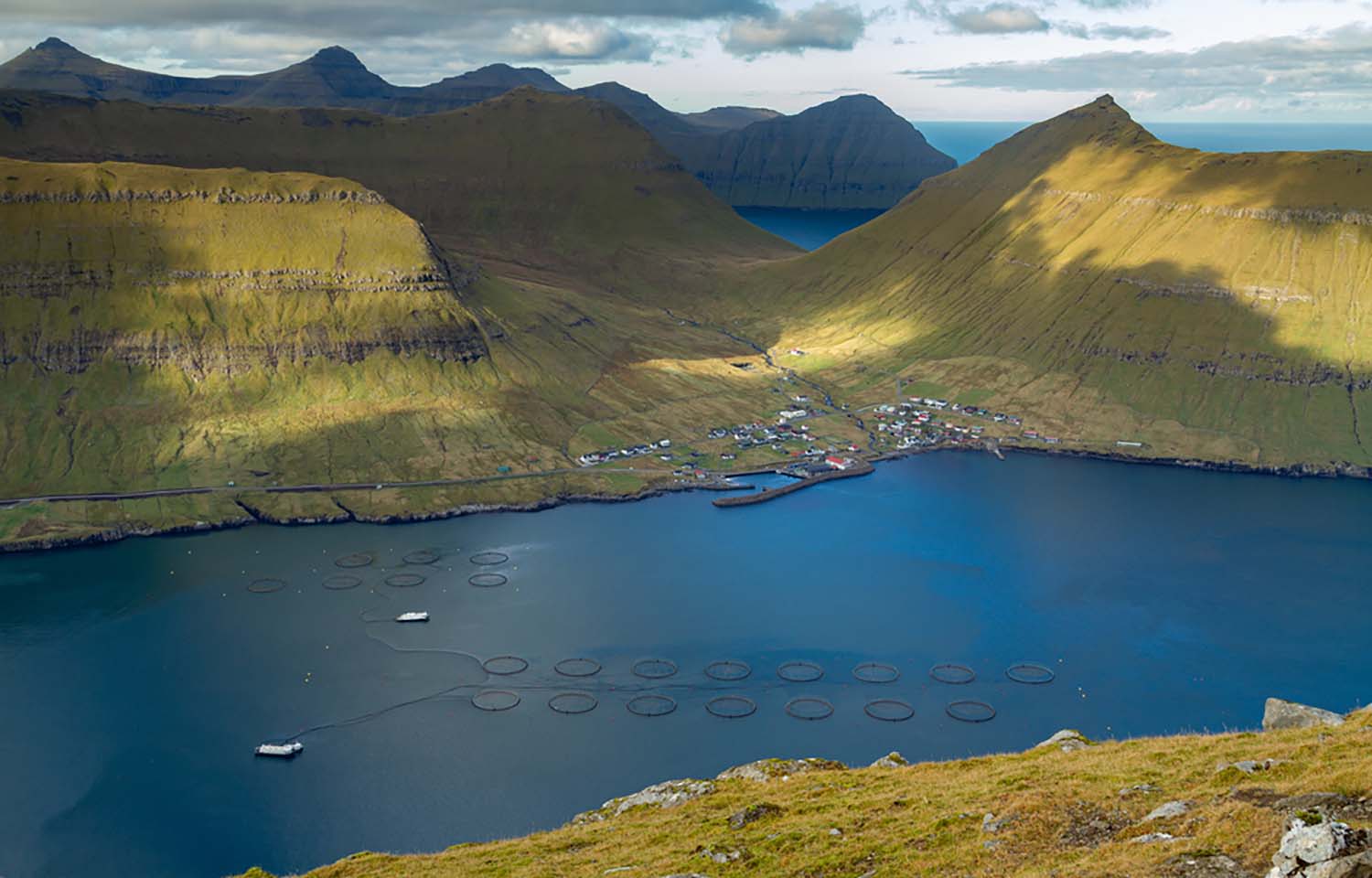
Rates on the Faroe Islands, meanwhile, remained at the same 10 percent rate they have stood at since April.
Instead of celebrating the upper hand the self-governing archipelago has gained over competitive salmon-farming nations, some involved with Faroese trade are leery of what tariffs will do to global commerce in the long run.
“It's of course beneficial to have a slightly lower tariff than some competitors,” Niels Winther, the CEO of Vinnuhúsið, the Faroese House of Industry, told SeafoodSource. “But, if the U.S. market becomes less interesting for some competitors, will they then be looking for other markets like Europe? How would that affect prices there? It's essential to look at the whole picture. If tariffs lead to general price increases, the consumer has less money to spend, and that could affect all exporters to the market.”
Winther further explained that the Faroe Islands is particularly dependent on open markets and has only six free-trade agreements currently in place. Seafood competitors such as Norway and Iceland, which are members of the European Free Trade Association, have direct access to the E.U. market and 34 additional free-trade agreements to benefit from, he pointed out.
"We have a very open economy. We import most of our goods and export most of our production. So, increased tariffs are in general never good for a small country like the Faroe Islands,” he said. “We would be in a bad starting position if we’re moving toward a world of bilateral free-trade agreements.”
Others, such as Atli Gregersen, the CEO of Faroese salmon-farming firm Hiddenfjord, are not as wary of the effects of tariffs just yet.
“We don't know the effects yet, but I assume we will have a benefit. Of course, it was easier to export to the U.S. when there was no tariff,” he told SeafoodSource, explaining that almost half of the firm’s production was shipped to the U.S. in 2024.
Gregersen said that various factors, such as the fact that global salmon production has skyrocketed this year, have had a much more significant effect on the market than tariffs so far and, therefore, are worth paying more attention to at the moment.
“The supply of salmon to the global market has spiked this year, which has decreased prices significantly. That also makes it difficult to say exactly what the effect of the tariffs will be,” he said. “The global increase in production has had a much greater effect [than tariffs]. That's the reason why salmon prices are low.”
Regardless of the situation with U.S. tariffs, the company is looking to diversify the markets to which it exports.
Hiddenfjord launched the "Fish Don't Fly" campaign in 2020, eliminating air freight from its supply chain. The move, which Gregersen called a pioneering gamble, boosts the sustainability of the firm’s production but also requires more legwork into deciding which nations it can ship to around the globe.
It is now working on improving its frozen product supply chain enough to boost sales to Asia without having to fly.
“That's a long-term project,” Gregersen said. “It's important for us to have as big a part of the world as possible as our [consumer base]. That's not something that started because of the current situation.”
Other salmon-farming nations, such as Chile and the U.K., also enjoy 10 percent tariffs on export shipments to the U.S., placing Norway at a competitive disadvantage to several heavy hitters in the global seafood industry.
"For Norwegian producers, it will be impossible to compete with a higher tariff than our competitors. I'm afraid that we will end up losing the U.S. market," Geir Ove Ystmark, CEO of Sjømat Norge, the Norwegian Seafood Federation, told Norwegian public broadcaster NRK.
However, just as Faroese reactions to the tariff changes are split, the same is true for Norway.
Norwegian Seafood Council Communications Director Martin Skaug recently said that many opportunities still abound in the U.S.
“It’s a market where consumption still is relatively low per capita and where the drivers for choosing seafood, and Norwegian in particular, fits very well with our offerings [such as] the desire to live a healthy life, eating nutritious and tasteful food, keeping up with taste trends, staying away from ultra-processed. It’s a great match, and thus, our efforts in the U.S. will continue,” he said.
