



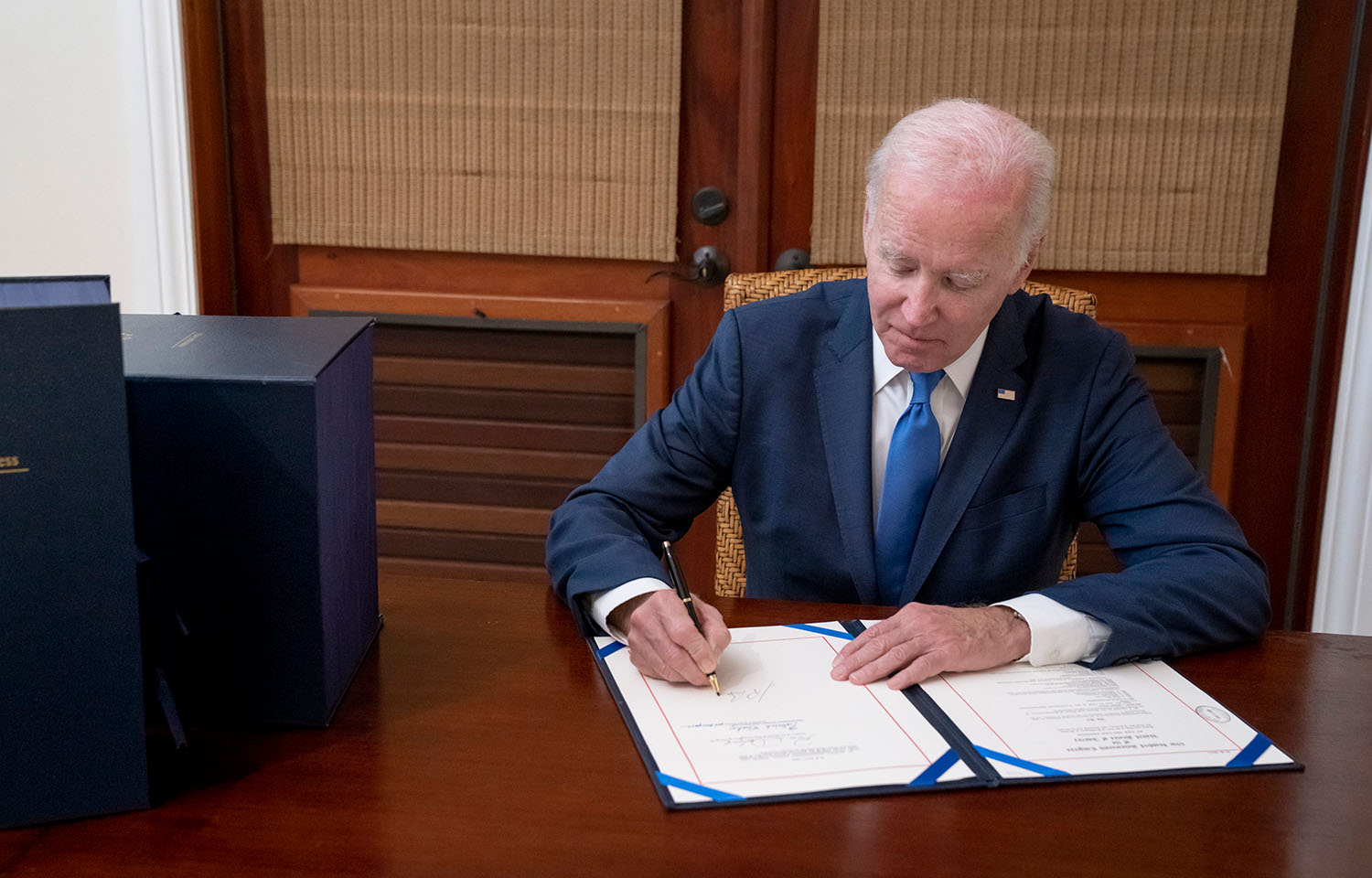
A new letter written to U.S. President Joe Biden is urging him to avoid naming any new marine national monuments in the final months of his presidency.
The letter, signed by seafood companies, fishermen, government officials, and groups representing the seafood industry, calls on Biden to “resist all proposals” to either create a new marine national monument or expand an existing one inside the U.S.’s exclusive economic zone. Biden is currently in the “lame duck” period of his presidency, with just 56 days left before President-elect Donald Trump takes office.
Creating a marine monument in the final months of a presidency is not without precedent.
In September 2016, U.S. President Barack Obama designated a 5,000-square-mile area off the coast of New England as a national monument dubbed the Northeast Canyons and Seamounts Marine National Monument. The designation as a monument banned all mining, drilling, and commercial fishing in the area and was the first U.S. monument of its type in the Atlantic Ocean.
Obama’s predecessor U.S. President George W. Bush also created marine monuments in the final months of his presidency. On 6 January 2009 – two weeks before his final term was finished – Bush established the Pacific Remote Islands Marine National Monument, the Marianas Trench Marine National Monument, and the Rose Atoll Marine National Monument in the Pacific Ocean.
All told, according to the letter, five monuments spanning 1.2 million square miles of ocean territory have been created by presidential proclamation.
“As a result, more than one-quarter of U.S. ocean territory is now part of a marine protected area (MPA) where commercial resource extraction is prohibited – a higher level of such MPA coverage than almost any other nation,” the letter states.
Fishing groups have opposed the creation of MPAs and went as far as suing the federal government over the creation of the Northeast Canyons and Seamounts Marine National Monument. That lawsuit was later rejected by a federal judge, and a later attempt to appeal that lawsuit was also denied.
In the meantime, the debate over the monument was complicated in 2020 when then-U.S. President Donald Trump issued a proclamation that reopened the monument to fishing – a move that was then also subject to lawsuits from conservation organizations. Then, just hours after taking office in January 2021, U.S. President Joe Biden announced he was reviewing national monuments – including the Northeast Canyons and Seamounts.
The fishing industry quickly mobilized to try and prevent the reestablishment of a fishing ban in the area encompassed by the Northeast Canyons and Seamounts National Monument but ultimately failed as Biden reinstated all restrictions in the area.
That wasn’t the end of the monuments saga, as fishermen filed another lawsuit in April 2022 challenging the monument once more.
Throughout the back and forth over marine monuments, the U.S. seafood industry has argued the existence of the monuments to prevent fishing is unnecessary given the country’s already robust fisheries management policy; the latest letter to Biden reiterates that stance.
“The Magnuson-Stevens Act (MSA) requires U.S. fisheries to be managed to sustainable harvest rates and to achieve broader marine biodiversity goals,” the recent letter said. “The result is that U.S. fisheries produce exceptional environmental outcomes, preserve vital cultural traditions, create jobs in communities across the United States, contribute to U.S. food security, and provide billions of nutritious meals with a carbon footprint dramatically lower than other leading proteins.”
The letter said as ocean ecosystems undergo rapid changes, the MSA and U.S. fisheries management provides a stronger framework to protect the species that the monuments are ostensibly intended to protect.
“As ocean warming causes shifts in the distribution of fish stocks and other marine biota, fisheries scientists see it as prudent to provide managers with flexibility to distribute fishing effort across areas over time in ways that best achieve defined objectives, including conservation objectives,” the letter said.
Marine monuments, however, are static and don’t have the flexibility to protect the ecosystem, the letter argues.
“They are a tool that will more often prove ill-suited to the dynamic ocean management challenges that lie ahead,” the letter said.
