



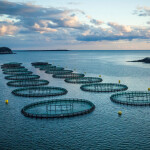

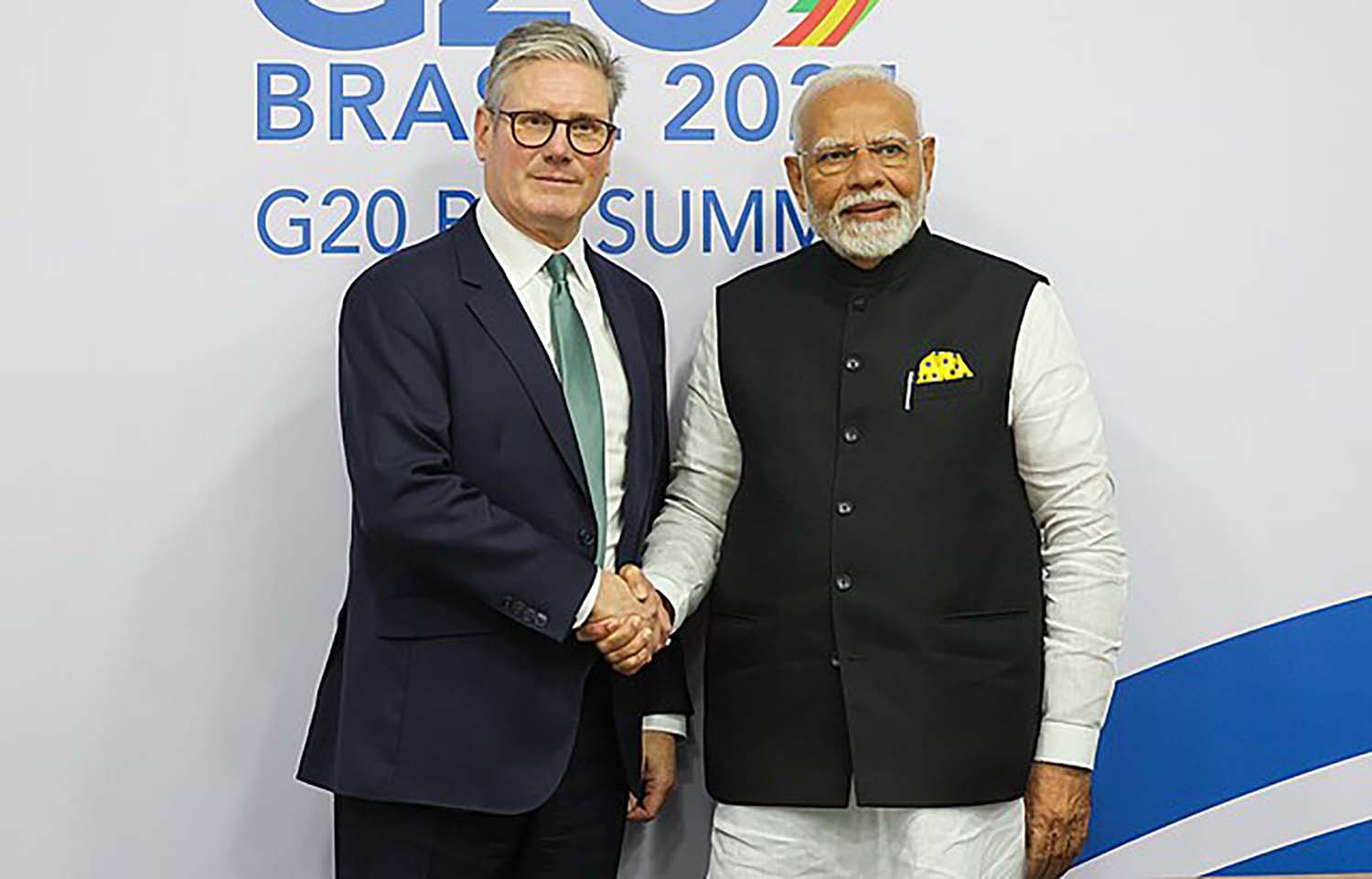
Like many seafood sectors across the globe, Scotland’s salmon producers and exporters are looking to diversify the markets to which they sell amid trade disruptions, and a new free trade agreement (FTA) between the United Kingdom and India that is set to come into effect in 2026 is likely to help them accomplish just that.
Formally agreed between the two countries on 6 May, the FTA is expected to significantly boost bilateral trade, with projections indicating an increase of around GBP 25.5 billion (USD 34.2 billion, EUR 29.4 billion) worth of goods annually.
Work is underway on finalizing the agreement’s legal text before the ratification process begins.
Currently, Scottish salmon carries a 33 percent tariff in India, which has hindered trade in the past, but industry representative body Salmon Scotland said that thanks to the FTA, India now presents a huge opportunity to the sector.
"The U.K.-India trade deal establishes the broad framework, and farmers interested in exporting to India are now working on the details of how this will happen in future," a spokesperson for Salmon Scotland said.
According to the industry body, India is the world’s third-largest fish market, with domestic use reaching nearly 12 million metric tons (MT) in 2021 – up 120 percent since 2005. It further explained that while most of the fish that’s eaten is locally sourced, consumers in major cities such as New Delhi and Mumbai are increasingly demanding healthy, high-quality produce.
Already, Indian High Commissioner to the United Kingdom Vikram K. Doraiswami has traveled to Scotland to learn more about Scottish farmed salmon, visiting Mowi’s processing plant in Rosyth.
“The Scottish salmon industry … exemplifies the quality and innovation driving this partnership,” he said. “I am delighted that with the FTA reducing trade barriers, India’s restaurateurs and consumers will soon be able to affordably access premium Scottish salmon, enhancing consumer choice and fostering economic growth.”
A major influx of salmon exports into India would also align with the “recent boom in the Asian market” Scottish salmon has enjoyed, according to the industry body, with exports to China up 60 percent in 2024 and volumes to Taiwan more than doubling in the same period.
These gains contributed to record international sales of around GBP 844 million (USD 1.1 billion, EUR 973.7 million) in 2024 and affirmed Scottish salmon’s place as the United Kingdom’s most valuable food export. Its main markets last year were France, which bought GBP 462 million (USD 619.2 million, EUR 533 million) of salmon last year, marking a 70 percent jump year over year; the United States, which purchased GBP 225 million (USD 301.6 million, EUR 259.6 million), up 61 percent, and China, which purchased GBP 76 million (USD 101.9 million, EUR 87.7 million), up 60 percent.
Alongside India, the Scottish salmon sector is expecting to see a lift in sales of salmon in France and other European markets off the back of a new GBP 100,000 (USD 134,050, EUR 115,397) marketing campaign that’s being jointly funded by Salmon Scotland and the Scottish government through its Marine Fund Scotland.
"We are pleased that ministers understand the challenge of global trade disruption and are in the process of agreeing a detailed European marketing plan with officials, jointly funded by the Scottish government and the salmon sector,” the Salmon Scotland spokesperson said. "In 2023, we outlined a plan to grow the share of Label Rouge exports to 15 percent, and we are confident we will achieve this ambition."
The move, Salmon Scotland explained, is in response to the continuing uncertainty brought by the U.S.’s tariff policies, which are an ongoing concern for Scotland’s salmon farmers.
Salmon Scotland added that the recent U.K.-E.U. trade deal opens doors for more salmon exports to head into Europe but that U.S. tariffs are pushing rival producers to also focus more on European markets, thereby increasing the risk of Scottish salmon losing ground in its biggest overseas market. Therefore, the organization is calling for renewed talks to remove the current 10 percent tariff on its U.S. exports.
“We are determined to do everything we can to ensure our excellent Scottish exports not only maintain but build on their competitive position in Europe and beyond, particularly at this time of uncertainty in the U.S. market,” Scotland Cabinet Secretary for Rural Affairs, Land Reform, and Islands Mairi Gougeon said.
