



U.S. lawmakers have reintroduced legislation that would allow fishery disaster funding to be awarded to commercial fisheries hurt by foreign subsidies, predatory pricing, and illegal, unreported, or unregulated (IUU) fishing.
The U.S. Department of Commerce’s fishery resource disasters assistance program provides financial assistance to commercial fishers and related businesses that experience sudden, unexpected losses. NOAA Fisheries has awarded fishery disaster determinations for hurricanes, harmful algal blooms, oil spills, and other man-made or natural events that cause harm to commercial fisheries.
For instance, NOAA Fisheries determined a disaster took place in 2019, when the U.S. Army Corps of Engineers opened up the Bonnet Carré Spillway to alleviate flooding on the Mississippi River. The resulting surge of freshwater killed off many commercial species, forcing regulators to close shellfish fisheries for multiple years to let populations recover. Ultimately, the Department of Commerce awarded USD 88 million (EUR 80.6 million) in financial support to Southern states whose fisheries were affected by the spillway opening.
However, economic impacts on domestic fisheries, such as low prices caused by competition from subsidized foreign fisheries, do not qualify for assistance under the current fishery disaster program.
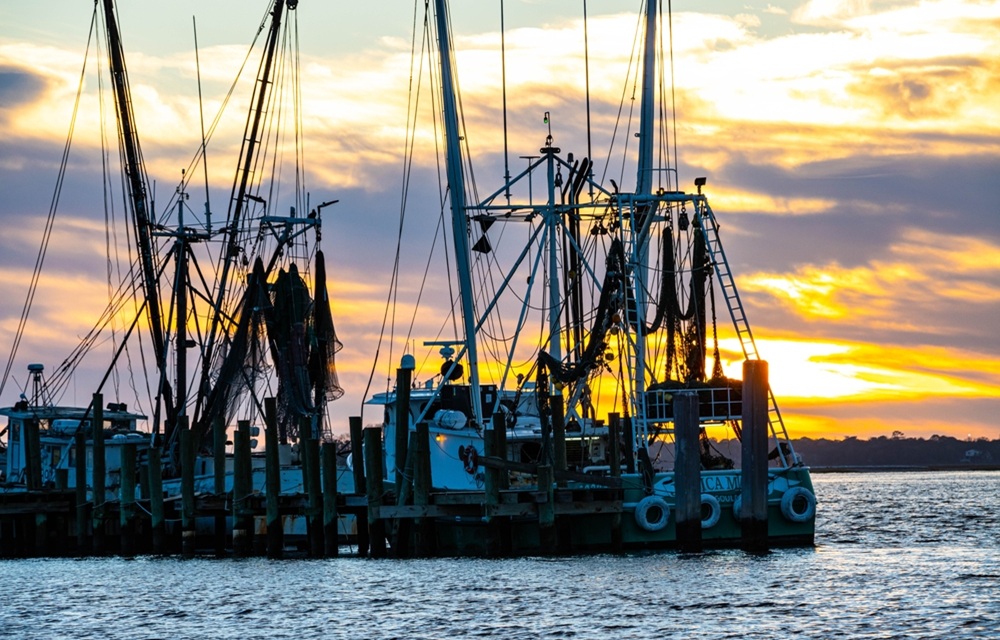
Commercial shrimpers in the U.S. have long decried the impact foreign shrimping has had on their businesses, calling on the federal government to act against shrimp imports and provide financial relief to struggling shrimpers. Though the Department of Commerce has issued antidumping duties on some foreign shrimp exporters, it has so far declined to use the fishery disaster program as a response to shrimp imports.
In 2023, the Southern Shrimp Association campaigned for state governors to petition the department for a fishery disaster determination based on the impact of foreign shrimp, and two did. Ultimately, then-NOAA Assistant Administrator Janet Coit rejected the requests, arguing that the law only applies when fishers are unable to access a resource, not when they choose not to fish it for economic reasons.
“The MSA requires that a fishery resource disaster must be a result of a natural cause, discrete anthropogenic cause, or undetermined cause, including a cause that occurred not more than five years prior to the date of a request for a fishery resource disaster determination that affected such applicable fishery,” Coit wrote in her response. “In this instance, because the resource exists and is accessible, and the decision not to fish (i.e., not to access the resource) is based on economic factors, rather than inaccessibility of the resource, the allowable cause criteria for a fishery resource disaster are not satisfied.”
In response, U.S. Representative Nancy Mace (R-South Carolina) introduced the Protect American Fisheries Act in 2024, which would have amended the law to allow consideration of “economic causes” in making a fishery disaster determination.
"Our domestic fisheries are under assault not only from illegal and subsidized foreign competition but also from bureaucratic red tape failing to protect American industries. The Protect American Fisheries Act takes a stand against these harmful practices and the inefficiencies in our system allowing them to persist. This legislation ensures we can cut through the red tape, defend the livelihoods of hardworking American fishermen, and strengthen our coastal economies by targeting illegal fishing, predatory pricing, and foreign market distortions," Mace said when she introduced the first version of the bill.
The original bill was endorsed by 20 fishing organizations, including the Southern Shrimp Alliance, the Georgia Commercial Fishermen's Association, and the South Carolina Shrimpers Association.
However, no action was taken on the proposal during the previous session of Congress, and the bill died.
Now, Mace and eight cosponsors have reintroduced the legislation, hoping the new Congress will be more receptive to the bill.
If passed, the Protect American Fisheries Act would define an “economic cause” as any activities carried out by foreign persons, governments, or institutions that distorts the fisheries market, disrupts a sustainable harvest, or hinders the economic viability of a fishery. According to the bill's text, that would include IUU fishing, forced or child labor, predatory pricing, and subsidies.
