





China’s shrimp consumption has remained relatively flat in the first half of 2026, but its imports of the species are up significantly year over year.
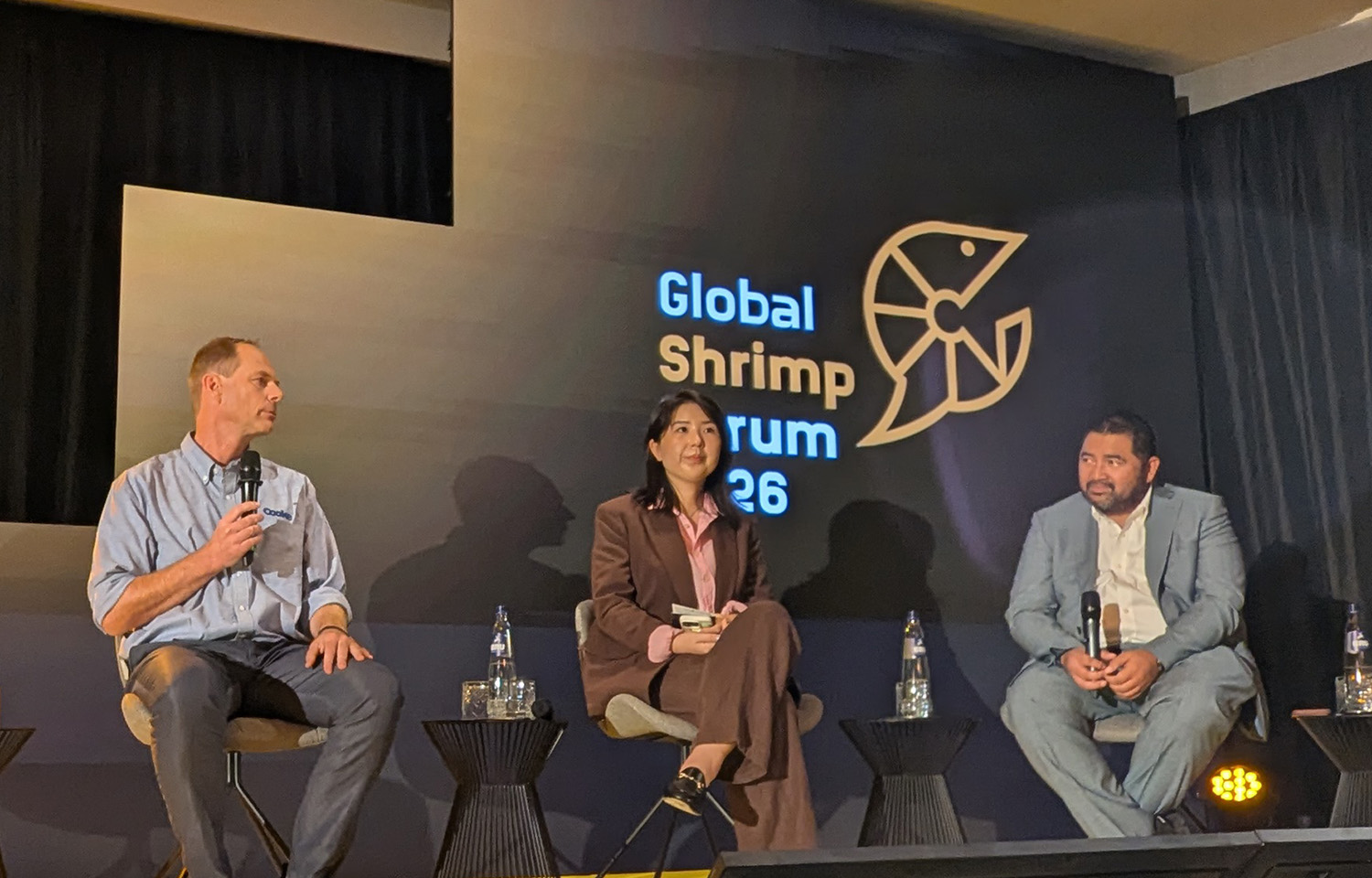
Statistics shared during the Global Shrimp Forum in Utrecht, the Netherlands showed China’s imports of shrimp in Q1 2026 were up 25 percent compared to the same period of 2025, and had hit a new all-time-high for the quarter. The story was the same in Q2 2026, with imports up 20 percent, and also reaching all-time-highs for the period.
Global Shrimp Forum Director and Co-founder Willem van der Pijl said the timing of Chinese New Year always impacts import numbers on whether shrimp is imported in November and December or January and February, but even that doesn’t fully explain the surge.
“You can see in at least May and June that the volume was still significantly growing,” van der Pijl said.
According to trade statistics, China’s imports of shrimp in May were up 15 percent, and in June they were up 13 percent. July was the only month that showed any signs of slowing, and imports then were still up 2 percent. That month was also when China decided to impose restrictions on certain imports of Ecuadorian shrimp, which may have influenced the decrease.
Despite that, Ecuador has seen 21 percent growth in its exports to China in 2026.
“Ecuador this year is at 21 percent growth, almost 500,000 metric tons [MT] to China, in only half a year,” van der Pijl said.
India has also seen growth, with its shrimp exports to China increasing 23 percent so far in 2026, hitting nearly 100,000 MT.
“That’s primarily headless shell-on for reprocessing, but also monodon,” van der Pijl said.
Across other major shrimp producing countries, imports are up across the board as well. China’s imports from Thailand are up 11 percent, from Vietnam are up 157 percent, from Indonesia are up 49 percent, from Myanmar are up 61 percent, from Saudi Arabia are up 48 percent, and from Peru are up a whopping 639 percent compared to the prior year.
“You can see that it was not only the two major markets that were going, it was across the board,” van der Pijl said.
Alongside the growth came a drop in average value per kilogram. Ecuador’s average import value per kilogram dropped to roughly USD 4.50 (EUR 3.92) per kilogram in July, and India’s price was just over USD 5.00 (EUR 4.36).
“China might for the first time exceed one million MT of imports by the end of this year,” van der Pijl said.
Kelly Wang, the director of overseas business at Optimize Integration Group, said her data aligns with what van der Pijl collected and puts China’s shrimp imports up 22 percent in H1 2026 compared to the same period of 2025.
Wang said in her work talking with Chinese importers, the story isn’t as positive as the increased numbers make it seem.
“If you talk with the Chinese importers, you cannot feel that good,” Wang said.
Wang said the increase in imports is also coming as China remains a major shrimp producer in its own right, producing 2.5 million pounds of product in 2025, and it will likely remain that high in 2026. She added that most consumption is of local shrimp, because the Chinese market prefers fresh or live rather than frozen.
Wang said she has investigated why there’s a big discrepancy between higher import numbers but gloomy sentiment among importers, and said that when she examined the data it seems as though the Chinese public can’t consume the volume of shrimp the country is importing.
Wang speculated that the reason imports are up is because of fears over the uncertainty of the supply given China’s past total bans on its largest shrimp trading partner Ecuador, as consumption is flat.
“The Chinese people really can’t eat or consume the 22 percent increase in volume in the first half of the year,” she said.
Total retail sales in the first half of 2026 across multiple channels have only increased by single-digit percentages, with things like catering revenue climbing just 2.8 percent, and large scale retail only seeing a 1.8 percent increase in volume.
“So we can see the consumption in China is not as fast as the volume,” Wang said. “Consumption is increasing, but much more slowly than we buy.”
