




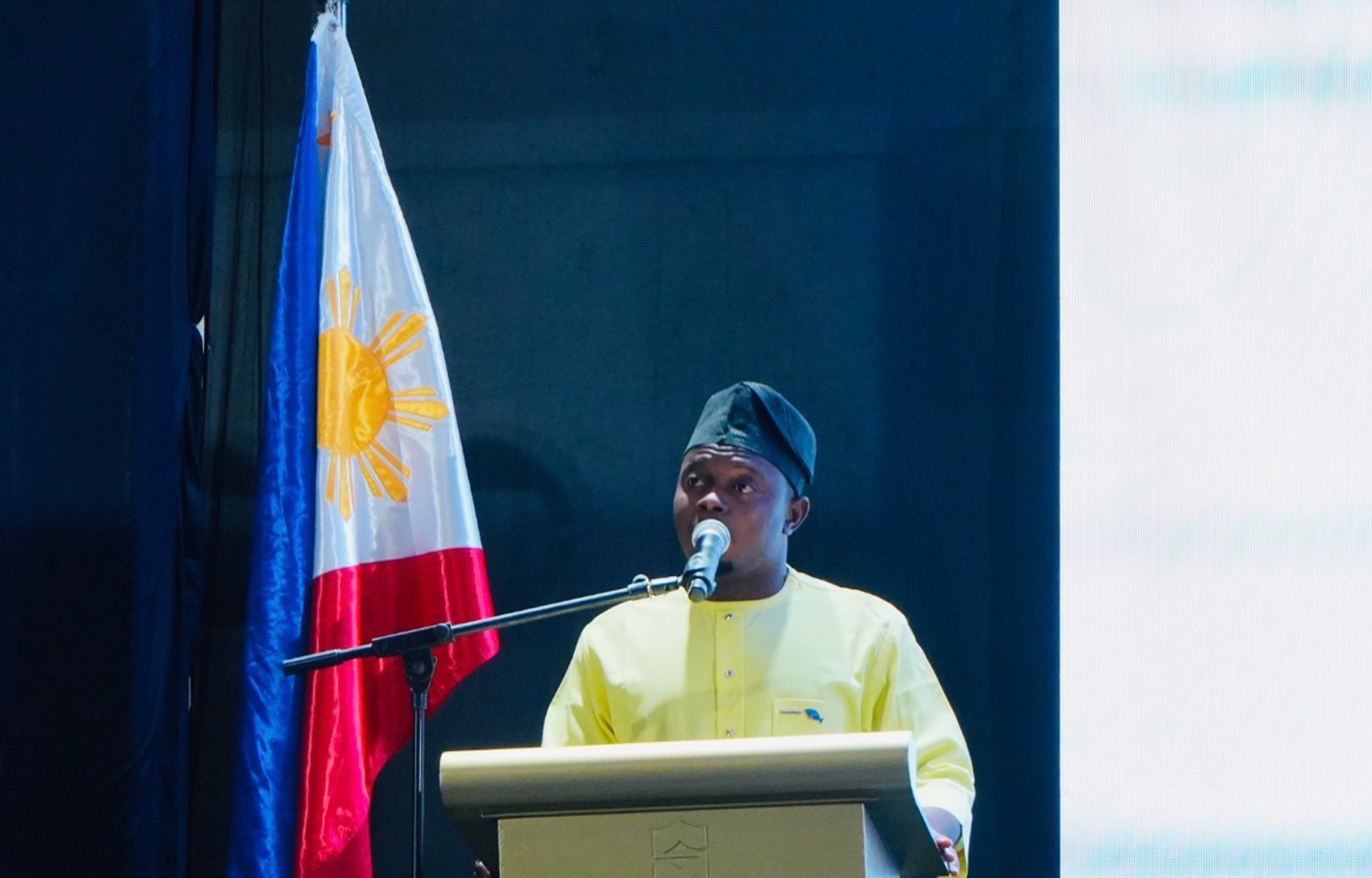
Salifu Eyiojotule Daniel is the founder and CEO of AquaProX Africa, a youth-led aquaculture innovation organization based in Abuja, Nigeria.
His work focuses on sustainable aquaculture, youth empowerment, food security, technology adoption, and blue economy development across Africa. He is currently leading the development of the AquaProX Hub, an initiative aimed at advancing aquaculture training, innovation, and enterprise development in Nigeria.
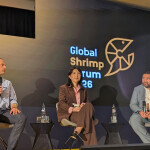
I recently traveled to the Philippines to participate in the Seafood & Fisheries Emerging Technologies (SAFET) Conference in Cebu.
I went there to speak about aquaculture, innovation, and the future of fisheries technology. I expected to learn, meet people and exchange ideas. I did all of that. But I also came back with a question that has stayed with me: If integrated agriculture-aquaculture can contribute to food, income, resource efficiency, and resilience, why does Africa still struggle to move it from promising projects to functioning food systems?
The question is not whether the idea works. The evidence increasingly says that it can. The harder question is why we have not built the systems necessary for farmers to keep doing it.
Integrated agriculture-aquaculture is not a new idea. Across different contexts, farmers have integrated fish with rice, vegetables, livestock, and other agricultural activities to make better use of land, water, nutrients, and labor. Recent research in Africa is adding to that evidence.
A 2024 systematic review of integrated rice-fish farming in Africa found improvements in several areas, including fish growth, farm income, nitrogen-use efficiency, and management of weeds, pests, and diseases. The study also found that integrated systems can generate additional economic value compared with rice monoculture.
More recent work in Nigeria has also demonstrated the financial potential of integrated systems. A 2026 study of integrated rice-fish farming in Kebbi State found substantial profitability from a demonstration system, with fish contributing significantly to overall returns.
This is important because it changes the conversation. We are no longer asking whether farmers can theoretically integrate fish into agricultural systems. We are asking why practices with demonstrated potential remain relatively limited in scale. And that brings us to the real problem.
Africa does not necessarily have an integrated agriculture-aquaculture technology deficit. It has an adoption-system deficit.
One of the things that became clearer to me in Asia is that successful aquaculture does not exist in isolation. A farmer does not adopt a technology simply because someone demonstrates it to them.
They adopt it when the surrounding system makes adoption possible. They need access to seed, feed, water, knowledge, finance, markets, extension support when something goes wrong, and policies that do not work against them.
And, perhaps most importantly, they need to believe that the system will still work after the project supporting it has disappeared.
This is where many African interventions struggle. A project arrives. Farmers are trained, demonstration ponds or integrated plots are established, results are produced, reports are written, and the project ends.
Then the farmer is left with the same questions: Where do I get fingerlings? How do I finance the next cycle? Who helps me when water quality deteriorates? Where do I sell? What happens when the cost of feed increases?
The problem is not that the pilot failed. The problem is that the system around the pilot was never built to survive without it. That distinction matters enormously. A project can demonstrate what is possible. A system determines whether farmers can continue doing it.
My experience in the Philippines did not convince me that Africa should simply copy Asia. That would be an oversimplification. Africa has different farming systems, institutions, markets, ecological conditions, infrastructure challenges and investment realities.
But Asia made one thing particularly difficult to ignore: technology becomes powerful when it is embedded in an ecosystem. Aquaculture development is not only about fish production. It is about the relationship between farmers, researchers, extension systems, government, finance, markets, technology providers and consumers.
Over time, those relationships create institutional memory. Farmers learn, researchers learn from farmers, extension systems carry knowledge forward, businesses respond to demand, policies evolve, and markets develop.
The next project does not necessarily start from zero because the previous intervention has left something behind. That is the part of the Asian experience that Africa should pay closer attention to. Not the technology alone, the architecture around the technology.
There is certainly a case for greater investment. But I think the question is more complicated than simply saying Africa has not received enough funding. Africa has had integrated aquaculture projects. Nigeria, Malawi, Zambia, and Mali have had them. Across the continent, development organizations, research institutions and governments have invested in different forms of integrated agriculture-aquaculture.
The problem is what happens next.
Too often, investment follows the logic of the project rather than the logic of the food system. Funding is designed around a defined period, defined outputs, and defined beneficiaries. But adoption does not operate according to project timelines. Farmers do not stop needing extension services because a grant has ended.
Markets do not become predictable because a project report has been submitted. Infrastructure does not become sustainable because a pilot demonstrated that it was technically feasible. This is why I increasingly see the funding gap as both a cause and a symptom.
Insufficient and fragmented investment makes scaling difficult.
But the deeper reason investment remains fragmented is that integrated aquaculture itself is often treated as a niche intervention rather than part of a broader food-system strategy. That is the cycle we need to break.
If we genuinely believe integrated agriculture-aquaculture can contribute to food security, nutrition, livelihoods and climate resilience, then our investment model needs to change.
We should stop asking only: “Can this project work?”
We should also ask: “What would it take for this system to work at scale, and what will remain when the project ends?”
That means investing beyond the demonstration farm. It means supporting research and farmer-led experimentation, strengthening extension, improving access to quality fingerlings and feed, developing appropriate financial products for farmers, connecting producers to markets, integrating nutrition into the conversation, improving water governance and infrastructure, generating better climate and production data, and putting young people at the center of the transformation.
Africa has one of the world’s youngest populations, yet youth are still too often positioned as beneficiaries of agricultural programs rather than as entrepreneurs, technology developers, researchers, farm managers and system builders.
If we want aquaculture to scale, we need to build human capital alongside physical capital.
Perhaps the biggest change should be in how we define success.
A project should not be considered successful simply because it trained 500 farmers, established 20 demonstration farms or produced a technical report. Those are activities. The harder questions are: Are farmers still using the system three or five years later? Are they making money from it? Are households consuming more nutritious food? Has the system made them more resilient to climate and market shocks? Have local businesses emerged around it? Has government adopted the approach? Has extension continued after donor funding ended?
These are much harder indicators.
They are also much closer to what development is supposed to achieve. If adoption disappears when the funding disappears, perhaps we should question whether we funded adoption at all.
My trip to the Philippines did not make me return to Nigeria believing that Africa is behind Asia in every aspect of aquaculture.
It made me return with a different way of looking at the problem What I saw reminded me that the biggest opportunity may not be discovering another technology.
It may be building the systems that allow the technologies and knowledge we already have to survive, adapt and scale.
Africa does not need another successful project that ends with a report. It needs aquaculture systems that remain successful after the project ends.
