






According to U.S. legislators, Alaska fisheries stakeholders are set to benefit from U.S. President Donald Trump’s “Restoring American Seafood Competitiveness” executive order and other policies his administration has laid out.
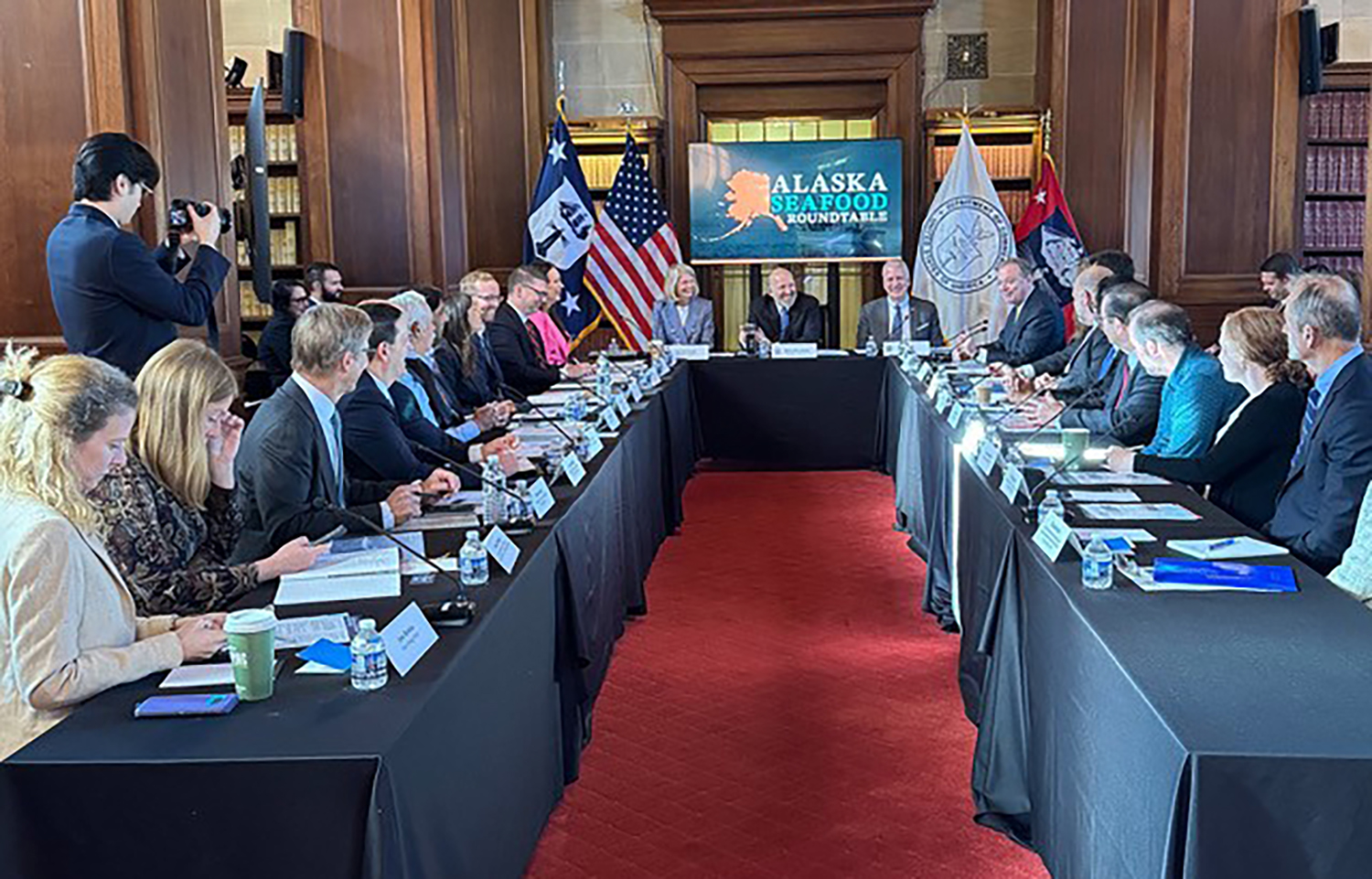
On 9 September, U.S. senators Dan Sullivan and Lisa Murkowski, as well as Congressman Nick Begich, all of whom are Republican congresspeople representing Alaska, convened a roundtable meeting at the U.S. Department of Commerce in Washington, D.C., which gathered Alaska community and fisheries leaders, Secretary of Commerce Howard Lutnick, U.S. Secretary of Agriculture Brooke Rollins, and other senior federal officials.
At the roundtable, the group discussed the 17 April executive order Trump wrote on seafood competitiveness, which directs Lutnick and NOAA Fisheries to identify fisheries regulations that should be streamlined or eliminated. In late August, NOAA Fisheries opened a public comment period for feedback on how the agency should implement the order.
The goal of the roundtable was to discuss policy priorities for the Alaska seafood sector in particular, including ways the Trump administration can address threats to wild Alaska seafood production and marketing and the U.S. seafood supply chain as a whole.
“The men and women of Alaska’s seafood sector are tough, patriotic, and resilient entrepreneurs who do not often seek help from their government,” Sullivan said. “But, these great Americans and the communities they support are facing a perfect storm of challenges: the accelerating costs of aging fleets and infrastructure, unfair competition from America’s adversaries – particularly Russia and China – and burdensome federal regulations.”
Begich added that regulatory barriers are currently resulting in heavy costs to capital equipment while foreign competitors are “heavily subsidized, engage in illegal, unreported, and unregulated activities, operate with low or in some cases no environmental standards, and utilize labor forces in ways that Americans would find abhorrent.”
“Longstanding challenges require new solutions, and in order to address the structural competitive disadvantages American companies experience in the international fishing industry, we must ensure American producers have an advantaged playing field at home,” Begich said. “Capital formation, international trade agreements, treaties, and American production provide the tools necessary for American industries to compete.”
Sullivan said that the executive order gives the U.S. government an opportunity to help tackle these challenges and protect the tens of thousands of jobs and billions of dollars in economic activity generated by domestic seafood producers.
The Trump administration is “clearly seeking to elevate the seafood industry as a vital part of our nation’s economy following the directive of the president’s executive order,” Murkowski added.
“I appreciate that the administration recognizes that a whole government approach is required to ensure that our seafood industry remains the gold standard worldwide,” Murkowski said.
Seafood stakeholders outside of Alaska have also welcomed the executive order.
When the order was announced, the New England Fishermen’s Stewardship Association (NEFSA) said it breaks from “decades of overregulation.”
“Today’s order refocuses fisheries management where it belongs – the success and prosperity of American fishermen,” NEFSA CEO Jerry Leeman said at the time.
However, other organizations have said that other Trump administration policies and actions contradict some of the goals laid out in the order – including the widespread firings of NOAA employees that have heavily reduced the agency's capacity to perform its duties.
“Between firing experts at NOAA, delaying fishing seasons, and disrupting ocean science and data collection, the Trump administration is causing unprecedented chaos,” Ocean Conservancy Senior Director of the Fish Conservation Program Meredith Moore said in April. “Our fisheries need more investment and support in order to tackle the issues of seafood trade and markets, modernizing our data systems and responding to real-time ocean conditions. A weakened and understaffed NOAA will not be able to deliver on these promises.”
