




After three straight months of growth, Vietnam’s seafood sales to the U.S. dropped in June.
June marked the first monthly year-over-year decline in Vietnam’s seafood exports to the U.S. since February, with total export value diving 17.7 percent to USD 131 million (EUR 113 million), the Vietnam Association of Seafood Exporters and Producers (VASEP) said on 17 July.
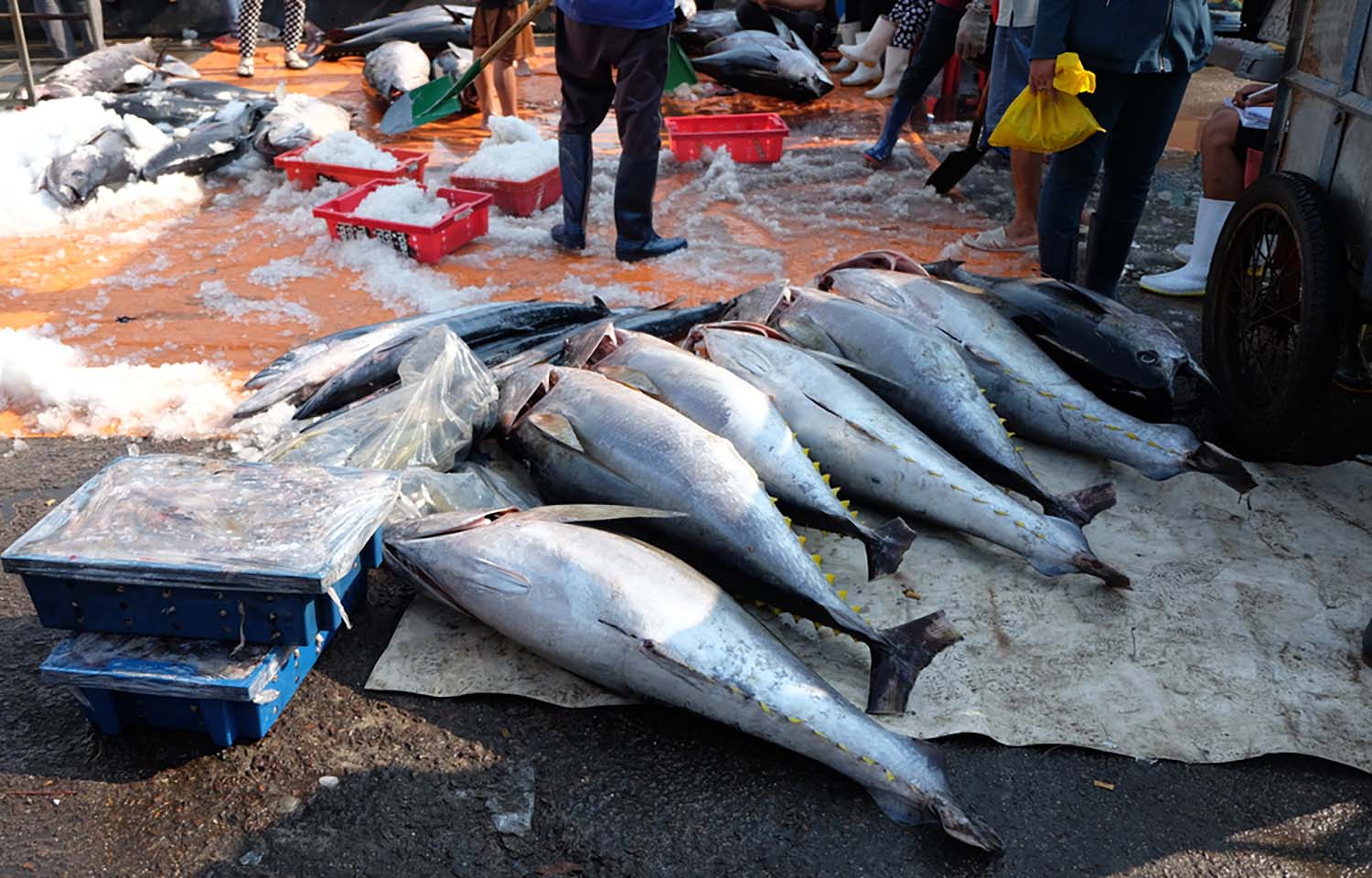
The decrease was largely driven by the downward trend in sales value of shrimp and tuna – two of Vietnam’s key seafood products. The export value of shrimp from Vietnam to the U.S. plunged 36.5 percent to USD 47 million (EUR 40.6 million) in June, while tuna sales dropped over 40 percent to USD 18 million (EUR 15.5 million). This marked a sharp reversal from May, when shrimp and tuna sales to the U.S. surged 66 percent and 37.5 percent, respectively, VASEP said.
VASEP largely attributed the decline to exporters’ concerns that the three-month high tariff suspension with the U.S. originally set in April would trigger a steep 46 percent duty in July if Vietnam failed to reach a deal with the Trump administration, which it eventually did strike. Not knowing this at the time however, many had rushed shipments to the U.S. ahead of the deadline to take advantage of the lower 10 percent rate in effect during the suspension, according to VASEP.
This rush is reflected in the growth of Vietnamese exports during the first half of the year.
Vietnam shipped seafood products worth USD 905 million (EUR 781 million) to the U.S. from January to June, marking a 17.5 percent rise year over year.
Rapid and unpredictable tariff changes are creating a highly volatile trade environment, disrupting production planning, contract negotiations, and deliveries for both U.S. and exporting businesses, VASEP said, adding that in sectors like seafood, where seasonality and logistics are critical, this volatility amplifies financial risk across the entire supply chain.
As a response, Vietnamese shrimp companies are going to continue to closely monitoring U.S. tariff developments, Siam Canadian Sales Director for Vietnam Vo Thi Tuong Oanh said.
“Switching to other markets is an option for factories. However, other markets can not cover all the volume the U.S. market [accounts for],” Oanh told SeafoodSource.
Sao Ta Foods Chairman Ho Quoc Luc, who is a former president of VASEP, said he believes that U.S. tariffs of 20 percent, though down from the originally proposed 46 percent, are likely to deal a blow to Vietnam’s shrimp industry, which is already grappling with other protectionist measures in the U.S., including antidumping and countervailing duties. Compounding these challenges are widespread disease outbreaks, which have led to limited supply and rising domestic prices, Luc said in a statement on 4 July.
VASEP General Secretary Nguyen Hoai Nam also recently said that VASEP is concerned about the unusually high tax rate in the U.S. Department of Commerce (DOC)’s preliminary findings on certain Vietnamese shrimp firms, suggesting it may be due to calculation errors. A bigger problem, though, according to Nam, is that the U.S. is not accepting any more submissions from Vietnam, meaning that even complete and transparent data won’t be considered.
Regarding Vietnamese tuna, many exporters are seeking to diversify and reduce reliance on the U.S. To support this shift, companies are calling on the government to ease domestic supply constraints, particularly by unlocking access to tuna raw materials and streamlining the issuance of catch certificates, VASEP said on 18 July.
Unlike shrimp and tuna, the value of Vietnam’s pangasius exports to the U.S. rose sharply in June, climbing 22.8 percent year over year to USD 33.7 million (EUR 28.9 million), driven by continued demand for the affordable fish, according to VASEP.
In the first half of 2025, Vietnam exported USD 175 million (EUR 151 million) worth of pangasius to the U.S., which was up nearly 10 percent from the same period in 2024.
While acknowledging stable demand for low-cost pangasius in the U.S. market, VASEP noted on 21 July that much of the recorded growth stemmed from orders that came early in the year. As such, the June increase does not accurately reflect current market dynamics, the association said.
Still, while prices in other seafood segments remain under pressure, pangasius has bucked the trend. Its prices have remained relatively high compared to last year, bringing tangible benefits to local farmers.
VASEP said 7 July that in Dong Thap Province, farmgate prices for pangasius ranged between VND 31,500 and VND 31,800 (USD 1.20 and USD 1.22, EUR 1.03 and USD 1.04) per kilogram, earning farmers a net profit of VND 6,000 to VND 7,000 (USD 0.23 and USD 0.28, EUR 0.20 and EUR 0.23) per kilogram.
Buoyed by recent gains, many farmers in Dong Thap and other provinces across the Mekong Delta – home to the vast majority of pangasius production in Vietnam – have begun restocking their ponds.
Nevertheless, VASEP has urged caution, warning that any rapid, large-scale expansion could lead to oversupply and price instability.
“Experts advise that reinvestment decisions be made carefully to maintain a balance between short-term profits and the long-term sustainability of the industry,” the trade group said.
