




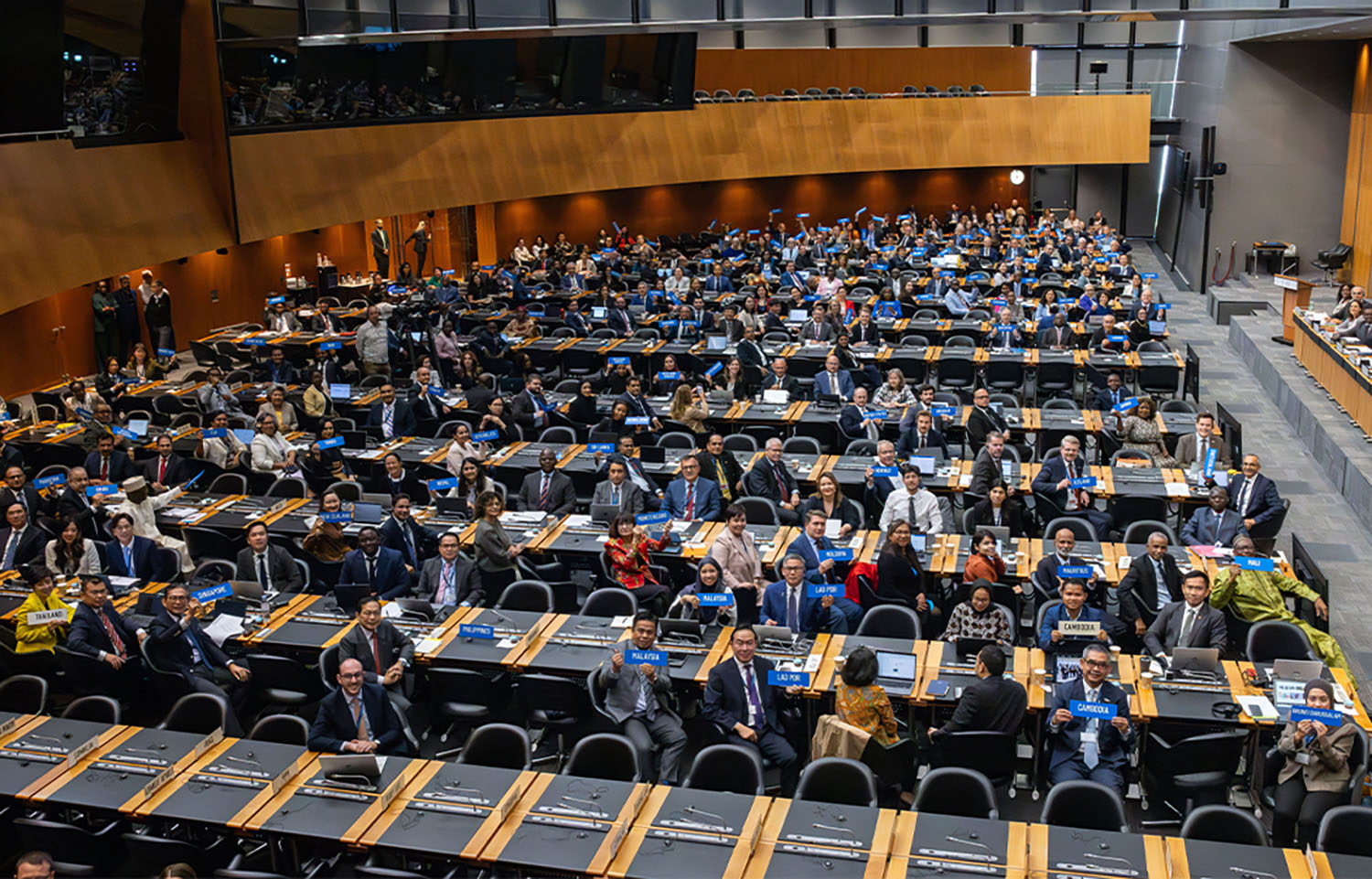
The World Trade Organization (WTO) announced on 15 September that its 2022 deal to end harmful fisheries subsidies has officially entered into force.
"At a time when the international trading system faces profound challenges, the Agreement on Fisheries Subsidies sends a powerful signal that WTO members can work together in a spirit of cooperation and shared responsibility to deliver solutions to global challenges,” WTO Director-General Ngozi Okonjo-Iweala said in a release. “The entry into force of this agreement stands as a reminder that many of the biggest challenges we face are more effectively addressed at the multilateral level. People and nations need a multilateralism that delivers – which is why today is so reassuring.”
To help developing coastal nations meet the goals laid out in the agreement, the WTO has opened a USD 15.5 million (EUR 13.2 million) fund comprising donations from the organization’s member nations. The fund will help these countries with technical assistance, such as building up their fisheries data collection infrastructure.
Only countries that have ratified the deal are eligible for support through the fund.
Daniel Skerritt, the senior manager for environmental nonprofit Oceana’s Science and Strategy team, told SeafoodSource that besides the fund, stipulations in the agreement that offer differential treatment should also aid developing nations in achieving the deal’s goals.
For example, “developing” and “least developed” countries are given two years from the date of entry into force before they are fully prohibited from granting or maintaining subsidies to vessels or operators engaged in illegal, unreported, and unregulated (IUU) fishing or related activities, as well as fishing for overfished stocks within their exclusive economic zones.
Skerritt explained that poorer members of the WTO, with an annual share of global marine capture production not exceeding 0.8 percent, also have less frequent data reporting requirements.
“Still, these countries will likely face challenges as, in general, their data availability and platforms are not as advanced as other members,” he said. “The additional funding and flexibility should make it easier for developing and least developed member countries to adhere to the agreement.”
While the deal is likely to cut down on IUU fishing and other activities harmful to the world’s oceans, major fishing nations such as Thailand, Vietnam, Indonesia, and India have yet to ratify the agreement.
