





The Vietnam Shrimp Association (VSA) has urged the nation’s government to restrict raw shrimp imports, arguing that competition from India and Ecuador is putting pressure on domestic farmers.
The association said that its requests stem from concerns raised by farmers, cooperatives, and aquaculture companies, particularly in the Mekong Delta, about foreign imports, which they blamed for putting downward pressure on domestic shrimp prices.
VSA cited prices for 30-count shrimp, which ranged from VND 160,000 to VND 220,000 (USD 6.20 to USD 8.60, EUR 5.70 to EUR 7.80) per kilogram in 2025 but fell to between VND 113,000 and VND 120,000 (USD 4.40 and USD 4.70, EUR 4.00 and EUR 4.20) per kilogram from March 2026 onward.
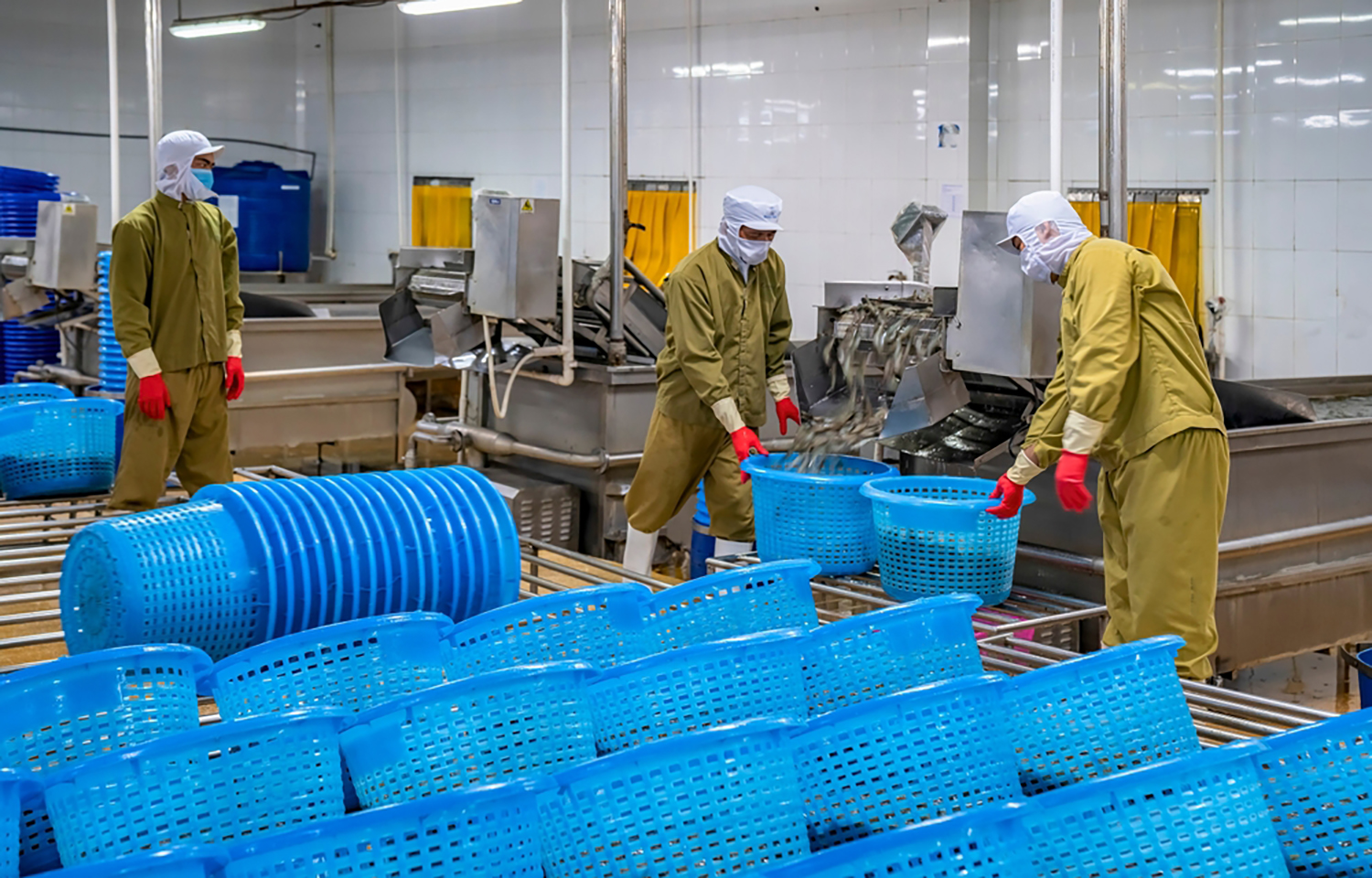
VSA estimated Vietnamese processors imported about 57,800 metric tons (MT) of raw shrimp during the first 10 months of 2026.
“This has raised concerns about competitive pressure on domestically produced shrimp, particularly as farmers continue to bear the costs of feed, seed, electricity, water treatment, and managing production risks,” VSA said.
To alleviate the issue, the association has asked the Vietnam Ministry of Agriculture and Environment to work with the Ministry of Industry and Trade on measures to minimize imports of foreign shrimp for processing, except when disease outbreaks or natural disasters disrupt domestic production.
Alongside import restrictions, VSA proposed an interministerial program to reduce shrimp farming costs and improve production efficiency focused on survival rates, feed conversion ratios, production costs, and farmer profitability. It also called for stronger domestic shrimp breeding capabilities, investment in farming infrastructure, and pilot supply chain models linking farmers, cooperatives, and processors through purchasing agreements.
Under the proposed models, cooperatives or farmer organizations would coordinate production, input suppliers would provide technical support, and processors would agree to purchasing arrangements based on defined quality standards.
