



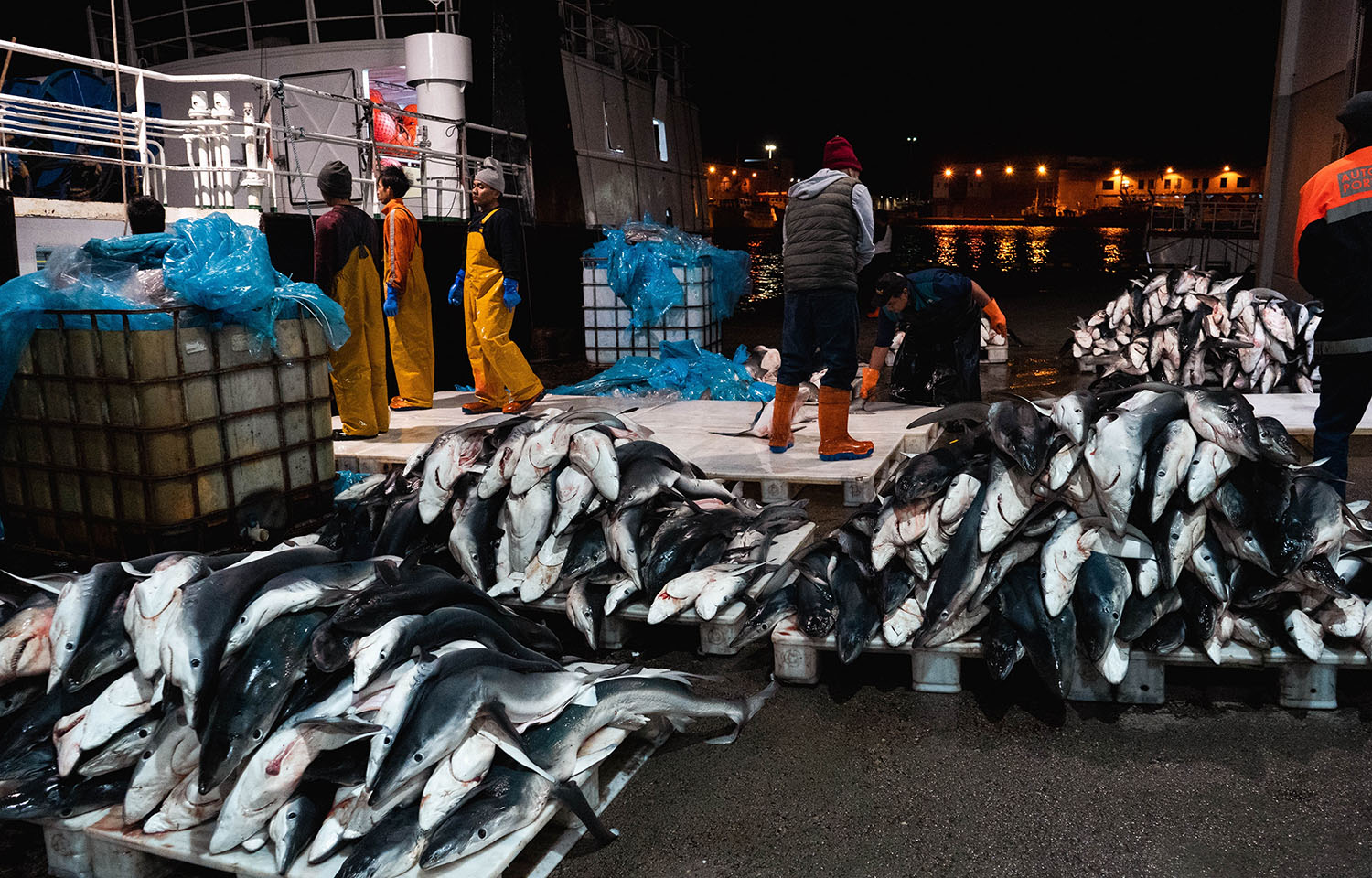
A survey of companies exporting Alaskan seafood to the European Union found that 94 percent of respondents reported that the E.U. CATCH program has caused significant shipping disruptions and increased costs with delays, higher cold storage costs, and penalties for delayed shipments during storage.
Conducted by Juneau, Alaska, U.S.A.-based Alaska Seafood Marketing Institute (ASMI), the survey also showed that 75 percent of respondents have been forced to redirect products or consider alternative markets.
These issues echo concerns highlighted by ASMI, the Pacific Seafood Processors Association, At-Sea Processors Association, and the National Seafood Association with the program's implementation, which they claim does not acccount for the unique way salmon harvests are collected in Alaska. In a release, ASMI said the industry fears Europe will lose access to affordable Alsakan seafood – a market that generates USD 1 billion (EUR 912 million) annually – as soon as 1 December.
“This survey documents what we have heard anecdotally,” Pacific Seafood Processors Association President Julie Decker said. “The EU CATCH system is not working as promised – as a simplified, digital system intended to stop IUU fishing. Instead, law-abiding companies are incurring tremendous costs that will trickle down to EU consumers. Additionally, Alaska seafood sellers are considering diverting seafood elsewhere, or have already stopped sales to the EU.”
Those calls for reform were detailed in a whitepaper published by ASMI in September. Survey respondents shared that the CATCH program acts as a significant non-tariff trade barrier for a product that is legally in the marketplace and without change, will massively limit the availability of Alaskan seafood in the European market due to higher costs.
Another concern highlighted in the survey was the required CATCH documentation paperwork, which respondents called “excessively detailed and burdensome,” causing delays in shipping times and additional staff needed. Respondents also reported that the amount of documentation depends on the type and size of shipment, but larger loads can need more than 140 pages taking more than 80 hours.
Following the survey, organizations are calling for collaboration between U.S. and E.U. authorities, industry, and trading partners to make amendments to the E.U. CATCH system.
“A one-size-fits-all approach to combating IUU fishing does not work in the real world," ASMI Executive Director Jeremy Woodrow said. "The unnecessary bureaucratic burden that CATCH places on highly regulated, legally harvested seafood must change. We stand committed to work alongside the EU to address this challenge and create realistic solutions to combat IUU fishing, while providing reliable market access for highly regulated fisheries."
The E.U. CATCH system was implemented in January 2026, and has remained under fire from the commercial fishing industry since. In July 2026, industry representatives in Europe spoke out about the system's gaps, even calling it "a massive fraud." Several of the complaints fall around the lack of an interoperable digital infrastructure for traceability, forcing some companies to hire additional labor to manually enter product information into CATCH. Many of the smaller third-party systems lack the manpower and ability to fulfill the CATCH system's documentation requirements.
Prior to the implementation, the CATCH program's enforced rollout date in the U.S. was delayed to give seafood processors and harvesters more time to meet the requirements. That came after public calls to make amendments to the program by industry leaders, which have still not been answered several months later.
The program was built around the goal of strengthening seafood import control schemes with national and international conservation and management measures to eliminate illegally harvested seafood in the marketplace. The program was intended to act as an E.U.-based real-time system to collect and process catch certificates and fishery paperwork, acting as a security measure to flag or approve products ahead of shipment.
"CATCH aims to provide a single database for EU Member States to use, allowing real-time monitoring of import documentation controls," according to E.U. regulators. "CATCH should help member states detect suspected fraud and abuse of the paper-based version, simplifying and speeding-up controls at the EU border by reducing the administrative burden of import authorities."
