






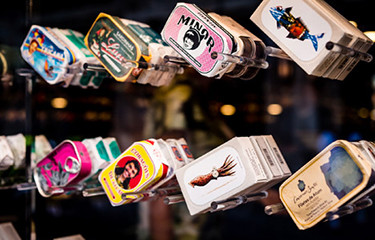
Perched on a sleepy side street in Sydney, Australia's hip suburb of Newtown sits Continental Deli Bar and Bistro, its menu proudly boasting “Yes We Can."
With a strong focus on tinned seafood from around the world, as well as many they can themselves, Continental Deli Bar and Bistro joined the line-up of restaurants around the world boasting a menu elevating the humble canned fish to new proportions.
This is not about those oily sardines in a tin, or canned flavorless tuna that grace every supermarket shelf. At these restaurants, chefs source canned goods from around the world from small artisanal canners or local fishers who care about the produce. Think anchovies from the Bay of Biscay, clams and cockles from Galicia, sardines from France, and so much more.
Or course, tinned fish is nothing new. Invented in the early 1800's in France by Nicolas Alpert, it slowly spread around the Mediterranean through chance or circumstance. Arriving in Spain on a French shipwreck, the country was quick to embrace the preservation method and now make what many say are the best "conservas" in the world.
It has been part of Portugal’s culinary heritage since 1853, when their national canning industry was born. In 1930, Portugal surpassed France to become the era’s largest producer; they still account for about a third of the fish brought to port each year.
Tinned fish fast became Portugal’s fast food during times of economic turbulence and food scarcity, as it was inexpensive and a good source of protein. And locals still eat it with everything, whether perched on a salad, squashed onto a thick slab of hot buttered bread, or lovingly broken up through pasta.
In this age of sustainability awareness, tinned fish can be a more sustainable source, which is one reason why it is being advocated by celebrity chefs such as London’s Jamie Oliver. Chefs keen to embrace the trend are sourcing from smaller boutique canneries that work with fisherman who sustainably catch in season, hand-pick and clean with attention to the quality of oil and flavoring ingredients, and use no preservatives.
Read on to discover five restaurants around the world that have made canned or tinned seafood their specialty and have made a name for themselves doing so.
 1. Tin Can, London
Though now closed, Tin Can cannot go without a mention. Imagined by a team of architects, A-LA, the light bulb moment occurred during a trip to Lisbon when they visited a small restaurant occupying a converted fishing tackle shed that served a menu heavy on tinned fish.
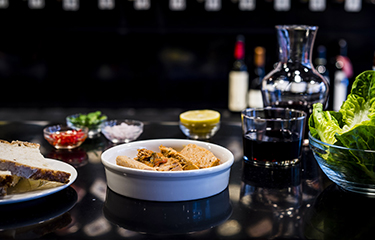
More than 100 tins of seafood were consumed by the team until the final 30 were decided upon and a menu created that could be enjoyed tapas style. The list included cod liver from Iceland, tuna fillet caught in the crystalline waters of the Azores marinated in fennel seeds and olive oil, miniature sardines in spicy olive oil, trout in a pickled sauce, and squid in its own ink. Most of the items sourced had never been seen in the UK before, which could partly explain why the space was an immediate hit with locals and travelers alike.
“Sourcing is a big deal for Tincan”, partner Arrocet says. "Family-run businesses make better products." His team, he said, scrutinized the credentials of all of their suppliers. When they first opened Tin Can, the owners faced criticism over one of their blue fin tuna products — so they stopped stocking it.
 2. Continental Deli Bar and Bistro, Newtown, Sydney
This very unassuming bar and bistro (which also doubles as a take-out deli) sits on Australia Street. Founded by Elvis Abrahanowicz (from Argentina); Joe Valore of Porteño; and Jesse Warkentin and Michael Nicolian (of Bodega and Gardel’s Bar, respectively); it has quickly become an institution for not only it’s home-made and globally sourced canned seafood, but also its clever sense of humor. Cocktails include the Mar-tinni and Can-Hatten, which also happen to be poured out of tins.
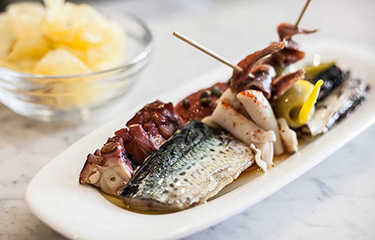
On their menu, you can order individual seafood by the can, or go all out and get an ensemble of these treasures on a platter – wonderful for sharing with some crusty bread. Here a just a few on their list of 20 tinned delicacies.
- Don bocarte boqueróns – from one of Europe’s leading producer of high quality canned seafood, these white anchovies are covered in cider vinegar and extra virgin olive oil, and flavored with spices. The result is a delicate flavor and firm texture
- Cambados white clams - harvested by hand from the beaches of Galicia, Spain, only the largest plumpest clams are selected for the Conservas de Cambodas. Cooked in sea water, and lovingly placed one by one in the can then covered with a briny water, the clams taste as though you are sitting on the beach in Galicia eating them fresh from the water.
- Cambados Baby Eels – Also named Angulas, these tiny baby eels are seen as an ultimate Spanish delicacy. Harvested by net from the streams of Northern Spain, they are carefully cooked in olive oil with a touch of red pepper.
- Tinned Octopus – One of Continental’s own canning creations, sourcing octopus from Freemantle in Western Australia, they place it in the tin with paprika, onions and a Galician sauce from Spain. The tin is then sealed and cooked in water under pressure, resulting in plump, tender tentacles.
 3. Maiden Lane, New York
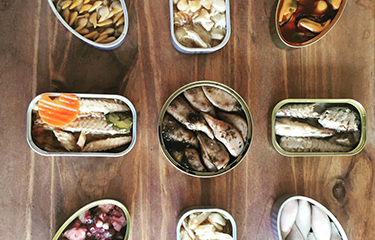
Opened in 2013 by Gareth Maccubbin in the East Village, Maiden Lane has cleverly merged European tinned fish with the American dining scene. On the day of this story, 27 tinned items were on offer, categorized by the variety of seafood, then the method of preparation and source. Their goal was to provide a trend-worthy European conservas bar with New York vibe and, judging from the press, have achieved just that.
Maiden Lane chefs are careful to source from chefs who use only sustainable methods of catching and packing by hand, to maintain the integrity of the seafood. They are also exclusively devoted to small artisanal producers. In addition they offer a carefully curated selection of small production beers, spirits and wines, mainly from coastal regions.
Here’s a sampler of what they have on offer:
- Gonidec Sardines with basil and thyme - Les Mouettes d’Arvor sardines are fished on day boats, right off the coast of Brittany. Unloaded and brought to the cannery during the night, they are processed in early morning, sorted by size into frying trays, prepared according to recipe with well-balanced seasonings, and placed by hand in each tin for freshness and quality. These are prepared with organic basil, organic thyme, and packaged in organic extra virgin olive oil. The manufacturer of Les Mouettes is Conserverie Jacques Gonidec, the first cannery in France to hold the Marine Stewardship Council (MSC) certificate not only for their sustainable fishing practices, but also for the canning process. This seafood’s eco-label highlights awareness to responsible companies involved in the environmental development.
- Cabo de peñas small scallops in sauce – Small scallops in a Galician-style sauce, made with tomato, olive oil, onions, sweet pepper, spices and salt.
- Econe Oyster Co Spicy Oysters – from Willapa Bay Washington.
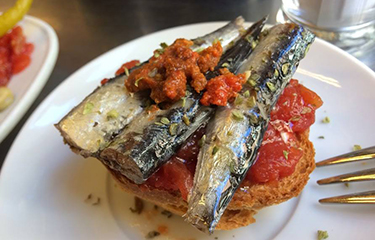 4. Quimet y Quimet, Barcelona
Walls lined with bottles of wine, vermouth, and spirits, this space has been a gradual evolution from humble beginnings to one of the hottest spots for good tapas and conservas. Upon entering you are whisked into a world of and culinary excitement.
Opening in 1914 as a wine shop, it has gradually added more to its beverage list, and food pairings that grow more delicious with the beverages as time goes on. The focus is on conservas, prepared simply but with exquisite accompaniments designed for pairing.
According to a recent review in Culinary Backstreets, “in a “montadito” of anchovies with Nevat (a soft Catalan cheese made with goat’s milk), tomato marmalade and chopped pickle, the vinegary pickle flavor is nicely balanced by the creamy cheese; the whole thing goes especially well with a glass of the excellent Yzaguirre Rojo Reserva, a sweet artisanal vermouth.”
With nearly 80 Tapas it’s easy to see why locals flock to Quimet y Quimet, where the owner likens fish conservas to the DNA of Catalonians.
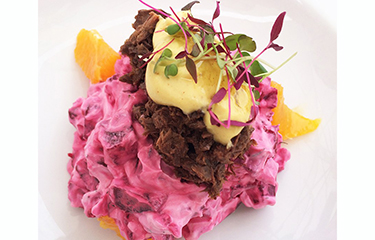 5. Can the Can, Lisbon
“We are a kitchen full of "Portugality", which represents the best of Portugal and the Portuguese. An openness to the world, a desire to run the world and welcome the world, which we want to do every day, in a unique square that holds so many details of the history of a Country.”, states the restaurant, which sits in Terreiro do Paço, Lisbon. Their claim for the restaurant is a gastronomy concept that, in addition to fresh produce, makes Mediterranean cuisine using the best of the national preserves in its dishes.
Once an old tavern, the interior is quite eclectic with wooden crates of canned fish, bottles of wine and olive oil, and other Portuguese gourmet items decorating the walls. A huge chandelier made with over three thousand cans of fish designed by Victor Vicente is hard to ignore as you enter.
Unlike many other restaurants who simply allow the canned fish to speak for itself, at Can the Can you’ll find their preserves taken to new heights by the creativity of the chef and a focus on healthy dishes. “Signature dishes can be thought of as the culinary equivalent of an artist finding their own style, or an author finding their own voice”, says the restaurant.
Signature dishes include:
- Mackerel with diced tomatoes in sweet potato puree, quince candied and fennel
- Smoked Eel, white bean puree, cucumber and oyster
- Mushroom portobello with smoked trout
- Marinated tuna stuffed with honey mustard in beetroot and orange salad
Here’s the recipe for the tuna, honey mustard, beetroot and orange salad:
Marinated tuna stuffed with honey mustard in beetroot and orange salad (Serves 4)
Ingredients for mustard and honey sauce (makes about 220 ml)
- 8 tablespoons mayonnaise (125 ml)
- 1 tablespoon light mustard (15 ml)
- 2 tablespoons Dijon mustard (30 ml)
- 2 tablespoons honey (30 ml)
- 1 tablespoon lemon juice (15 ml)
- 1/2 teaspoon curry powder (2.5 g)
- 1/4 teaspoon paprika / hot paprika (1.25 g)
Preparation
- In a small bowl mix well, with strong and fast movements, mayonnaise with the two types of mustard and honey. Add the curry powder and the hot paprika, mix well until obtaining a homogenous texture. Finally, add the lemon juice, continuing to mix until absorbed by the sauce.
- Put the sauce for at least 8 hours in the refrigerator, to cool and to get more consistent.
Ingredients for stuffed tuna
- 3 canned tuna sangacho in olive oil
- 2 oranges, to decorate
Preparation
- Open the preserves, strain the olive oil and separate the fillets. Season the tuna sangloin fillets with the mustard and honey sauce before putting them on the dishes.
- Peel the two oranges and separate into lumps, free of lumps and films. Reserve in the fridge.
Ingredients for beet salad
- 6 beets (approx 800 g)
- 1 tablespoon of salt
- 1 teaspoon of sugar
- 1 tablespoon of vinegar
Preparation
- Wash the beets and cut the stem next to the bulb.
- Place the beets in a saucepan, fill with cold water until completely covered, add salt and cook for about 40 minutes.
- After cooking, remove the beets, let cool and remove the peel. Then cut them into cubes.
Ingredients for beet marinade
- 6 tablespoons olive oil
- 4 tablespoons balsamic vinegar
- 1 clove garlic, crushed, processed into paste
- Juice of half an orange
- Fleur de sel
Preparation
- Mix all the ingredients of the marinade until they are wrapped and sprinkle the diced beets. Mix well and set aside in the fridge.
Ingredients for Beetroot Yogurt Sauce
- 4 tablespoons Greek yogurt
- 1 tablespoon olive oil
- 2 tablespoons of mustard seed
- Salt
- ground five pepper crushed
- bark of an orange peel
Preparation
- Mix all ingredients well and reserve in the refrigerator.
Final preparation
Serve ingredients on deep plates and place in the following order:
