
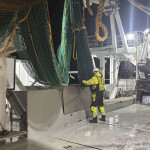

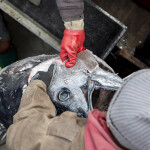


Alaskan lawmakers are celebrating the decision made this week by the United States Department of Agriculture and Secretary of Agriculture Sonny Perdue to approve a Section 32 purchase of USD 30 million (EUR 26.3 million) worth of Alaska pollock.
The fish will be used in various national nutrition assistance programming.
This purchase, encouraged by Alaskan Senators Lisa Murkowski and Dan Sullivan, will help to offset a loss of business due to retaliatory Chinese tariffs in response to those imposed by the Trump administration on Chinese products. Murkowski and Sullivan wrote Perdue a letter in September asking him to make a purchase of pollock to aid Alaskan fishermen who had been suffering from the escalating trade war.
“Alaska pollock is a significant and lucrative market for Alaska and the United States, accounting for one-third of our country’s seafood output. Unfortunately, in light of the retaliatory tariffs imposed by China on Alaska pollock products, many of those involved in the industry have suffered,” Murkowski said to the Alaska Native in response to the department’s decision. “I’m encouraged to know that the USDA, under the leadership of Secretary Perdue, has approved this purchase of Alaska pollock, which will provide a healthy protein source for American households and help safeguard the livelihoods of so many fishermen and coastal communities across our state.”
Tariffs were high on the agenda at last week’s Alaska Seafood Marketing Institute’s All Hands on Deck meeting, which was held in Anchorage.
“Some people brought up Buy American, Product of USA, once-frozen,” Mike Cusack, chairman of the Whitefish Committee said. “Is there an opportunity to create more once-frozen products here in the United States? We’re going to deal with the tariffs, but let’s find a silver lining here.”
Potential risks and competition to the Alaskan pollock fishery were also brought up at the meeting.
“Russian supply is the primary competition” for Alaska pollock, said Garrett Evridge, of the McDowell Group. “It could be at a peak this year.”
Photo courtesy of NOAA
