


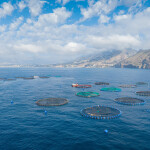



Production of seabass and seabream, two of the EU’s most important farmed fish species, has grown at a decent rate over the past two decades, but there is a lot of work to be done if the sector is going to fend off the competition from non-EU imports and make a greater contribution to the bloc’s rising demand for seafood, according to seafood analyst Paul Valle of Kontali Analyze AS.
Speaking at the World Seafood Congress 2017 (WSC) in Reykjavik, Iceland, Valle said that all of the growth in global seafood production is coming “only from Asia” and predominantly from its aquaculture sectors, and that Europe needs to up its game if it is going to address the ever widening imbalance between EU seafood imports and exports.
Although the volume imported by the bloc has stayed more or less the same over the past decade, the cost of these imports have risen dramatically, meaning that the bloc is paying more for its fish, which is a potential long-term risk, he said.
The bass and bream sector offers a potential means to address some of the imbalance, and Vale pointed out that while there have been “boom and busts” in the sector, the volume produced of both species continue to show “very good growth.”
The seabass harvest has increased by 259 percent since 2003, which equates to year-on-year growth of 11 percent. Over this same timescale, the price of bass has increased by 8 percent or 1 percent annually.
Seabream has followed a very similar pattern, with production since 2003 increasing by 200 percent, or 10 percent annually, while prices have risen by 16 percent or 2 percent annually.
While he expects EU bass volumes for 2017 and 2018 to increase by 5 or 6 percent, Valle warned that Turkey is providing fierce competition. For example, Greece’s “indicative” bass and bream sector has seen the volumes it supplies to Italy remain relatively flat, while the considerable increase in demand from the Italian market has been met by imports from Turkey.
A “significant price difference” of around 20 percent is not only driving this market supply trend, the price differential is also seeing the growing demand from northern European markets being met by the cheaper Turkish imports, said Valle.
In addition, there are more processed and value-added bass and bream products coming into EU markets from Turkey as consumer tastes change.
Improved marketing from EU producers would help with both volume growth and price improvements, said Valle. He also highlighted that there is a lot of inefficiencies in bass and bream production compared with other sectors, including the Norwegian and U.K. salmon industries and the Vietnamese pangasius industry.
“There is work to be done to sustain and compete, but Europe needs to grow,” he said. “Production and cost efficiency can be improved and there is room for technological development, as well as adapting to emerging consumer trends.”
