






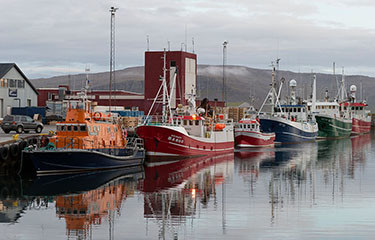
The Icelandic fishing fleet caught 84,724 metric tons (MT) of seafood last month, a decrease of 1 percent compared with February 2017, with a sharp decrease in the volume of pelagic fish landed being largely offset by an 89 percent larger demersal catch, according to the latest preliminary figures issued by Statistics Iceland.
A total 37,497 MT of demersal species were landed in February, with cod accounting for 24,105 MT (+66 percent), haddock at 3,988 MT (+86 percent), saithe at 4,301 MT (+246 percent) and redfish at 3,382 MT (+246 MT). At the same time, the flatfish catch increased by 71 percent to 608 MT.
Pelagic landings for the month, meanwhile, dropped by 29 percent year-on-year to 46,426 MT, which was driven by a 44 percent reduction in the capelin catch to 36,551 MT.
Statistics Iceland also found that the shellfish catch decreased by 8 percent to 193 MT.
The accumulated total catch for the year March 2017 through February 2018 increased by 28 percent to almost 1.3 million MT, with landings of demersal (475,941 MT), pelagic (765,904 MT) and flatfish (23,644 MT) species, rising by 18 percent, 35 percent and 10 percent respectively. The shellfish volume for the 12 months reached 10,419 MT, down 10 percent.
