




Conservation groups delivered nearly 30,000 letters to Canadian lawmakers opposing mining developments in British Columbia, which U.S.-based Tribes say could harm Alaskan salmon fisheries.
“The provincial government is blatantly ignoring the rights of Indigenous peoples to protect their traditional territory from toxic mining pollution,” Earthjustice Supervising Senior Attorney Ramin Pejan said in a release. “Thousands of people have raised their voice in opposition, and the government should take notice.”
The messages are the latest development in the ongoing conflict between the British Columbia mining industry and Tribes in the U.S. state of Alaska.
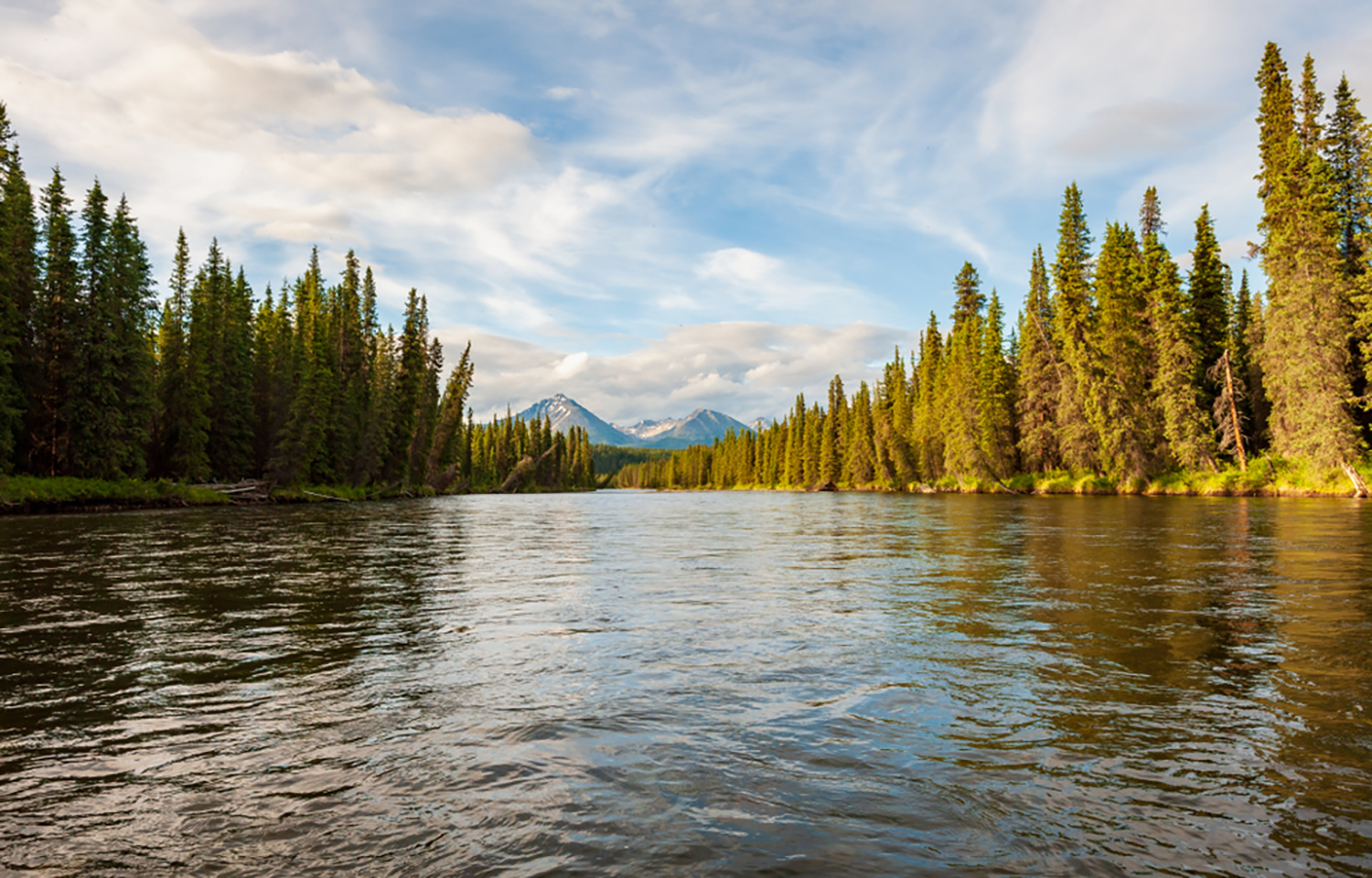
Though the Canadian government has been eager to develop gold-rich mining areas in British Columbia, Tribal groups claim that the proposed increase in mining activity near the transboundary Taku, Stikine, and Unuk rivers poses a threat to the downstream fish populations – including salmon – they depend on for cultural, spiritual, and subsistence practices.
The Southeast Alaska Indigenous Transboundary Commission (SEITC) has led opposition to the proposed mines, complaining that U.S. Tribes living and fishing along those rivers have not been given a voice in those upstream mining developments, despite having to deal with any negative repercussions of the increased activity. SEITC filed a complaint with the Inter-American Commission of Human Rights in 2020, arguing that an increase in heavy metals downstream could harm fish stocks that Tribes have traditionally relied on.
The British Columbia government, meanwhile, maintains that SEITC’s complaints ignore the environmental assessments already carried out to support the various projects, which concluded that mining activity was unlikely to cause significant adverse environmental effects.
“The State emphasizes that the potential environmental threats raised by the petitioners – acid rock drainage, dam storage failures, and harm to fish populations caused by increased metal concentrations in downstream waters – were in fact considered by authorities in Canada and British Columbia during the environmental assessment processes for five named mining projects,” the Inter-American Commission on Human Rights noted in its 2023 report on SEITC’s complaint.
In 2024, Canada’s Ministry of Land, Water, and Resource Stewardship denied consultation status to the Tribes that make up SEITC.
The British Columbia assembly has since passed legislation enabling the government to fast-track mining projects, and the province has moved forward with approving several mining projects.
“This news from B.C. brings the threat of the industrialization of the transboundary rivers to a whole other level,” Salmon Beyond Borders Director Breanna Walker said in June. “Passage of these new laws, which severely curtail oversight of mine development on our shared rivers, contradicts recent calls from B.C.’s own experts and community members who urge caution around large-scale mining in these shared salmon rivers as new salmon habitat is emerging from melting glaciers. B.C. has also passed these laws without even a mention of who’s downstream of these risky mine projects and failure-prone mine waste dams: Alaska.”
U.S. lawmakers have also raised alarms over the mining developments; in 2024, Alaska’s Congressional delegation wrote to then-U.S. President Joe Biden demanding the federal government implement protections for the transoundary Taku, Stikine, and Unuk rivers.
“Without unified action from the executive branch, Canadian mining activity in this region will increasingly endanger U.S. communities and resources, such as salmon, without any mechanism for recourse or compensation,” the U.S. lawmakers said.
Fears were stoked in summer 2024, when a heap leach pad at the Eagle Gold Mine in Yukon, Canada, failed, leaking cyanide into a nearby waterway.
“The recent cyanide disaster and fish kills at Canada’s Eagle gold mine in the Yukon watershed and the 10th anniversary of the massive mine waste dam failure at Canada’s Mount Polley mine in B.C., make clear that Tribes and Alaskans need seats at the table when it comes to shaping the future of our shared wild salmon rivers,” Walker said.
A final decision on the resource projects the Environmental Assessment Office is fast-tracking in the region is expected by 26 November.
Despite SEITC being excluded from the consultation process, conservation NGOs Earthjustice and Re:wild collected almost 30,000 messages opposing the mining developments in coordination with SEITC, which were then delivered to British Columbia lawmakers.
“We are calling for our inherent rights to be recognized as they pertain to the traditional territory we’ve relied on and stewarded for thousands of years,” SEITC Assistant Executive Director Lee Wagner said in a release. “B.C.’s decision to exclude us from decisions that directly impact our communities and wild salmon threatens who we are as a People.”
