




 Stock market dysfunction
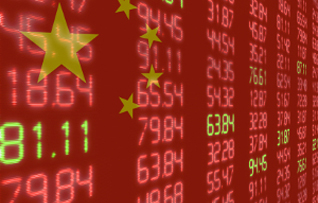
It remains difficult to get an accurate handle on China’s listed seafood companies. While it’s clear that many firms in the sector carry high debt-to-revenue and debt-to-assets ratios, there’s not enough information for a clear assessment. In 2016, Chinese companies raised USD 20 billion (EUR 18.7 billion) of equity capital, more than the combined amount raised in the U.S. and Europe over the same period. But it’s hard to judge the real value and quality of many companies – including seafood companies – listed on local bourses, given Chinese markets lack global standards on such matters as trading suspensions and short-selling. Perhaps most important is the slow enforcement of rules on de-listing of substandard companies and trading suspensions. Foreign investment into equities, which would weed out some of the dodgier stocks, remains limited by government controls and reluctance of the investors in the absence of better quality standards. Even though the Shanghai (SSE) and Shenzhen (SZSE) stock exchanges were established only in 1991, as of December 2016, China has the world’s second-largest stock market (and this excludes the Hong Kong exchange), with a combined aggregate market capitalization of USD 7.3 trillion (EUR 6.8 trillion).
