






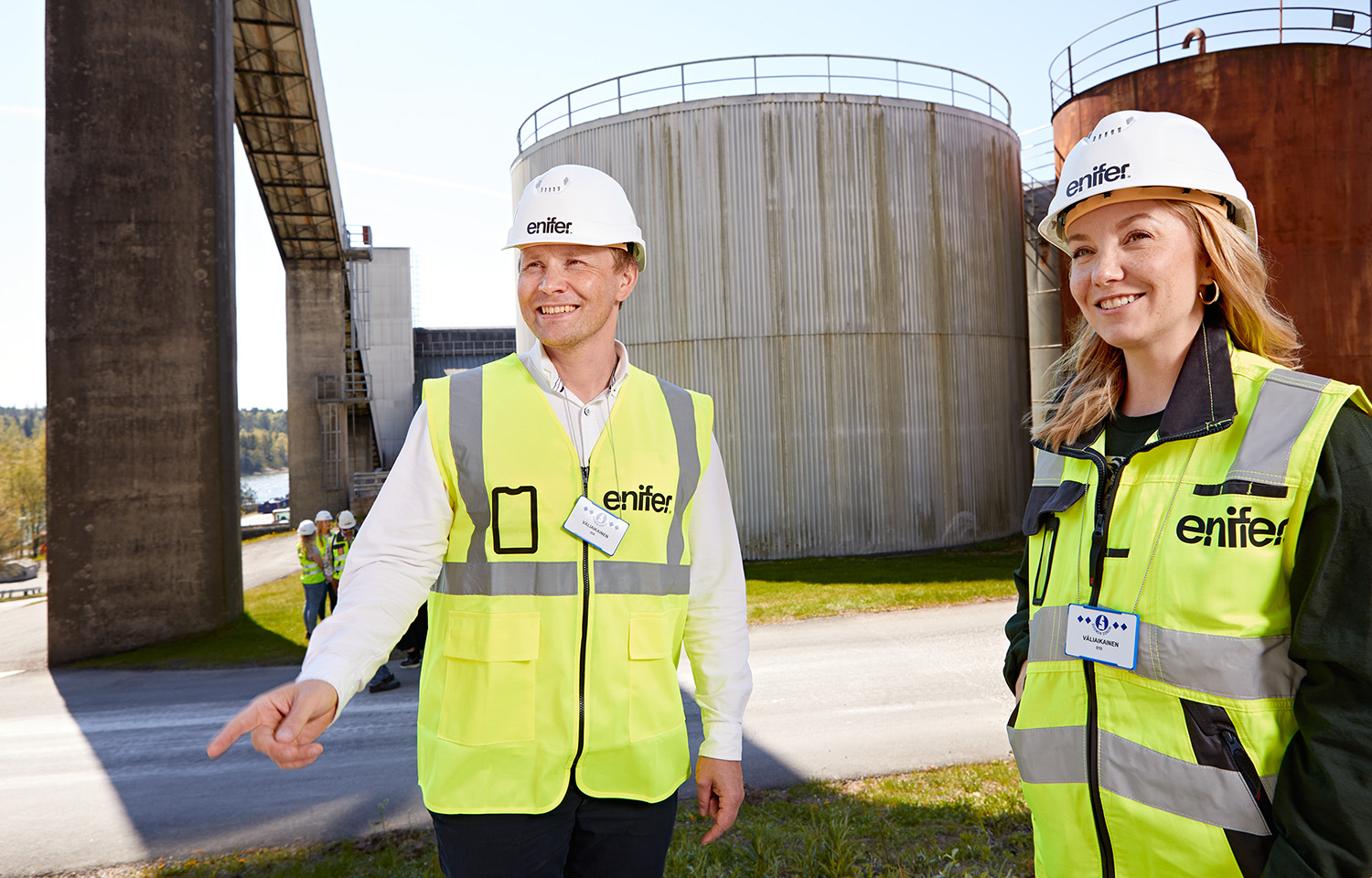
Simo Ellilä is the CEO of Espoo, Finland-based Enifer, a biotech firm concentrating on producing its PEKILO fungi-based protein product for aquafeed and other uses.
SeafoodSource: What is your background and how did you get involved in Enifer?
Ellilä: I'm a bioprocess engineer. In my previous life, I did a lot of development with biofuels and biochemicals, and the underlying theme was how could we transform side-streams from different industries into something of value, like waste-to-fuel type processes. And then I came across the history of this PEKILO process in 2016, and I was fascinated by it. It was remarkable that Finnish engineers had been producing mycoprotein 50 years ago, and it was just such an intriguing concept that they could take a pretty complicated side-stream from the paper pulping industry and transform it into protein. So I started looking up just about everything I could find on it, and decided protein seemed like a lot more attractive of a market than biofuels and chemicals, which I had previously been working with. Along the way, I happened to bump into one of the other co-founders of the company who independently had the same idea of reviving the PEKILO process but had been looking more on the market side.
SeafoodSource: What is so special about the PEKILO process?
Ellilä: The original process had been developed by the pulping industry because they needed to process a side-stream. The starting point was water treatment and the protein part was nearly secondary – that happens to be the end product of this water treatment. Then they then they figured out what it would be good for and they used it for pig and chicken feed. But they stopped making it in the early 1990s, mainly because the raw material disappeared from the Finnish pulping industry, but also because the engineering company that had built these plants went bankrupt. That discontinuity meant a lot of that know-how was forgotten at that point. What we saw was a production-ready concept, and we just needed to figure out if we could make it work in today’s context. Where my background came in was finding the raw materials. I had worked with the biofuels industry, so I knew there were suitable new raw materials to run this process. And then our co-founder was looking on the market side and saw … there are more valuable end-use cases for this protein today. Aquaculture was the first one we looked at. Compared to pigs or chickens, aquatic organisms – and especially salmonids – are really picky eaters. They have much more stringent dietary requirements, so the price-point of these feed ingredients is a lot higher. So we were running the numbers and figured out if we revive this process and we take it to aquaculture, it would actually make financial sense.
So we started the company in 2020 with a small seed round of about EUR 1 million (USD 1.1 million) with that we built we built a lab, a small pilot line, and started testing to see whether we could make standard, quality mycoprotein out of all these different side-streams that I had identified. In aquaculture, this ingredient had been fed to salmon before, so we've been doing a lot of trials, particularly in salmon but also shrimp, and we were also looking at pet food applications.
Just over a year ago in March, we raised EUR 23 million (USD 24.6 million) in our Series A, and with that, we started pursuing scaling the process and applying for a food permit for this ingredient. Feed grade and food grade have some slight differences, primarily the raw material from which they produced, but they’re very similar, so those are two avenues we’ve pursued.
And then we really went into overdrive in December when we got this big grant – EUR 12 million (USD 13 million) in European Union funding channeled through Business Finland, conditional on finding the rest of the money for our first factory. Once that came in, we were able to pull in the rest of the money for the factory. So we’re set to start building our first larger-scale factory, 3,000 tons per year, which is very small for a feed plant, this will be what we’re calling an intermediate-sized plant, but once we get that [food] approval, we expect to be a profitable commercial factory in that application. The factory serves two additional important purposes. One is acting as a general technical demonstration of our process … to help us in our pursuit of building several dedicated feed factories. The other is in testing other byproducts, such as from the pulp and biofuel industries, which have huge volumes of side streams, to either license our technology or work together as a joint venture to build a plant. They can come and see the factory and the processing operation, and that will provide validation that the solution works.
SeafoodSource: Will any of that initial production go toward aquaculture?
Ellilä: It's a very small volume for aquaculture, so we don't think that a significant amount of protein from that facility will be going to aquaculture. We're in talks with some big companies so see if we could do a limited launch in aquaculture from that factory, but since the scale is rather small, the production cost is higher than it would be from a larger factory. It's really a question of price and finding partners who will accept that price point, which is definitely not outrageous, but for grow-out salmon feed, it is pricy.
SeafoodSource: How have your aquafeed trials gone?
Ellilä: We've been very lucky to be able to work closely with a professor at the Norwegian University of Life Sciences named Margareth Øverland. She's really a leading light in the salmon nutrition field, and five joint projects with her, including several studying salmon and one with rainbow trout in Finland. We've also commissioned a shrimp trial in Malta, and there's been tests done by a few aquaculture companies, a lot in Norway, but of course we can’t name those.
The trials have been amazing. When we were first starting out, we were looking at it as a protein ingredient, but what we've been seeing is that it's much more than that. Besides the protein, our mycoprotein also includes beta-glucan, which provides stimulation of the salmon immune system; and nucleotides, which help with fast growth in juvenile marine organisms. We also got really exceptional results from the shrimp trial, seeing more concretely what that amino stimulation can do. We saw the reference group had 75 percent survival, whereas the group eating our mycoprotein had 85 percent survival, so it really gave a boost there.
SeafoodSource: Where is the mycoprotein sector in terms of its development as an input for aquafeed?
Ellilä: Oh, it’s still at a very early stage. I'm not really aware of other companies going beyond small tests. We’re definitely the first of our kind to build a facility at this scale, and there’s nothing stopping us from scaling besides getting investment to build the factories. That’s what we hope to achieve in the next few years.
SeafoodSource: What is the sustainability case for your product?
Ellilä: There is a case, with several caveats – it's complicated. One thing we bumped into a lot the claim that fishmeal comes with barely any CO2 emissions. The aquafeed companies say their feed is already sustainable, but that ignores any concerns about overfishing. There's so many dimensions to sustainability, right? The other thing is soy. If you look at purely at CO2 emissions, we're on par with sustainable soy, but so much soy is not sustainable. It's leading to deforestation, eutrophication, fertilizer use and nutrient runoff. Our mycoprotein production requires minimal land and minimal water.
SeafoodSource: And how many years do you think it will take for mycoprotein to become a mainstream ingredient used in aquafeed?
Ellilä: I would say within five years, we'll start to see very significant volumes, like tens of metric tons. Mycoprotein is the missing ingredient for a more sustainable food chain. The facility in Kantvik serves as a key stepping stone on our path to making mycoprotein a cornerstone of protein supply, with several future factories already being planned.
SeafoodSource: Have you had any discussions with aquaculture companies about partnerships?
Ellilä: We’ve been talking to the aquaculture sector since the beginning. The aquaculture market is very price-driven, and their margins are very thin. So, it's not like they have a lot of margins to splurge on expensive ingredients, but I think there's more willingness on the side of the aquaculture companies to get involved. They're starting to realize these novel ingredients are not going to make it to market if everyone doesn't do their part. You need to have first market openings to show that traction that will enable us to finance our future. In a dream world, they would even participate in financing this production, but right now, that seems like something they’re reluctant to do. But maybe there’s a chance for that in the future.
SeafoodSource: There are numerous avenues being pursued for getting more protein alternatives into aquafeed. What is your pitch to the aquaculture sector in favor of mycoprotein?
Ellilä: This is a validated technology. It was used to produce pig and chicken feed. It's not a pipe dream. They recognize that it's a viable solution. And now that we have in hand these great feed trial results, we can show them it's so much more than a protein ingredient. We have a very compelling package for an ingredient that’s commercially viable and also delivers tangible benefits to fish nutrition.
SeafoodSource: Is your location in Finland an advantage or disadvantage to breaking into the aquafeed market?
Ellilä: Our process requires quite a bit of cooling, so the main advantage is the weather. We're not that far away from Norway but our local aquaculture production is relatively limited. We would ideally like to be closer to the end-user market, and we have several ongoing projects in development in Europe, and also elsewhere, at different stages of development. Any future plant we build will not be in Finland.
SeafoodSource: Where does aquaculture rank in terms of the most promising applications for PEKILO, versus pet food or dietary supplements?
Ellilä: If you rank those, pet food is somewhere between human food and aquaculture. There's a higher willingness to pay when it comes to pet food – everyone loves to pamper their cats and dogs, whereas aquaculture is food production, so it's a lot more cost-driven. But then again, a single aquaculture aquafeed company could buy the output of 10 of our factories. With pet food, you have to get many more companies on board, and you'll probably have tens or hundreds of buyers from a single factory.
SeafoodSource: Would you ever consider trying to partner with other alternative aquafeed ingredient manufacturers, like makers of omega-3 ingredients or natural coloration additives, to provide a combined offering to aquafeed firms?
Ellilä: No. That’s not really our domain. It's the feed companies who have to figure it out. We’re going to stick to what we know best.
SeafoodSource: Is there anything else you want to put in the article? Make sure I read about?
Ellilä: Aquaculture is a very interesting market. We’ve shown our ingredient has a lot of potential there. Some people have a bad association with aquaculture, but when you really look at it, it is the most sustainable way of producing animal protein, and seafood is the healthiest animal protein as well. So I think we really see it as an exciting market for our ingredient.
