





Lawmakers in Argentina’s southernmost province of Tierra del Fuego have voted by a narrow majority to authorize salmon production off the province’s Atlantic coast.
Provincial legislators voted 8 to 7 recently to amend an existing law (Law 1,355) that the local government in Tierra del Fuego unanimously approved in 2021 to prohibit salmon farming. At the time of the law’s passing, it was widely celebrated by environmentalists and other NGOs such as Greenpeace, which hailed the move as a safeguard for one of Earth’s biodiversity hotspots.
The recent amendment to allow the practice again came with a number of environmental restrictions and calls for government oversight attached.
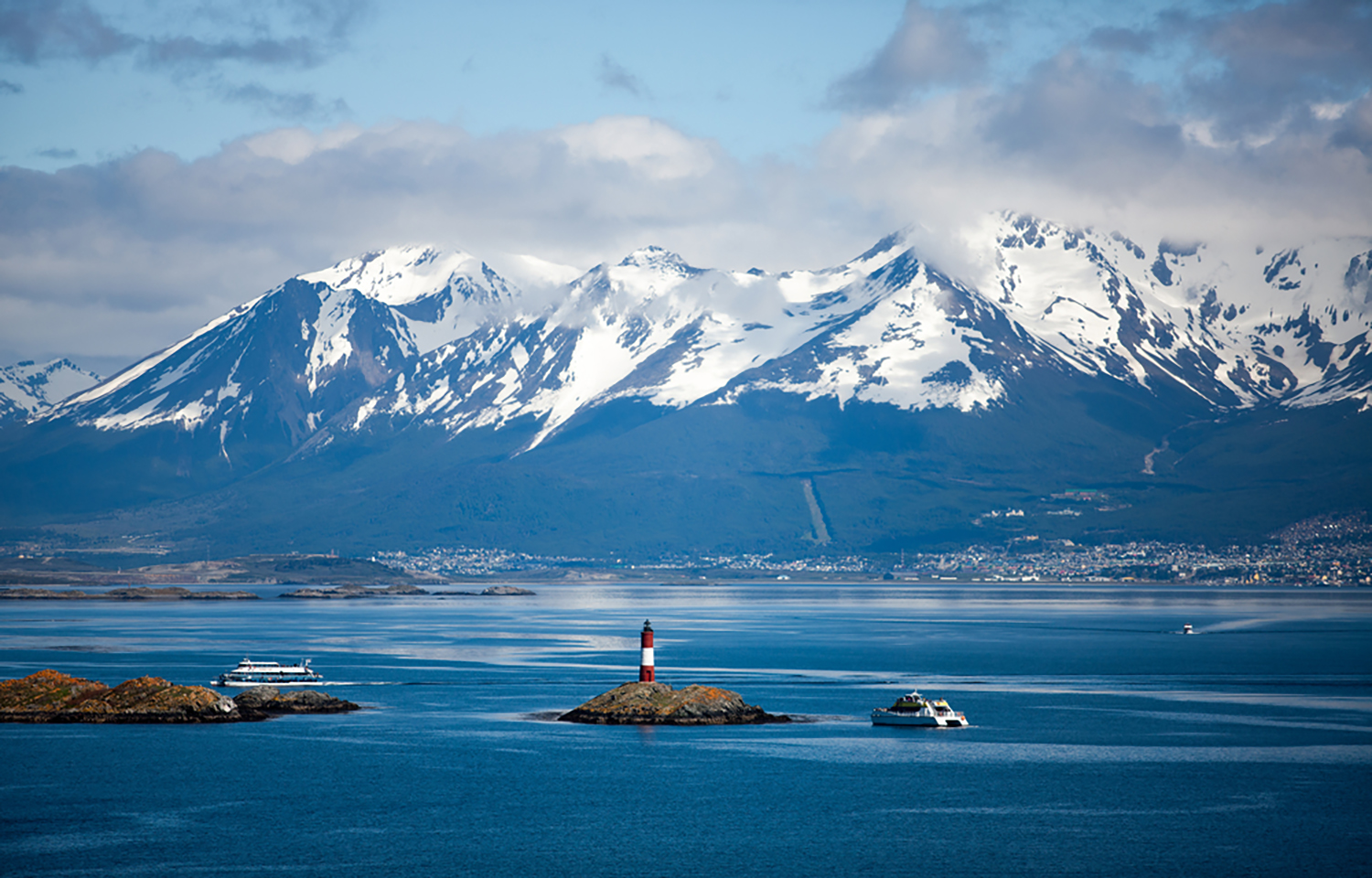
One such restriction is the prohibition of anchoring salmon pens along the Beagle Channel – a strait in the Tierra del Fuego archipelago that forms part of the Chile-Argentina border and which serves as a gateway to Antarctica – or in lakes or lagoons in order to protect biodiversity. Aquaculture would be allowed only in areas declared suitable after strict environmental assessments are performed. In addition, each aquaculture project would have to comply with clear production limits, permanent controls, and government oversight.
The executive branch of the Tierra del Fuego provincial government would also be responsible for defining the procedures included in the Strategic Environmental Assessment (SEA) process.
Further, a new government body – the Center for Fisheries and Aquaculture Development of Tierra del Fuego – will be created within the provincial Ministry of Production and Environment’s Secretariat of Fisheries and Aquaculture to promote applied research, oversee aquaculture production, and drive knowledge sharing and technological connections between related institutions – all with the goal of “maximizing social and economic well-being without compromising the sustainability of ecosystems,” according to the newly approved legislation.
Tierra del Fuego Undersecretary of Fisheries and Agriculture Diego Marzoni told local media that the provincial government projects some 100,000 metric tons (MT) of fish, of which a maximum of 80,000 MT would be salmon, could be produced each year over the next six to eight years. Salmon farming alone could generate between 4,000 and 4,500 jobs and attract investment of up to USD 400 million (EUR 342 million), he added.
The move looks to bolster Tierra del Fuego’s economy as tourism in the province has slowed and its manufacturing sector, which mainly produces electronic devices, is facing increasing pressures. More than 25 percent of Tierra del Fuego’s 180,000 inhabitants fall under the poverty line.
In comparison, Chile’s southernmost region of Magallanes, which borders Tierra del Fuego, hosts around 50 farming centers producing about 180,000 MT a year, generating exports of roughly USD 650 million (EUR 555 million) and more than 7,000 direct jobs, and comprising a reported 50 percent of Magallanes’ regional GDP.
Despite the potential of salmon farming to rejuvenate a sluggish provincial economy, not all Tierra del Fuego residents are excited at the prospect of salmon farming returning to their province.
“The recent vote reflects strong political pressure in a context of economic distress, but it also followed unprecedented public mobilization and opposition. Thanks to community pressure, the process was delayed as long as possible and generated a wide public debate,” Agustina Copello, a project coordinator at the Global Salmon Farming Resistance (GSFR), which is a global alliance comprising NGOs, activists, scientists, and individuals who strive to keep oceans free from open-net salmon farms, told SeafoodSource. “Law 1,355 was passed unanimously and became a global reference, inspiring the creation of GSFR as an international alliance. While the amendment still excludes the Beagle Channel, we see the modification of Law 1,355 as a serious setback, as it weakens a landmark law that, since 2021, prohibited salmon farming in the province’s marine and freshwater areas and opens the door to open-net salmon farming in other coastal waters.”
A number of demonstrations took place in Tierra del Fuego leading up to the legislative vote. Local chefs and fishers organized a gathering to call attention to the province’s previous stated commitments to native species, sustainable practices, and local identity. Residents gathered outside the legislature in a peaceful demonstration to defend the salmon-farming ban, and a letter was presented to the legislature expressing international support for maintaining the ban. Additionally, more than 1,000 residents signed a petition urging legislators to keep salmon farms out of the province’s waters.
Despite the community appeal, “legislators chose not to hear and instead bent toward the pressure of big businesses,” GSFR said in a release.
“This decision puts at risk one of Argentina’s most pristine ecosystems. Everywhere the salmon industry operates, destruction follows: pollution, disease, loss of biodiversity, and the collapse of artisanal fisheries,” GSFR Director Catalina Cendoya said. “The people of Tierra del Fuego did not ask for this reversal of protections, yet they will be the ones paying the price.”
Doubts remain, however, about whether the amendment will actually lead to salmon production in the province. Some observers have claimed the vote is unconstitutional and said they may question the amendment in courts, possibly leading to injunctions against any future investment.
“This outcome is not necessarily definitive or irreversible. We are now entering a new phase, continuing to support local communities in Tierra del Fuego, reassessing strategy, and working to prevent the expansion of open-net salmon farming while pushing for more sustainable food systems and viable economic alternatives for the region,” Copello said.
The geography of Argentina’s southeastern coastline, where salmon farming would be allowed, is also less hospitable than neighboring Chile’s salmon-farming areas, which take place in more protected areas such as fjords and straits. Therefore, reestablishing salmon farming may add complications and costs that present a more difficult path to actual implementation.
