

Norwegian fish-farming firm Andfjord Salmon has put production on hold for the past year to expand its Kvalnes land-based salmon-farming facility, and CEO Martin Rasmussen recently confirmed that every part of the expansion is either on track or ahead of schedule.
Delivering the company’s Q3 2024 financial results in Oslo, Norway, on 28 November, Rasmussen said the project’s waterways are the closest part of the expansion to completion.
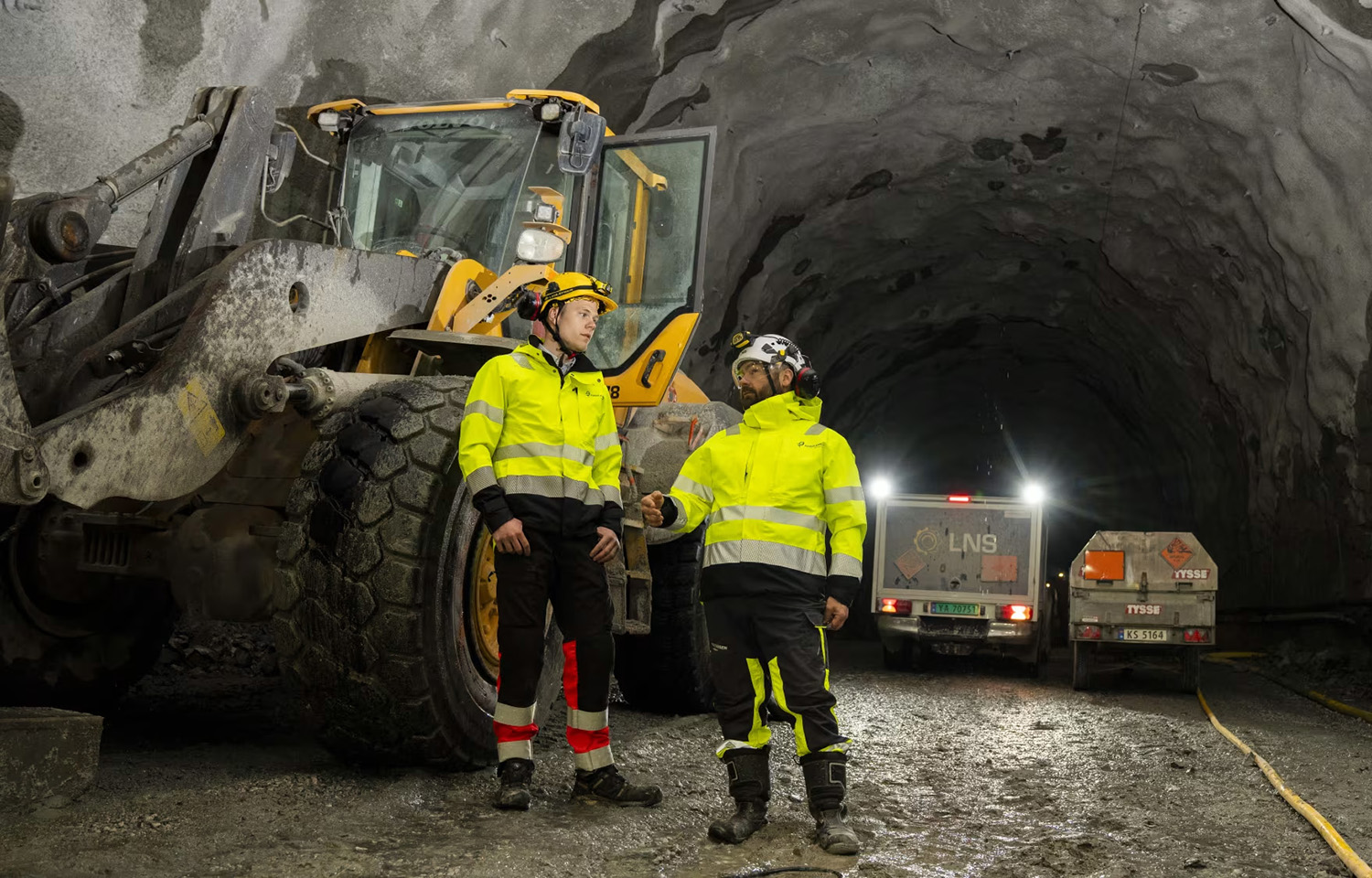
The company is introducing nearly 4.5 kilometers of tunnel infrastructure to the site, including inlet waterways, and at the end of November just 20 meters of the outlet waterway and approximately 450 meters of the inlet waterway were left to be completed.
Kvalnes’s completed infrastructure will include eight vertical inlet shafts that will supply all the pools with fresh seawater.
Andfjord Salmon aims to complete four new pools in the current stage of its Kvalnes’s build out, increasing its facility to five pools capable of producing 8,000 metric tons (MT) of head-on gutted (HOG) salmon by next year.
Once the infrastructure is complete, the company will be able to introduce four new pools each year, and reach a capacity of 19,000 MT HOG some time during 2027, Rasmussen said, ensuring full utilization of its current salmon-farming licenses.
“Production at Kvalnes will then increase gradually, and we aim to reach the full production capacity of 40,000 MT in 2030,” he said.
With no salmon production in Q3, revenues generated in the period for Andfjord were nearly zero, compared with NOK 27.7 million (USD 2.5 million, EUR 2.4 million) in Q3 2023. The company also reported a loss of NOK 15.3 million (USD 1.4 million, EUR 1.3 million), compared to a loss of NOK 28.3 million (USD 2.6 million, EUR 2.4 million) in the corresponding period last year.
Nevertheless, Andfjord’s first production cycle, with harvesting conducted a year ago, saw a very high survival rate of 97.5 percent, compared to an industry average of 83.3 percent, Rasmussen said, adding that the company aims to maintain high survival rates with increased production.
“This demonstrated the concept works very well on behalf of the fish and biology,” he said.
He also pointed to the firm’s feed-conversion rate of 1.05, compared with the industry average of 1.27, its 1-kilogram extra growth achieved, lower energy costs, and a higher superior share of end products.
“We have provided the building blocks for attractive financial results,” he said.
One thing that has made many Norwegian aquaculture companies wary of new investments, though, is Norway’s two-year standstill on administering license applications for land-based aquaculture facilities, making it difficult for firms to commit to new projects
Norway has also made it difficult for offshore projects to get off the ground, even though some firms have tried to push through with innovative concepts.
Rasmussen said there have been signs of a breakthrough from the Norwegian Ministry of Trade, Industry, and Fisheries, which is considering regulatory changes that will allow the land-based sector to develop.
A public consultation on the topic administered by the ministry ended on 21 November 2024, with Andfjord Salmon submitting its response on 20 November claiming the two-year standstill has been based on very little scientific evidence.
Rasmussen said Andfjord Salmon isn’t alone with these concerns, and the expectation is that the ministry will present a new regulation for land-based fish farming after reviewing the input it receives.
For now, initial feedback on the industry’s input has been positive, he said.
Rasmussen said that the proposal doesn’t affect facilities that have already received permission for farming on land, and that it removes confusion about what aquaculture facilities are defined as being on land.
“This new regulatory change confirms what Andfjord Salmon has always said: Our facility is undoubtedly on land,” he said.
Rasmussen has continued to express optimism for the future of land-based salmon farming in Norway and globally.
“What we’re seeing now is that there's not only one solution; we have many good ways of producing healthy and sustainable seafood. Each company has its own concept, and they should utilize their advantages based on where they are,” Rasmussen told SeafoodSource at the 2024 Seafood Expo Global. “In other parts of the world, you may need more sophisticated technology, but for us, we can use a lot of the gifts from nature around us. Overall, I'm very convinced that we will see a lot of good producers and companies in the future with new methods of producing salmon. The market is there.”
