






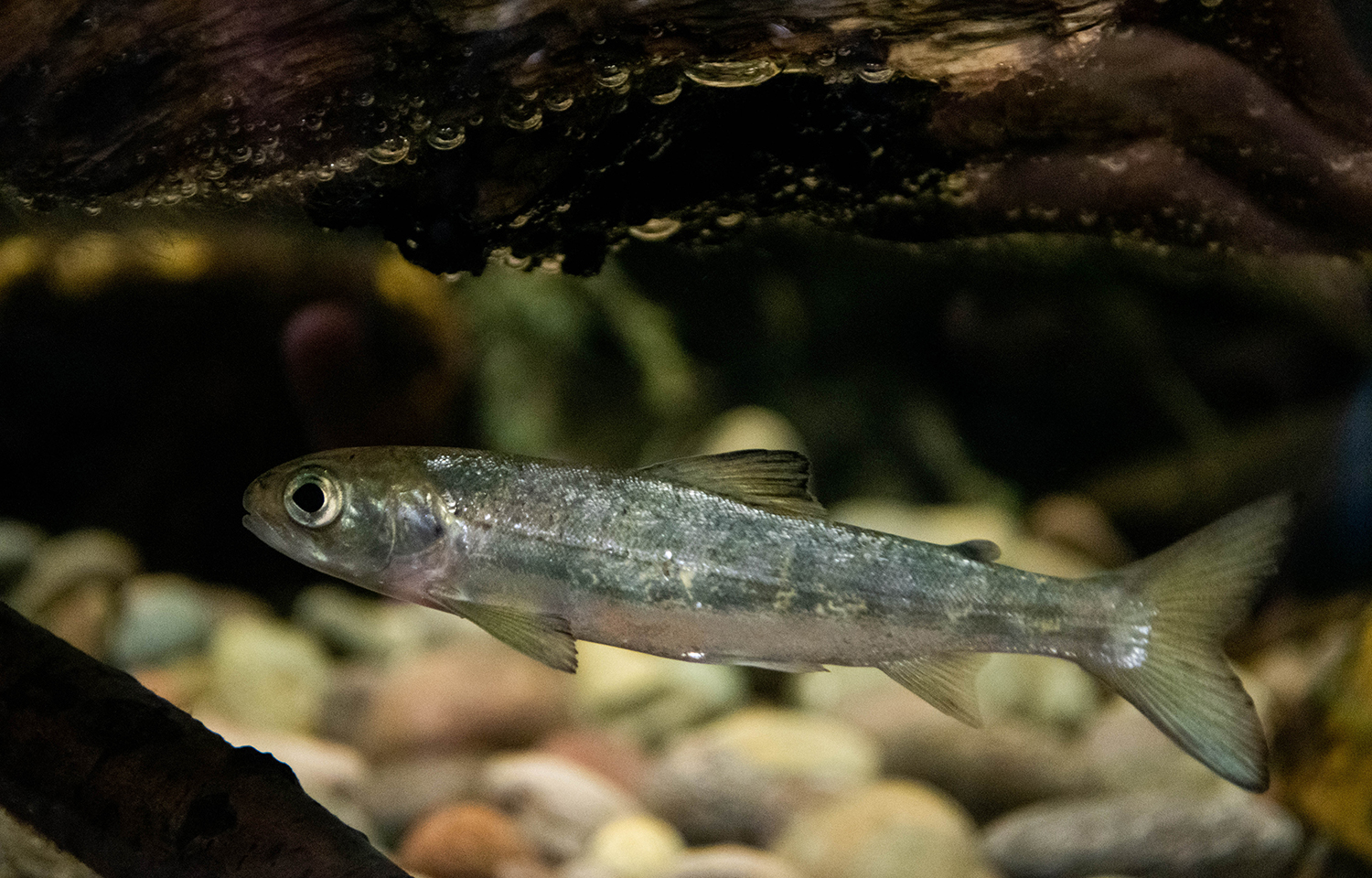
Norwegian land-based salmon producer Andfjord Salmon has announced plans to use spare pool capacity as part of a post-smolt production strategy for supplying ocean-based farming operations around the country.
Delivering Andfjord Salmon’s fourth-quarter 2023 results on 29 February 2024, CEO Martin Rasmussen said the new strategy has the potential to unlock significant value for the company, as well as for ocean-based farmers and other stakeholders in the aquaculture industry at large.
“Cooperation between land-based and ocean farmers is a unique opportunity for Norway and for the Norwegian salmon-farming industry,” Rasmussen said. “First, there is substantial industry demand for post-smolt because of the benefits associated with shortening the ocean-based grow-out phase. Second, releasing larger and more robust fish into ocean-based net pens offers multiple biological and environmental benefits, including a lower risk of disease, reduced exposure to salmon lice, and improved survival rates. By combining the strengths of land-based salmon farming with ocean-based farming, we can introduce a new, optimized value chain collaboration that can provide highly energy-efficient and sustainable salmon farming here in Norway.”
According to Andfjord Salmon’s own calculations, the move will enable 10 percent higher biomass turnover, equating to an estimated 15 percent to 25 percent increase in earnings before interest and taxes (EBIT).
The company also said its cash flow will improve considerably as it can establish revenue streams from both post-smolt after a typical five- to seven-month production period, as well as income from the company’s own harvest of market-ready salmon following a full 12- to 15-month production cycle.
To this end, Andfjord has agreed on a strategic collaboration with ocean-based fish farmer Eidsfjord Sjøfarm/Holmøy Havbruk to provide post-smolt for selected, nearby ocean-based farming locations for upcoming production cycles, Rasmussen revealed.
This collaboration has already received approval from relevant Norwegian authorities, and Andfjord Salmon is also discussing similar collaborations with other local salmon farmers.
“In short, we are enhancing production capacity and income potential without adding additional infrastructure costs,” Rasmussen said. “I have said many times that Andfjord Salmon would not be able to achieve the biological results we have done without learning from ocean-based farmers and tapping into the extensive competence of the northern Norwegian fish farming industry. Through collaboration on this post-smolt strategy, we can further enhance the environmental, biological, and economic development of the aquaculture industry in our region.”
Meanwhile, according to the company’s Q4 2023 report, construction at Andfjord’s Kvalnes site is progressing according to plan, and in January this year – well ahead of schedule – it completed excavation on the site’s next 12 pool pits.
A total production capacity of 40,000 MT HOG is targeted at Kvalnes through gradual volume increases between 2025 and 2030.
Due to the expansion work, there was no salmon production or revenue generated in the fourth quarter for Andfjord. The company reported an operating loss of NOK 19.4 million (USD 1.8 million, EUR 1.7 million) in the period, compared to a loss of NOK 18.2 million (USD 1.7 million, EUR 1.6 million) in Q4 2022.
