






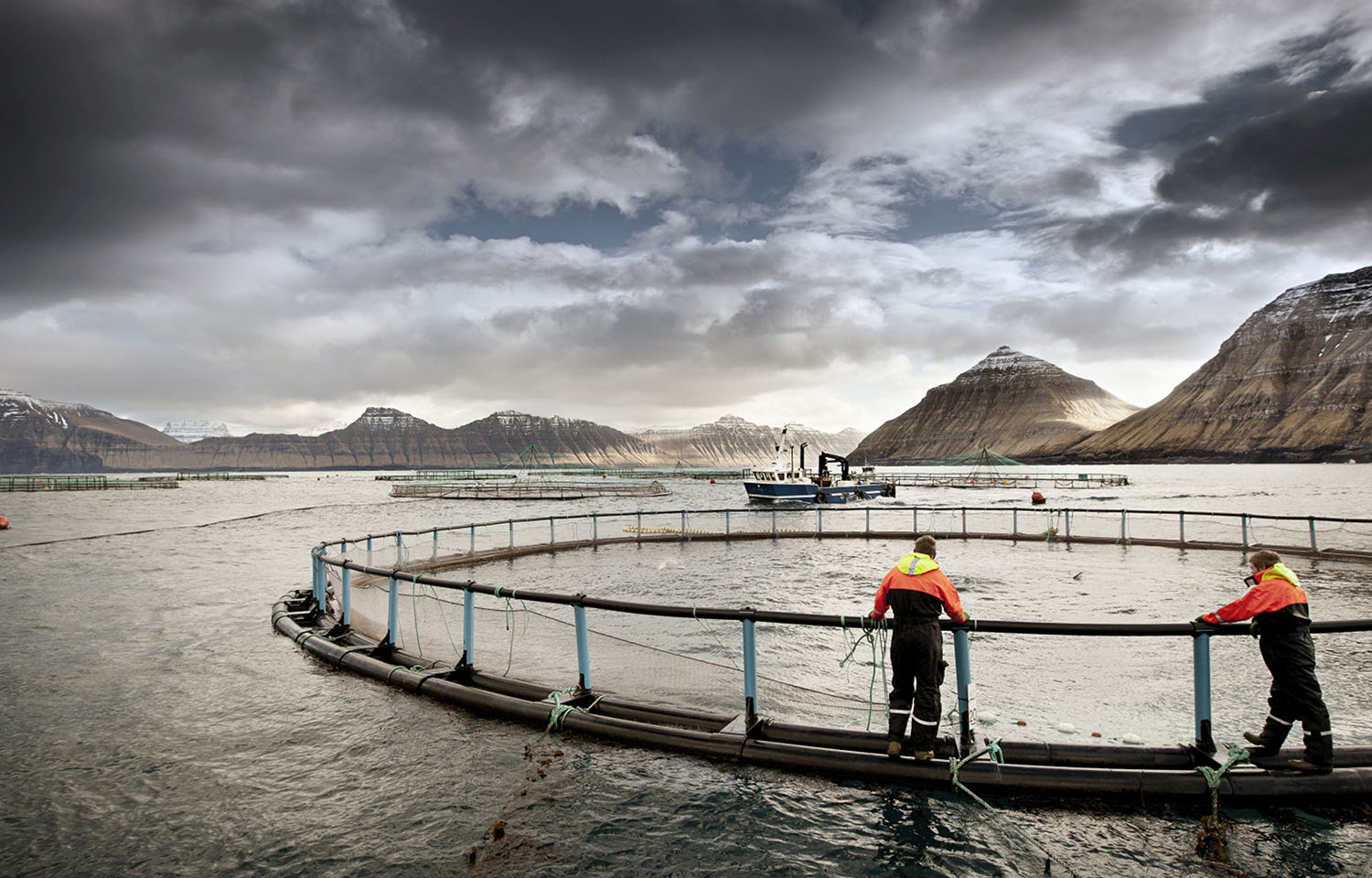
A trading update by Faroe Islands-based salmon farming company Bakkafrost revealed mortality at its Scottish operations ended up costing the company millions.
The Q4 2025 trading update indicates Bakkafrost harvested 23,300 metric tons (MT) of head-on gutted (HOG) salmon at its Faroe Islands facilities, with an average weight per salmon of 5.6 kilograms. Scotland’s harvest total came in at 4,600 MT, with an average weight of 4.1 kilograms.
The update also revealed that mortality events at its Scottish salmon facilities cost the company DKK 58 million (USD 9 million, EUR 7.7 million) in the quarter. Half of that cost came from a Pasteurella bacteria incident at its Portree facility in Q3 2025. It also indicated a DKK 2 million (USD 312,000, EUR 267,000) loss in Scotland in Q4 2025, which it attributed to culling costs at its Couldoran hatchery.
For the year, Bakkafrost’s harvests at the Faroe Islands facilities hit 83,600 MT, while it's Scotland-based facilties hit 23,200 MT for a total harvest of 106,800 MT of salmon. That total is up from the 90,656 MT it harvested in 2024, and ahead of its 2025 forecast of 97,000 MT.
Bakkafrost engaged in what it called a “de-risking” strategy in Scotland, which it said had begun to pay off at the start of 2025. The company began to shift its smolt production to its expanded Applecross hatchery facility, which CEO Regin Jacobsen said in early 2025 would create a “fundamental transformation” of the company’s salmon farming operations.
“Overall, we are pleased with the de-risking of our Scottish operations in 2024. Mortality has decreased significantly, and the fish harvested in the quarter were large and contributed to the highest full year EBITDA since the acquisition,” Jacobsen said in February 2025.
Despite that strategy, Scotland was hit with the Pasteurella bacteria at its Portree farming site, which the company described as causing a “sharp increase in exceptional mortality” and forced advanced harvests to mitigate further biological incidents.
Despite the incident, Scotland’s total harvests for the year were still ahead of the 20,000 MT that Bakkafrost predicted at the start of 2025.
