






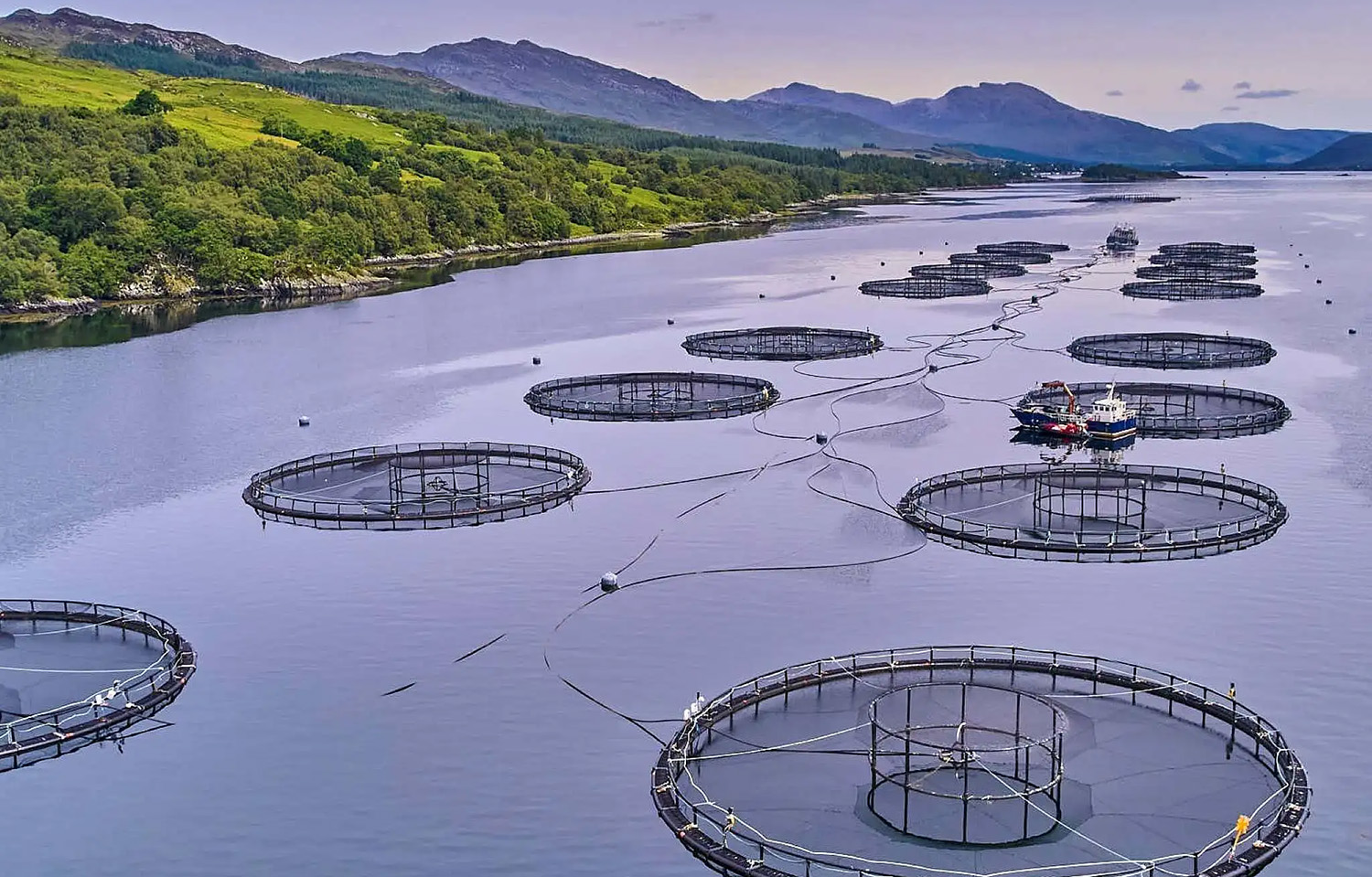
It has been more than five years since Faroe Islands-headquartered salmon-farming firm Bakkafrost entered Scotland via the 2019 acquisition of The Scottish Salmon Company.
The Scottish Salmon Company was the second-largest salmon-farming firm in Scotland at the time, and through the deal, Bakkafrost gained exclusive rights to grow native Hebridean salmon.
“The Scottish Salmon Company represents an attractive acquisition at this juncture providing exposure to the attractive and premium Scottish salmon-farming region with potential for synergies and transfer of best practices,” Bakkafrost CEO Regin Jacobsen said in a press release at the time. “The entire Bakkafrost team is looking forward to working with the management team to continue to enhance performance of the business and drive value in the years ahead.”
That initial optimism soon wore off as economic woes during Covid-19 and biological challenges such as jellyfish blooms negatively affected Bakkafrost's Scottish operations – a trend the firm is just starting to turn around.
“What we bought in Scotland was a company that was underinvested. It takes time to build everything to the level we want it at,” Jacobsen told SeafoodSource. “The pandemic delayed construction of our facilities, and we also encountered some technical problems. But, we think that now we will be seeing improvements.”
In its most recent financial results, Jacobsen revealed that de-risking strategies his firm has taken in Scotland are beginning to pay off.
Bakkafrost Scotland recorded a Q4 2024 harvest of 3,840 metric tons (MT) gutted weight, which more than tripled the corresponding period of the previous year. This contributed to a full-year harvest of 27,880 MT – up from 20,598 MT in 2023.
As a result, the segment posted Q4 2024 revenues of DKK 286 million (USD 40.2 million, EUR 38.3 million), which was an improvement of DKK 84 million (USD 11.8 million, EUR 11.3 million) from Q4 2023, and its operational EBIT improved from DKK -104 million (USD -14.6 million, EUR -13.9 million) to DKK -31 million (USD -4.4 million, EUR -4.2 million).
Now that biology has stabilized in Scotland and its operations have started to produce positive financial results, Bakkafrost has turned its attention toward the segment’s smolt production as a future driver of growth, all while still ensuring the biological de-risking strategies remain effective.
To accomplish its smolt goals, the company has invested in expanding its Applecross hatchery facility in Scotland.
"We hadn't reached our goal of producing big and good smolt in Scotland yet. It was delayed two years, but now, Applecross is delivering big and good smolt,” Jacobsen said. “That's decisive to produce effectively.”
Emphasizing just how important smolt is to producing robust and healthy fish, Jacobsen outlined what has played out at the firm’s operations in Kunoyarnes, Faroe Islands.
The firm farmed two groups of fish in the same area and environment that showed significant differences in growth due to smolt origin.
One group was grown from good smolt, while the other was the result of smolt that was produced under more "stressed" conditions due to technical issues, Jacobsen said.
"The two groups of fish grew in the same environment and were fed by the same people. The fish that grew from the smolt that had been challenged compared to the good smolt were smaller, and more of them died,” he said. “Therefore, in Scotland, when we get good smolt, that will have a very positive effect on the farming in the sea, as well. That's what we will be seeing in the coming time.”
Beginning in the first quarter of 2025, the company plans to have 10 percent of its smolt in Scotland larger than 200 grams and gradually grow that share until Q4 2026, when all of its smolt will be over 200 grams if all goes to plan.
"We recognize when we have bad smolts, but we can diminish the risk by removing the worst groups of fish before Q3 starts. What's left in the ocean is stronger fish," he said. "That reduces the production cost because fewer fish die, and that's why our EBITDA was substantially better in 2024. When we have reached a lower level of risk in our production, we will be upscaling the production.”
The firm is also working on perfecting, and then expanding, its production of roe to become self-sufficient in its operations both in the Faroe Islands and in Scotland.
"We are investing in making ‘elite roe’ – roe that has a perfect immune system against all kinds of disease. We have found the correct markers in the DNA of our roe and are now working toward proving our findings," Jacobsen said. “Our salmon has to be truly Faroese and truly from the Hebrides.”
