


Faroe Islands-based salmon-farming company Bakkafrost is planning to continue its strategic initiatives in Scotland and its investment program as its harvest projections for 2026 are far from goals it announced in years past.
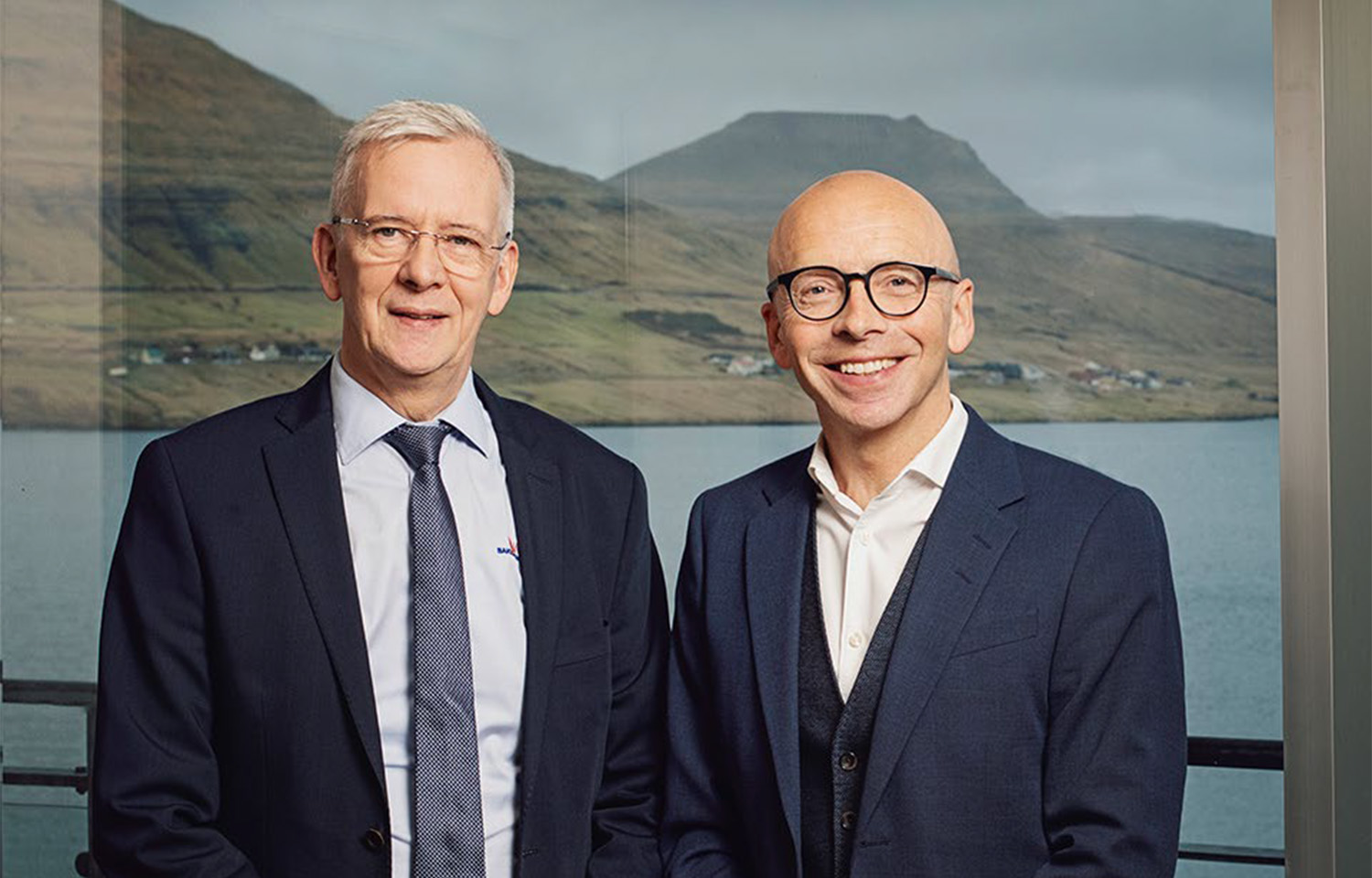
Bakkafrost saw increased harvests, revenue, and EBIT in 2025, overcoming a year it said was marked with challenges due to the high global salmon supply that dampened prices. In its full integrated annual report, which also takes into account its environmental, social, and governance metrics, Bakkafrost CEO Regin Jacobsen and Bakkafrost Chair Runi Hansen said the company navigated the year well and managed to strengthen its operations in both the Faroe Islands and Scotland.
However, its projected harvests of 112,000 gutted-weight tons of salmon in 2026 lag behind forecasts it made in its 2022 annual report, which projected its investments could get it to 150,000 metric tons (MT) by the same year, with production capacity for as much as 180,000 MT. At that time in 2022, the company disclosed its investment plan through 2026, where it said its large-smolt strategy would be a game changer for operations in Scotland.
So far its operations in Scotland, which it acquired in 2019 with the purchase of the Scottish Salmon Company, have struggled with poor biological performance compared to the company’s farms in the Faroe Islands. Its Scotland operations cost the company millions in revenue in 2025, and it also reported biological issues in 2023.
The company has been undertaking what it calls a “de-risking” strategy in Scotland, and its recently-released annual report indicates that strategy will continue in 2026. So far, that strategy has shown some positive results, with full-year average harvest weights increasing from 4.3 kilograms head-on gutted to 5.3 kilograms, which the company attributed to better biological control and stable farming conditions.
While harvest weights increased, disease-related events hampered its harvest totals in 2025, resulting in 23,185 MT of salmon. Since 2020, the company’s harvests in Scotland have been below 30,000 gutted-weight tons, and the company is projecting a harvest of 20,000 MT in 2026.
According to the report, a core part of the continued improvement strategy will continue to be bigger smolt, which it will source from its Applecross facility. Bakkafrost has been focusing on improving smolt production and salmon hatcheries at its Scotland locations for multiple years, announcing plans to build three new salmon hatcheries in Scotland, and it has expanded its Applecross facility to accommodate the strategy.
“During 2026, the biomass at sea in Scotland will gradually shift towards fish released as large, high-quality smolt,” Jacobsen and Hansen said. “However, the operational benefits from this transition are expected to materialize gradually during the latter part of 2026 and to unfold more meaningfully from 2027 onwards as legacy fish are fully replaced.”
The company said the large-smolt strategy is a “strategic priority” for 2026, and that the move represents “our most significant value creation opportunity.”
“We expect to see meaningful biological improvements emerge in the latter part of 2026 as the first large cohorts of large smolt from Applecross reach harvest,” Bakkafrost said.
Outside Scotland, Bakkafrost said it continues to focus on its DKK 5 billion (USD 772 million, EUR 669 million) investment plan for 2026 through 2030 and focus on reducing biological risk, improving efficiency, and enabling sustainable growth of the company.
The company also said that the global market will likely favor the company in years to come.
“Bakkafrost has a long value chain and a cost-efficient production of high-quality salmon products, and it will likely maintain financial flexibility going forward,” the company said.
