






After becoming a public limited company and completing its third funding round, food-tech company Big Akwa is inching toward achieving its ambitious plan to develop a 6,000-metric-ton (MT) land-based trout farm in central Sweden.
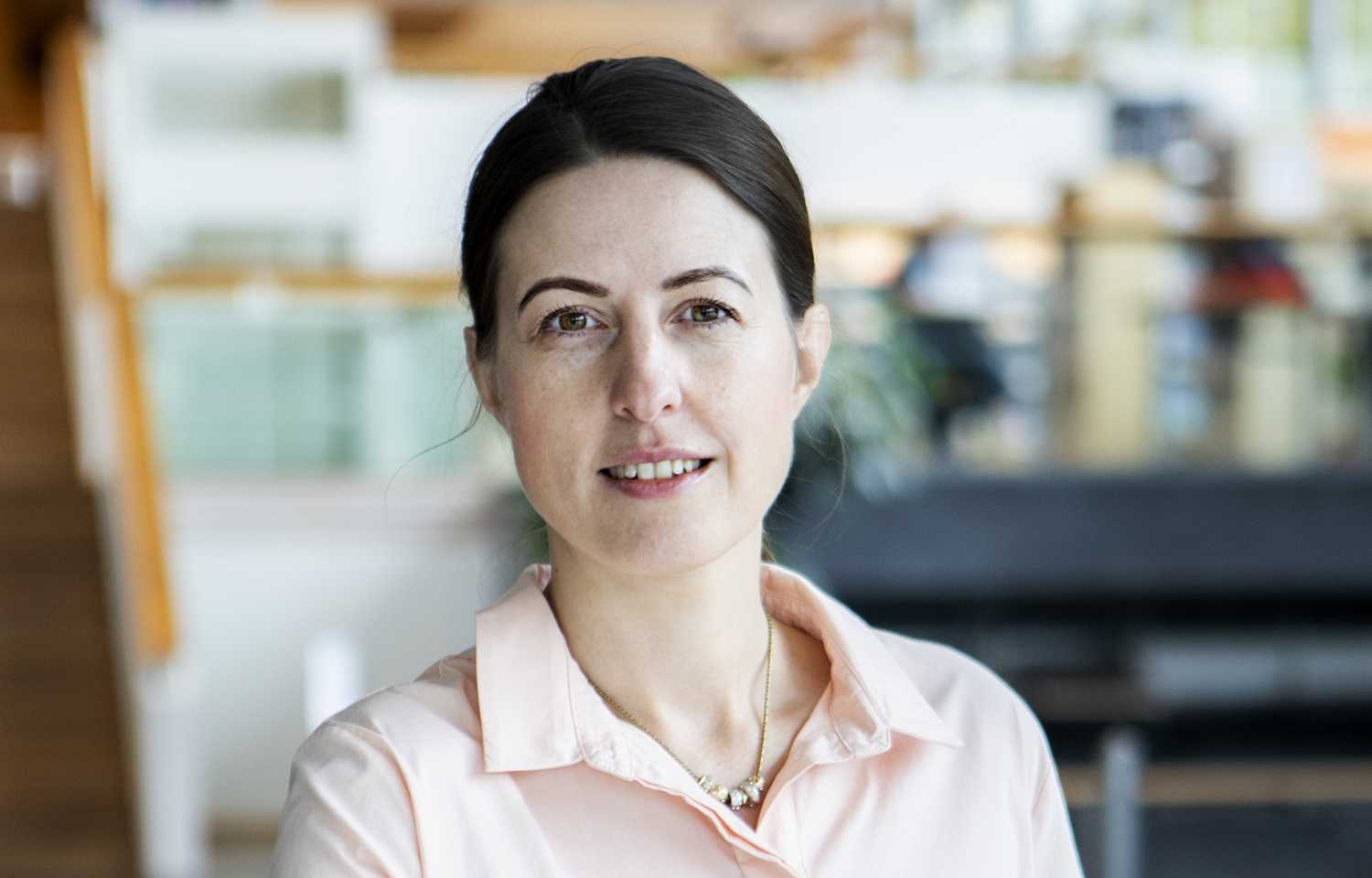
Big Akwa aims to revolutionize land-based aquaculture by sharing the farm with a processing industry partner, forming an effective symbiotic relationship, according to Big Akwa Co-Founder and CEO Elena Petukhovskaya. The collaboration will help drive efficiency, minimize waste, maximize profitability, and contribute to circular food production, she told SeafoodSource.
“Our first farm will be built on a new industrial park and will share resources and infrastructure with a 100-megawatt green hydrogen plant operated by RES Nordics,” she said. “This company is part of the largest independent renewable energy organizations in the world, and we hope that if the first collaboration is successful, it will pave the way for future farms.”
The collaboration aligns with the company’s original mission. Since its establishment in 2020, Big Akwa has been working to determine the most efficient and environmentally friendly way to produce seafood.
Petukhovskaya was already familiar with trout aquaculture, having worked for several years in aquaponics before assuming her role at Big Akwa. Through her previous experience, she said she realized that farming trout as a stand-alone product would provide a greater contribution toward the country’s food security.
“There are very few fish farms in Sweden, so the country is nowhere near self-sufficient in aquaculture, despite [the fact that] Swedes eating a lot of fish,” she said. “[Sweden] currently grows 13,000 MT of seafood annually, mainly trout, which amounts to consumption of 1 kilogram per person per year. However, [Swedes] actually consume 30 to 32 kilograms of fish per person per year, so there is a massive disparity but significant public interest in increasing domestic food production.”
Seeking a complementary partner that could mutually benefit from a recirculating aquaculture system (RAS) seemed like a natural first step to achieving that goal, according to Petukhovskaya.
“The fish farm will … maintain well-oxygenated water in the growing tanks and also in the bio-purification process to clean gray water,” she said. “The waste heat, as well as reducing our energy requirement to maintain the farm water at the correct temperature, will also be used to dewater sludge for use in biochar and fertilizer production. This will allow us to create an additional income stream from environmental waste.”
Petukhovskaya is also excited by the potential to develop protein using fish waste and byproducts, with the company intending to develop and commercialize these types of processes over the next few years.
Having chosen a site and partner, the next step in the process was to apply for an environmental permit, which Big Akwa did in June 2024. The company is now waiting out the slow process of approval, which could take up to one year. Yet submission of the permit marks the start of the next pre-construction stage, inching Big Akwa closer to securing purchase of the land; fundraising for the build through a combination of equity, loans, and grants; and planning for the future, Petukhovskaya said.
“We hope to start building in 2025, stock the first fish the year after, and begin sales in 2027 to 2028,” Petukhovskaya said. “We are incorporating a hatchery into our plans, but there are also opportunities to buy fingerlings from Sweden and Denmark to kickstart the process if timing slips.”
A funding round completed in June 2024 raised EUR 533,000 (USD 571,000), while two previous rounds brought in EUR 1.9 million (USD 2.1 million). Total costs of the Alby project are estimated at EUR 80 million (USD 86.6 million).
“We were pleased to welcome new investors in our last funding round and deeply grateful to our existing shareholders for their support and trust during this exciting growth phase for Big Akwa,” Petukhovskaya said. “We also look forward to welcoming international investors once we have all our permits and plans in place, many of whom have already expressed keen interest in our plans to disrupt the aquaculture industry.”
Big Akwa’s plans are part of an overall innovative landscape of fish farming in Sweden, including companies like Agtira designing micro-farms located next to supermarkets around the country.
