


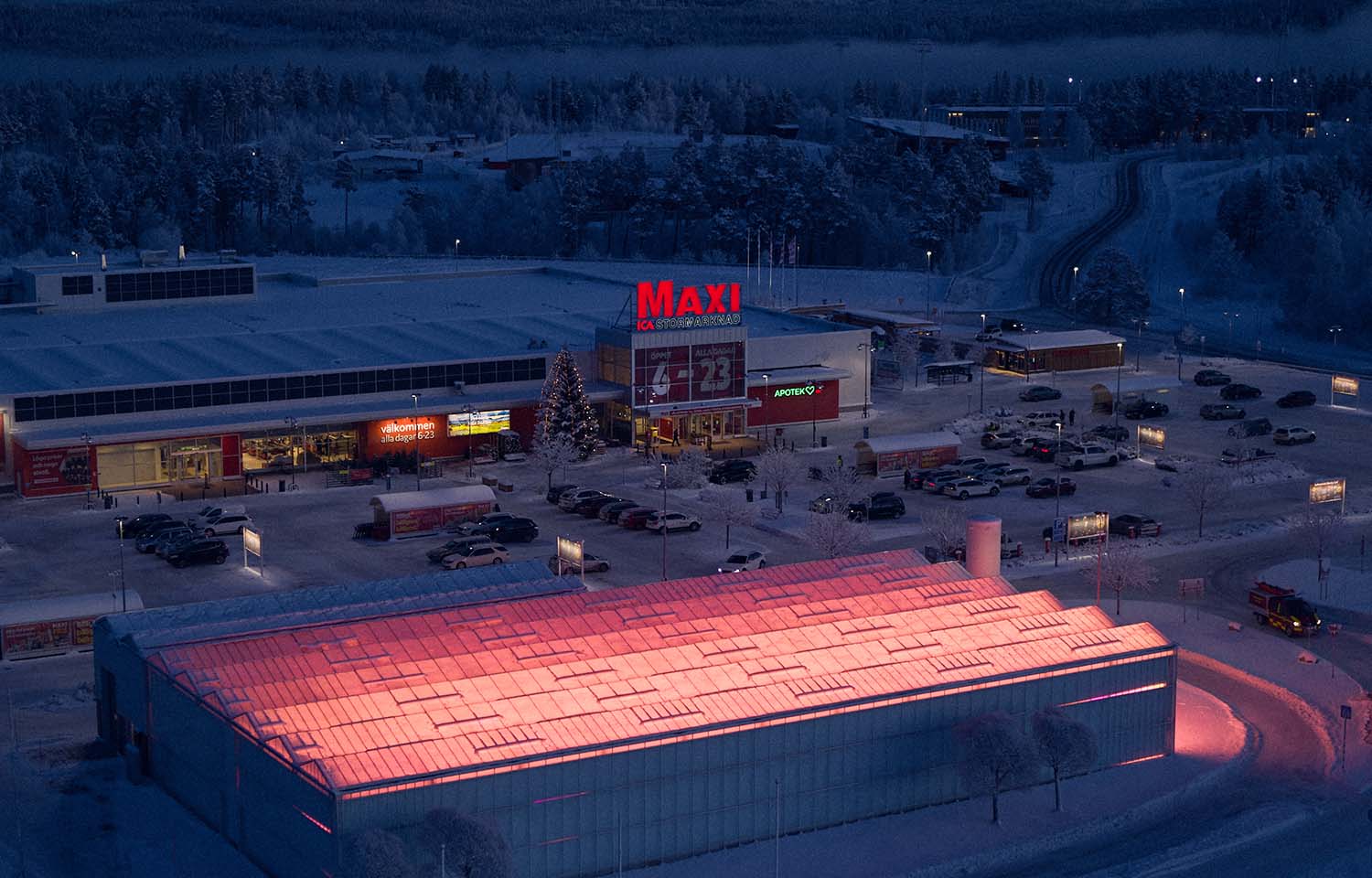
Härnösand, Sweden-based foodtech company Agtira has big plans to streamline the Scandinavian country’s food supply chain.
Employing a Farming-as-a-Service (FaaS) strategy, Agtira aims to grow vegetables and fish close to Sweden’s major retailers. Through long-term supply agreements with those retailers, the products will be sent directly to nearby grocery stores.
“Agtira represents a technology shift that can be compared to when agriculture went from oxen and horses to using tractors," Agtira CEO Erik Jonuks said. "We are changing an industry, and that will eventually affect the whole of society."
Agtira’s FaaS strategy is proving to be increasingly popular with retailers. Recently, Lidl Sweden announced it had become self-sufficient in its cucumber supply by implementing a Faas strategy with Agtira, with the two parties recently signing a 10-year partnership.
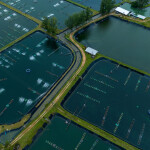
While Agtira’s vegetable growth occurs in greenhouses, its fish growth stems from the deployment of compact recirculating aquaculture systems (RAS).
Via a new three-way partnership, Agtira is working with Dutch land-based fish farming engineering and consultancy company Landing Aquaculture to place a compact RAS at its aquaponics facility in Östersund in central Sweden, which is close in proximity to one of retail giant ICA Maxi’s hypermarkets.
Agtira currently supplies the retail outlet with vegetables from its greenhouse, together with salmon and trout from its RAS farm in nearby Härnösand, which is also equipped with a hatchery. The company said it expects fish from the new RAS system will be available for Maxi customers beginning in 2025.
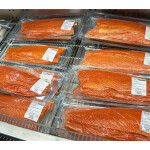
Once it's able to assure retailers of a consistent supply, Agitra plans to market the freshness of its salmon and trout to shoppers, which will augment current in-store offerings, such as in-house sushi preparation counters.
Carlos Espinal, the innovation director at Landing Aquaculture, told SeafoodSource the planning and design of the compact RAS unit Agtira plans to utilize concluded at the beginning of 2024, and the project is now in its construction phase at Landing’s base near Eindhoven, the Netherlands.
Landing collaborated closely on the design with Norwegian consulting company Alde Akva, which has extensive experience building out land-based fish-farming facilities.
The unit’s parts are expected to be shipped to Sweden in Q2 2024, where a team will then swiftly put together the entire unit. It will then take a further two months to complete operational tests and for the beneficial bacteria in the system to mature before the first smolts are transferred into the unit from a Härnösand hatchery.
The target harvest weight of fish raised in the RAS is four kilograms, which will take between 12 and 18 months to rear, depending on the size of the smolt introduced.
“The RAS can grow up to 10 metric tons of Atlantic salmon, which translates into 8 MT of fillets, and the processed effluents will support a greenhouse capable of producing 100 MT of vegetables,” Espinal said.
Agtira's greenhouses also boast a novel approach.
“Our process means that different streams of water could have a bespoke mineral content, and provide a ‘mix-and-match’ approach for the aquaponics system, depending on the type of vegetable being grown,” Espinal said.
In designing the system, Espinal aimed for a zero-water exchange, with almost all of the water filtered and excess nitrogen removed by anaerobic reactors. The remaining sludge is then broken down by bacteria, dewatered, and used as fertilizer.
Agtira currently operates vegetable aquaponic systems near three ICA Maxi hypermarkets and a Greenfood store and has 12 more in the works for the same companies.
“In the past, we have tended to work with entrepreneurs and small- to medium-scale projects and are delighted to be working with Agtira – the largest aquaponics operator in Europe – to supply a compact RAS unit. We hope this will be the start of a long relationship that will see similar systems installed alongside their other greenhouses,” Espinal said.
Agtira plans to assess results from the new RAS, including the quality of fish, the type of species, and the size preferred by customers, and will use these findings to adapt future systems.
