




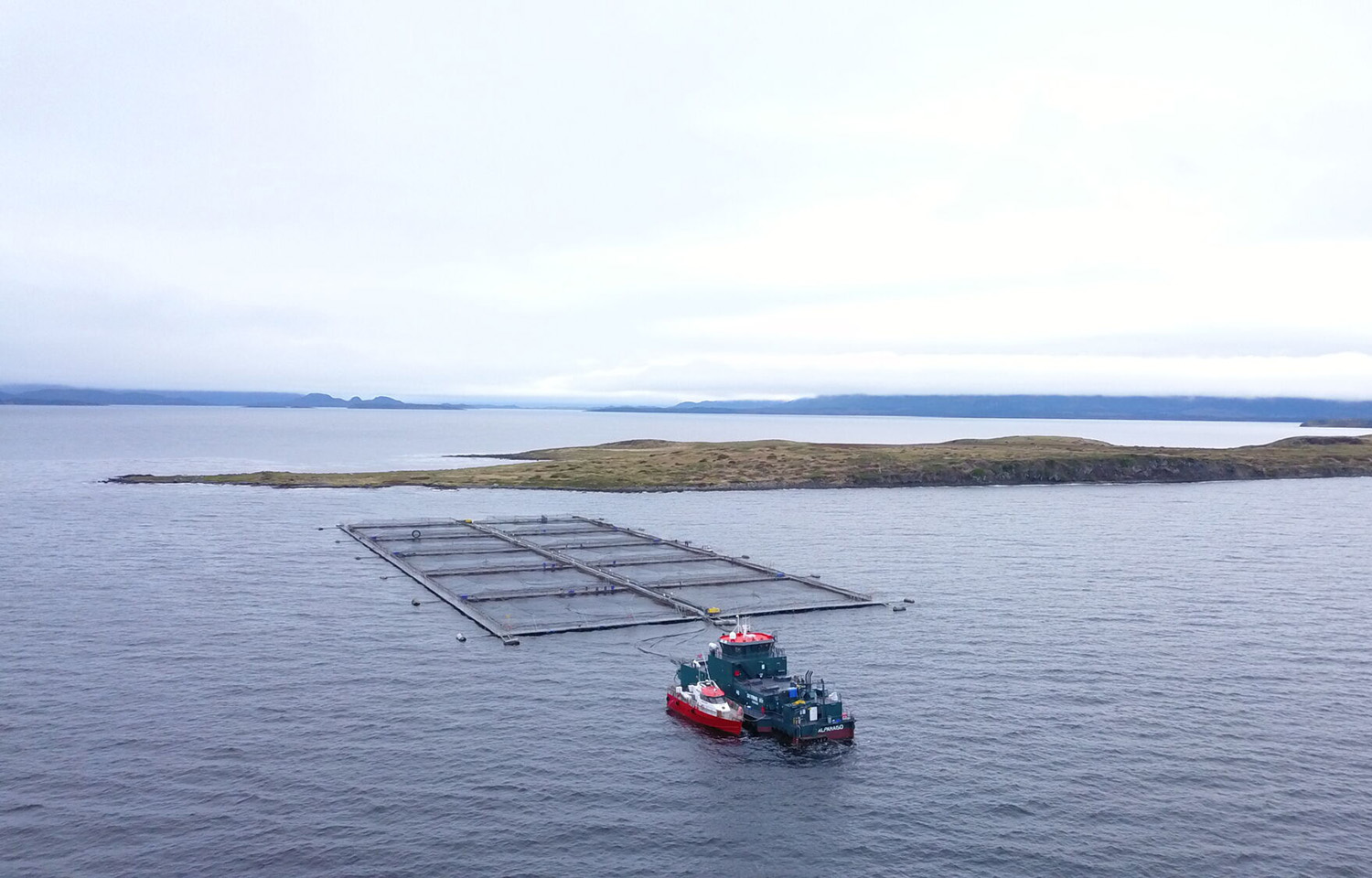
Salmon-farming firms Blumar, Australis Mar, and Cermaq Chile have undertaken a three-year scientific study to redefine production areas in Chile’s southernmost Magallanes region, aiming to optimize operations while reducing sanitary risks.
Under the joint initiative, a multidisciplinary team of scientists, veterinarians, and academics spent three years performing advanced modeling, oceanographic campaigns, systematic collection of environmental and sanitary data, long-term behavior analysis of currents, and pathogen dispersion modeling, with the goal of establishing a technical foundation for the three firms to submit a proposal to fishing authorities: subdividing seven salmon-farming concessions in the municipality of Río Verde.
The subdivision covers approximately 50 percent of the region's productive area, the Association of Magallanes Salmon Farmers told SeafoodSource.
The project was reviewed by specialists from Chile’s National Fisheries and Aquaculture Service (Sernapesca) and the Chilean Fisheries Development Institute (IFOP), and in January, it was approved by the country’s Undersecretariat of Fisheries and Aquaculture (Subpesca).
According to the Association of Magallanes Salmon Farmers, the project is “unprecedented” and may well set the tone for future proposed adjustments to existing concessions.
“This project reflects the future of aquaculture: a production system based on science and the creation of territorial knowledge, enabling more efficient production with lower sanitary and environmental risks. Magallanes has unique conditions to become an aquaculture powerhouse, and moving forward with robust information allows us to improve sanitary sustainability, operational efficiency, and regional development,” Association of Magallanes Salmon Farmers President Carlos Odebret said in a release.
The salmon-farming industry in Magallanes is responsible for over 15 percent of all the salmon produced in Chile and nearly 5 percent of employment in the region, according to data from SalmonChile.
“In addition to the operational benefits, this project strengthens scientific knowledge of the regional ecosystem, providing valuable information for the responsible and sustainable development of aquaculture in Magallanes. We believe this sets a standard for our sector and positions the region as a knowledge-based aquaculture development hub,” Odebret said.
Projected benefits resulting from the concession subdivisions include enhanced sanitary management of farm sites, strengthened biosecurity, lower risks, and more stable and predictable production cycles. It also seeks to streamline productive management, including enhanced maritime and land-based logistics, leading to improved operational efficiency while lowering pressure on support systems.
“The value of this work lies in the integration of multiple scientific disciplines to better understand the environmental and sanitary behavior of farm sites under sub-Antarctic conditions. This type of study allows for better-informed production decisions and reduces uncertainties while maintaining the region’s good sanitary conditions”, said Hernán Rojas, an epidemiologist specializing in sanitary management and one of the members of the scientific team that performed the research.
The work performed can be comparable to the standards developed in other salmon-producing countries such as Norway, Canada, and Scotland, according to fellow team member Fernando Mardones – a veterinarian and academic at the University of Edinburgh.
“It represents a solid foundation for the future of the industry,” he said.
