






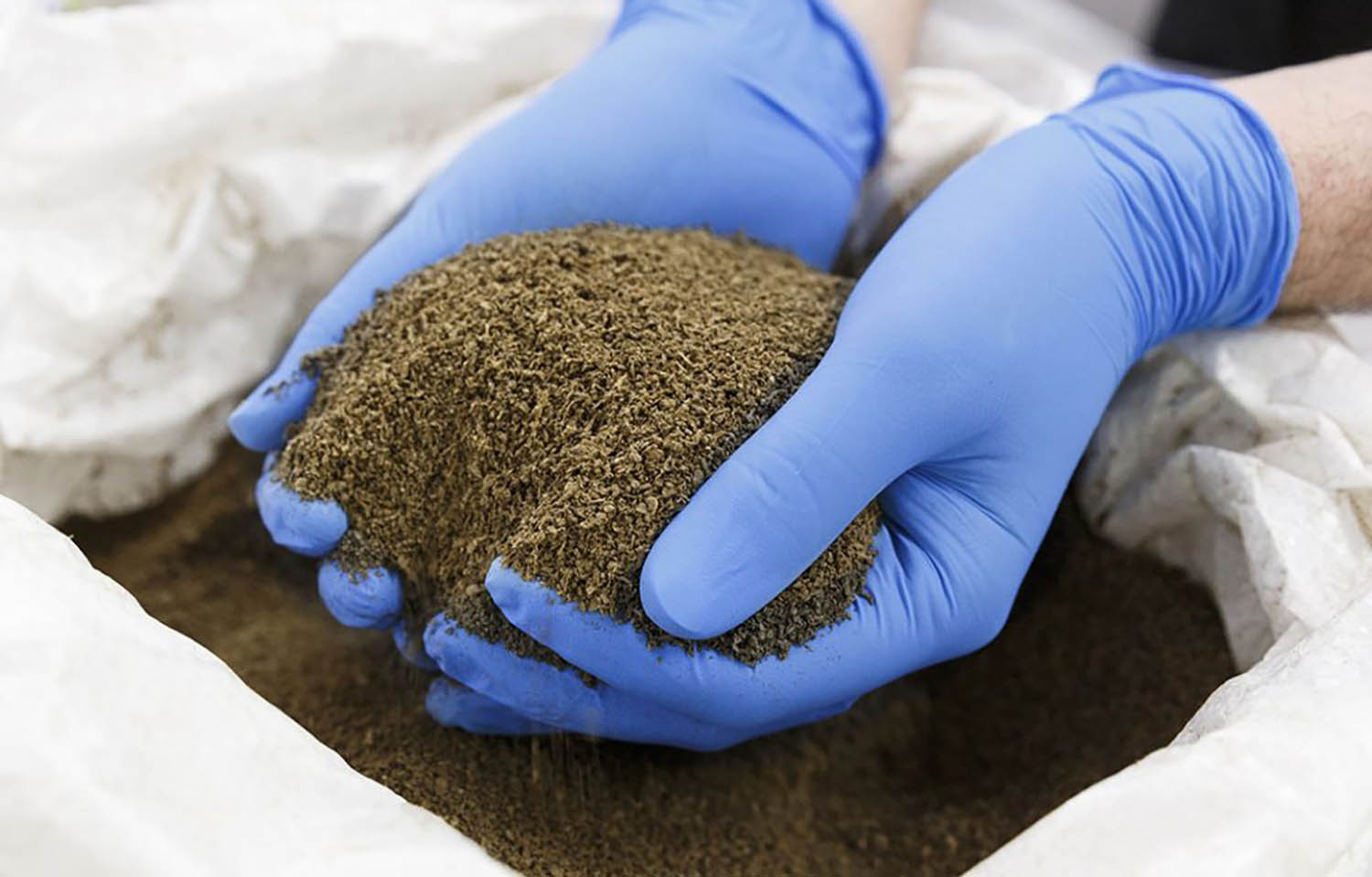
For aquaculture companies looking to embrace an effective circular economic model, as well as a lighter footprint on marine resources, using insect-based aquafeed as a partial replacement for traditional fishmeal can help and, actually, open up new markets, according to Felipe Mayol, the commercial manager at Chilean startup Food for the Future (F4F).
F4F breeds black soldier flies to produce alternative aquafeed. To help their flies grow, the company feeds the insects organic waste at the rate of 1,000 metric tons (MT) a month.
Insect-based aquafeed has been widely tested in farmed fish species and has proven to be competitive with traditional fishmeal’s high standards of nutritional performance. However, it is largely only meant as a complement to fishmeal, as insect-based diets alone cannot come close to meeting overall fish dietary needs, Mayol said.
Currently, F4F can manufacture between 35 MT and 40 MT of insect protein for use in aquafeed per month.
Of the 1,000 MT of food waste F4F uses to feed its flies monthly, 200 MT comes from partnerships with supermarkets such as Jumbo and Santa Isabel – both owned by Cencosud, one of Chile’s largest retail conglomerates – and the Walmart-owned Lider.
“This started about two years ago when Cencosud’s sustainability department told us, ‘What you have is incredible. We have a zero-waste-to-landfill program that needs to be implemented by 2030, and we want to take our waste to you. How much will you charge us?’” he told SeafoodSource.
Walmart is the leading supermarket chain in Chile, holding 44 percent of the sector’s market share, followed by Cencosud at 33 percent, according to Santander Trade Markets. Jumbo alone operates 59 supermarkets in Chile, boasting more than 3.76 million total square feet of space.
Half of F4F’s organic supermarket waste comes from Jumbo. As the partnership between the two companies was coming together, Mayol contacted local salmon-farming firm Caleta Bay, which uses F4F’s insect-based feed, to see if it could initiate a triangular business relationship.
“I asked [Caleta Bay] how long they had been trying to get their products onto Jumbo shelves, and they said they had been trying for more than five years. I told them, ‘OK, I have a proposal for you,’ and that’s why today, Caleta Bay trout can be found in Jumbo,” he said. “So, the issue of waste from our circular economy also helps to open markets.”
As momentum began to grow around the initiative, F4F teamed up with Caleta Bay and natural marine algal oil producer Vermaris to launch a new campaign centered around “AI” fish, or fish raised on algal oil and insect feed. While the market focus remains mostly limited to Chile, the partners also now have a customer in the U.S.
“What you can now see on Caleta Bay's Instagram is the result of about two years of work with them. They now feed their trout in a more sustainable way with insects, which partly replace some proteins such as fishmeal or algae oil in the case of fish oil,” Mayol said. “Basically, it seeks to reduce the dependence on marine resources. Veramaris is replacing fish oil, and we are replacing fishmeal so we can multiply the effect of the decrease in ocean pressure. These products we are launching together with [fish] producers are meant to raise awareness and test consumer responses.”
A recognized brand such as Caleta Bay putting F4F’s logo on its packaging was a major milestone for the alternative aquafeed provider, according to Mayol.
“While we are not going to develop a final product [for sale to the end consumer], we certify that it is a product with a more sustainable protein,” he said, adding that Caleta Bay has several more lines of product, giving the partnership significant room to expand.
“I am using the commercial and creative muscle of Caleta Bay. We very much work hand in hand, but I have to keep up with them because they supply the trout," he said. "The Jumbo [supermarket] business is just the beginning. With higher mass production, they will ask me for more feed."
F4F has also partnered with Puerto Montt, Chile-based salmon-farming firm Multi X and aquaculture feed supplier BioMar to implement the country’s first pilot feeding plan with products made from insect protein instead of fishmeal.
Insect-based aquafeed’s “effect as an agent promoting aquaculture health has been observed, improving the immune status and antimicrobial capacity of aquatic animals while obtaining environmental benefits such as a significant decrease in the carbon footprint and lowering pressure on marine ecosystems,” Mayol said at the time.
The company also produces insect-based fertilizer for plant growth.
