


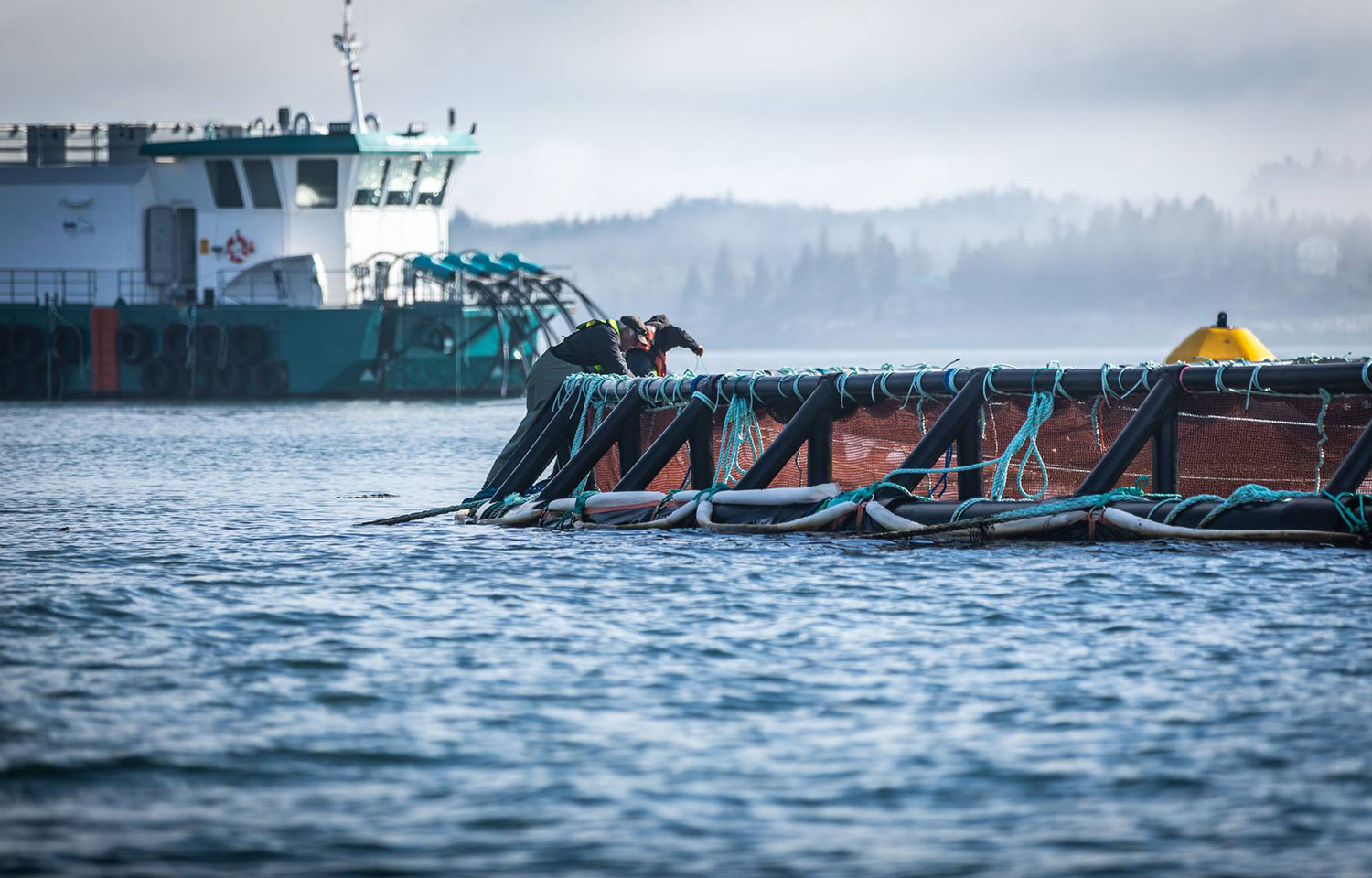
Cooke Aquaculture lost nearly 60,000 fish in two mortality events at its Newfoundland, Canada salmon farming sites.
Cooke reported both mortality events to Newfoundland and Labrador’s Department of Fisheries, Forestry and Agriculture, which requires that aquaculture producers report losses that amount to greater than 10 percent of the farm’s total population.
The first event occurred at Cooke's Cold Ocean Salmon farm, located in Olive Cove in Hermitage Bay, where approximately 47,000 fish died between 19 and 29 July.
Cooke VP of Public Relations Joel Richardson told the Canadian Broadcasting Company high water temperatures and sea lice contributed to the fish deaths.
“The mortalities appear to be a result of a rapid rise and fall in water temperature over a short period in time combined with a localized presence of naturally occurring sea lice in the area, together causing an increased strain on the fish,” Cooke said in its public report about the 29 July event.
Richardson said the other mortality event, in which 17,000 to 18,000 smolt died at the company’s Grip Cove farm, was caused by a mechanical issue during a smolt transfer.
"It's unfortunate that you have crop loss and you lose fish. But, you know, that is the nature of farming and growing food," Richardson told the CBC.
In its report about the smolt mortality event, Cooke said the event affected only one smolt shipment to the farm site, which contained 137,434 salmon.“The mortalities are a result of mechanical issues during transfer from a well boat causing an increased acclimation strain on the fish,” Cooke said.
Cooke concluded both reports with a note that, “all livestock farmers encounter and manage mortalities.”
Mowi Canada also reported a mortality event in Newfoundland at the end of July, with its Little Burdock Cove site seeing at least 17,000 fish die during the end of a harvesting period due to high water temperatures and low oxygen levels.
