



The Conservation Law Foundation (CLF) has sent a letter to Cooke Inc. CEO Glenn Cooke announcing its intent to sue the company over alleged Clean Water Act violations at its salmon farms in the U.S. state of Maine.
In the letter, CLF said it plans to initiate the action in the U.S. District Court for the District of Maine no earlier than 60 days from the postmark of its letter, dated 14 November. CLF claims Cooke’s aquaculture operations in Maine have violated conditions of its Maine Pollutant Discharge Elimination System permits and the Federal Clean Water Act.
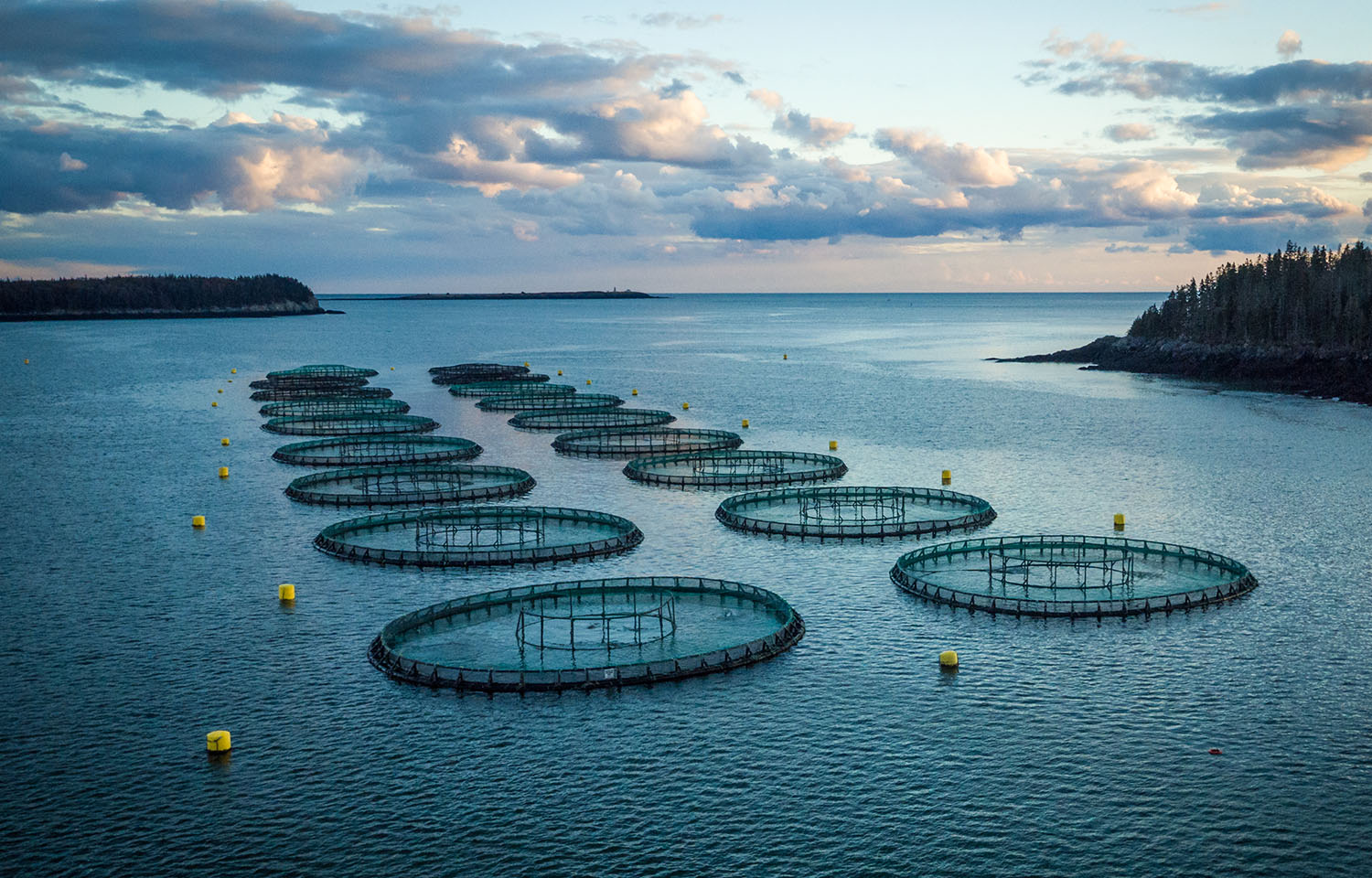
“These enormous salmon cages are like sewage pipes to the marine environment,” CLF Clean Air and Water Program Vice President Heather Govern said in a release. “Their solid waste smothers plants and ocean life while disease outbreaks and sea lice threaten nearby endangered wild salmon. We need to enforce our federal laws to protect Maine’s bays and communities.”
Cooke responded immediately to the allegations, stating CLF’s claims that the company has violated the Clean Water Act and its permits are “false, misleading, and lack any substantiating evidence.”
“Cooke is in full compliance with the laws set forth by the Maine Department of Environmental Protection, the Maine Department of Marine Resources and its operating permits,” the company said. “Cooke’s Maine Atlantic salmon farms are routinely inspected by state regulators and subject to regular monitoring reports. These laws are designed to protect Maine waters as well as Maine’s heritage fisheries.”
The company said its salmon farms in Maine are routinely audited and certified by third-party sustainability organizations, including the Global Seafood Alliance’s Best Aquaculture Practices third-party certification program.
“As part of this independent, voluntary program, all of Cooke’s Maine salmon aquaculture farms, hatcheries, processing plants and feed mills are audited against standards for environmental responsibility, social accountability, animal health and welfare, and food safety,” the company said. “To attain certification, facilities must be fully compliant with all clauses in the standards. Additionally, Atlantic salmon farmed in Maine is rated as a ‘good alternative’ by the Monterey Bay Aquarium’s Seafood Watch program.”
The CLF lawsuit is targeting 13 different Cooke sites: three sites near Swans Island, three sites near Eastern Bay, four sites in Machias Bay, and three sites in Cobscook Bay. The NGO claims the farms “dump several types of pollution into the surrounding waters” such as fish feces, “disease and sea lice,” escaped fish, and trash.
The letter specifically points to one instance where it claims Cooke violated standards. According to CLF, the company is required to remain below certain concentrations of sulfides, specifically within 3,000 μM, and in a 2023 sulfide report for the Sand Cove Cage Site, the company reported sulfide levels higher than allowed – but didn’t perform “benthic infauna monitoring” as required.
The other allegations relate largely to uneaten fish food, dead fish, escaped fish, and “floating ropes and large pieces of debris” from aquaculture operations.
“Cooke’s discharges impact lobstermen, fishermen, recreational boaters, and beachgoers whose livelihoods and enjoyment depend on clean water and healthy ocean ecosystems,” the CLF letter states.
In its statement, Cooke said finfish aquaculture has been coexisting with some of those uses for more than 40 years.
“Lobster landings are not negatively affected by Atlantic salmon farms. In fact, lobster gear is set alongside and within aquaculture lease boundaries,” the company said.
The threat of a lawsuit comes months after Cooke USA commemorated 20 years of operation in the U.S. state of Maine in August 2024.
“In 2004, with the acquisition of Atlantic Salmon of Maine, we aimed to stabilize Maine’s salmon farming industry through improved efficiencies to support Maine’s working waterfront and provide jobs,” Glenn Cooke said. “We have many long-term employees who have been with us from the start, and we thank them for their dedication and are grateful to all those who have joined us over the years to grow a sustainable local business.”
The occasion also garnered congratulations from Maine Governor Janet Mills, who called the seafood industry a key part of the state’s economy.
“For two decades, Cooke USA has been a leader in seafood production in Maine, employing hundreds of people in high-quality, good-paying jobs,” Mills said.
Supporting organizations of CLF, like Sierra Club Maine and the Protect Maine’s Fishing Heritage Foundation, claim that Maine’s government isn’t doing enough to police Cooke.
“Cooke Aquaculture has been the subject of legal action around the world. As stated in the notice of intent to file against Cooke’s Maine operation, Cooke continues to violate regulations and permit conditions meant to protect the environment,” Protect Maine’s Fishing Heritage Foundation Executive Director Crystal Canney said. “Neither the Department of Marine Resources nor the Department of Environmental Protection has taken effective enforcement steps to prevent or remedy these violations. Protect Maine stands with those taking this action concerning Cooke and will continue its work to stop industrial-scale aquaculture from owning the coast of Maine.”
Canney has been a vocal opponent of aquaculture and opposed recent legislation in Maine that the Maine Department of Marine Resources said would have made reviewing aquaculture leases more efficient. Canney also questioned state action following a salmon mortality event at Cooke in 2021 – which Cooke Aquaculture reported to the Maine Department of Marine Resources as required by law.
A Cooke spokesperson told SeafoodSource it has no further comment on the intent to sue aside from its 14 November statement.
