



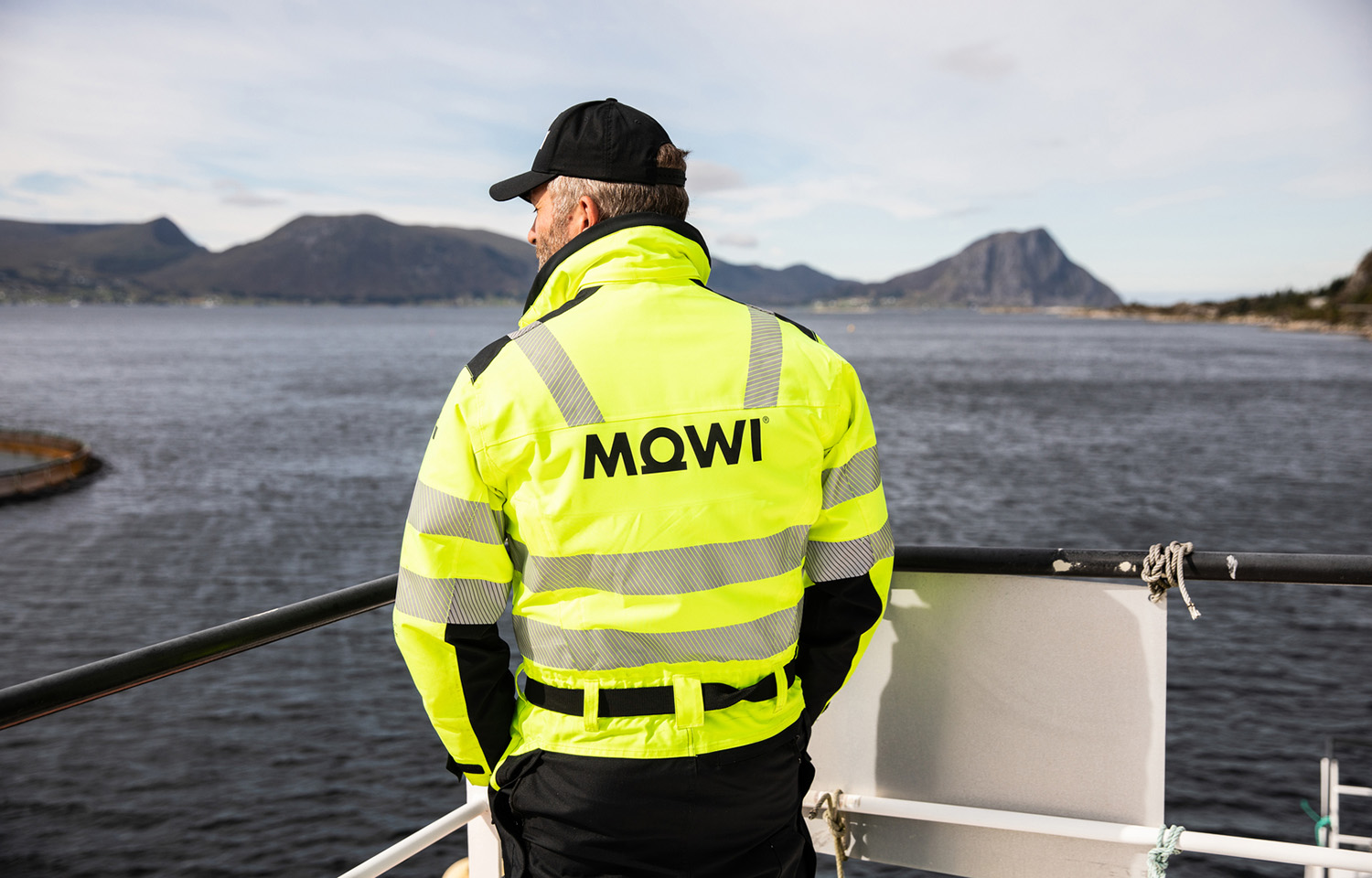
The supply of Atlantic salmon around the globe has increased 527 percent since 1995, equating to annual growth of 7 percent over the past 30 years.
However, the industry is nearing a production level where biological boundaries may force that growth to nearly plateau, according to a new report released by Mowi, the world’s largest salmon-farming firm.
Mowi’s 2024 Salmon Farming Industry Handbook highlights that annual supply growth for Atlantic salmon fell to 3 percent from 2013 to 2023 and expects it will further drop to 2 percent from 2023 to 2028.
The Bergen, Norway-headquartered salmon-farming firm said future growth can no longer be driven just by the industry and regulators but, instead, will require pointed measures to reduce its biological footprint. This will require technological improvements, the development of improved pharmaceutical products, the implementation of non-pharmaceutical techniques, better industry regulations, inter-company cooperation, and political willingness to permit more salmon farming, Mowi said.
“Too rapid growth without these measures in place adversely impacts biological indicators, costs, and, in turn, output,” the report said.
Supply growth has coincided with growth in global demand for Atlantic salmon, which has increased by 3 percent in all markets over the last 10 years.
The E.U., with the U.K. included, and the U.S. have been the largest markets for the product, while emerging markets such as Brazil and Asia have purchased more salmon recently, with the exception of 2020 to 2022, when trade was hampered by Covid-19 restrictions and increased airfreight costs.
This large growth in demand is due to Atlantic salmon being perceived around the world as “a healthy, resource-efficient, and climate friendly product," according to Mowi. On the back of a growing global middle class, an aging population, a global trend toward healthy living, and a focus on the carbon footprint of people and companies, demand grew an estimated 11 percent annually over the past decade.
Product innovation, proper category management, long-term supply contracts, and effective logistics and transportation have also stimulated demand growth for salmon, Mowi said.
Specifically, the approximately EUR 20 billion (USD 21.4 billion) spent on salmon in 2023 was “close to a record-high level and is expected to continue to grow in the coming years.”
Alongside increased supply and demand, the value of salmon sold increased 122 percent between 2013 and 2023, equating to a compound annual growth rate (CAGR) of 8 percent.
Since 2014, prices have varied between 2023’s high of EUR 7.86 (USD 8.42) per kilogram (2023) and 2015’s low of EUR 4.52 (USD 4.84) per kilo; last year’s prices continually reached record-high levels as a result of strong demand and limited supply from key producing regions – a trend Mowi predicted will continue.
As in most commodity industries, though, producers of Atlantic salmon will still experience high volatility in the price achieved for the product, according to the report. The average price by gutted-weight tonnage for Norwegian whole salmon since 2014 has been about EUR 6.20 (USD 6.64) per kilo and USD 7.30 (EUR 6.82) per kilo for both Chilean salmon fillets and Canadian salmon.
Scottish and Faroese salmon pricing is linked to the price of Norwegian salmon, with Scottish salmon normally enjoying a premium over Norwegian salmon. Faroese salmon used to trade at a small discount to Norwegian salmon, but due to geopolitical events in the last decade, salmon from the Faroes also now trades at a premium over Norwegian salmon in select markets.
Over the past 10 years, costs in the industry have trended upward due to several factors, including rising feed costs, biological costs, and more stringent regulatory compliance procedures. Over this period, the average EBIT for the Norwegian industry has been EUR 1.50 (USD 1.61) per kilo in nominal terms, Mowi said.
Mowi achieved total revenu of EUR 5.5 billion (USD 5.9 billion) last year – up from 2022’s record EUR 4.9 billion (USD 5.2 billion). Its harvest totaled a record 475,000 metric tons (MT). The group’s 2024 harvest guidance is set for 500,000 MT of salmon.
