






On the heels of recording a best-ever third-quarter Atlantic salmon harvest of 161,000 gutted weight tons (GWT), and with an overall 2024 harvest of 500,000 GWT almost a formality, Bergen, Norway-headquartered salmon-farming firm Mowi has issued a 2025 volume guidance of 520,000 GWT.
CEO Ivan Vindheim said the new guidance will put the company on course for its “next milestone” of 600,000 GWT, which it aims to reach in 2029.
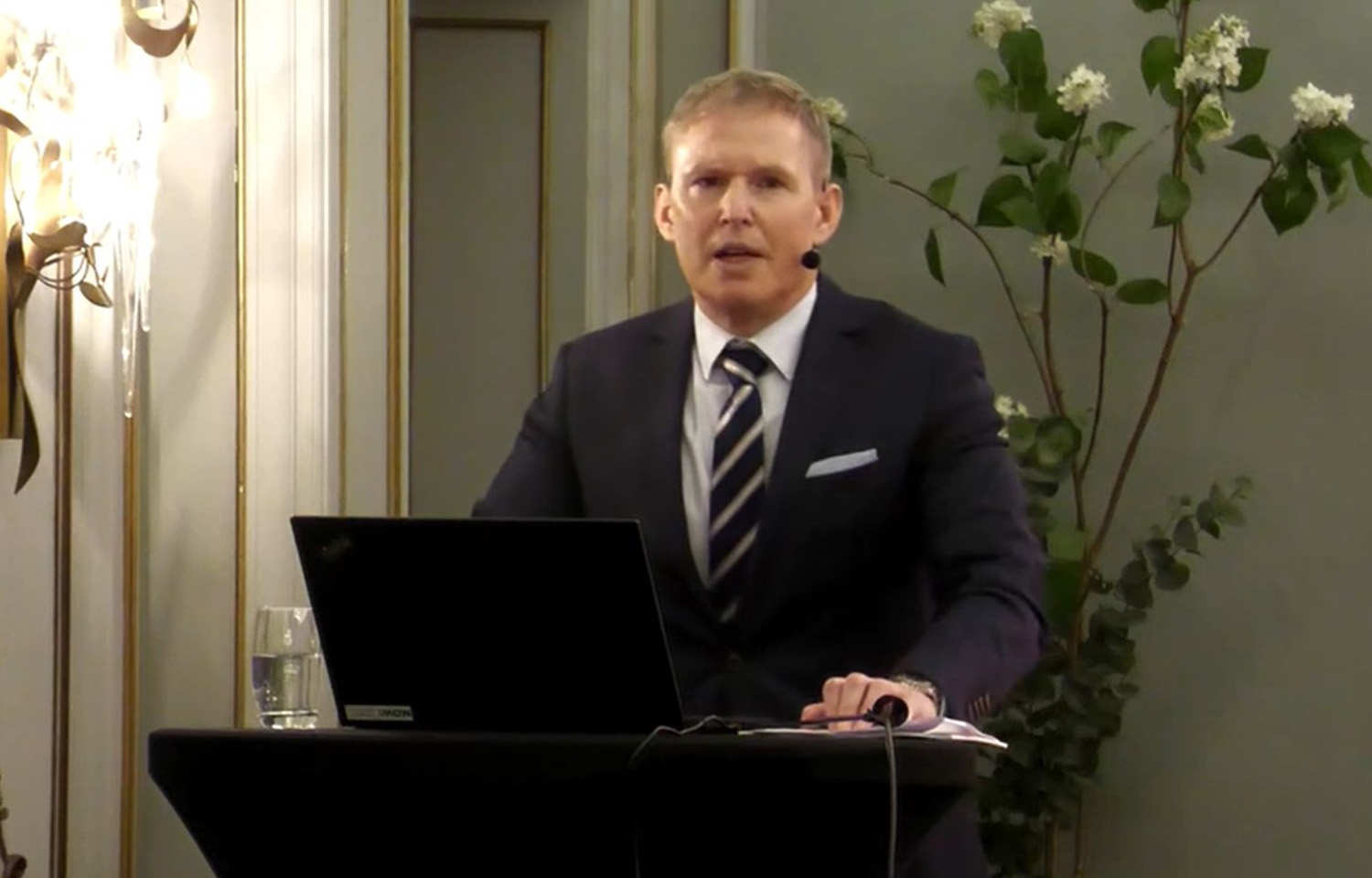
Delivering Mowi’s Q3 2024 results in Bergen, Norway, on 6 November, Vindheim said that achieving 520,000 GWT next year would mean Mowi’s harvest volume had increased by 145,000 GWT since 2018. This, he said, would be equivalent to a 4.8 percent compound annual growth rate, compared to the industry’s average of 2.7 percent, with a record-high biomass in the sea of 329,000 live weight tonnage (LWF) supporting the increase.
“Mowi’s idiosyncratic growth continues and is still surpassing that of the wider industry by a large margin,” he said.
Alongside its best-ever Q3 volume, Mowi recorded record-high operational revenues of EUR 1.44 billion (USD 1.5 billion) in the period, up 6 percent from EUR 1.36 billion (USD 1.5 billion) a year previously. Its operational profit slipped 15 percent to EUR 173 million (USD 186 million), with lower prices offsetting the quarter’s increased volume and stable costs.
“This was another record-breaking quarter for Mowi in terms of top-line growth, and by extension, we have maintained our volume guidance of 500,000 GWT for this year, which would be a milestone achievement for us as it will be the first time in Mowi’s 60-year history that we’ve crossed this ‘magic 500,000-ton mark’ and is equivalent to a growth of 5.3 percent year over year,” Vindheim said.
According to Mowi’s Q3 2024 report, of the total volume harvested in the period, its Norwegian operations produced a record-high 105,776 GWT – versus 86,228 GWT a year previously. Meanwhile, Scotland contributed 15,227 GWT compared to 14,730 GWT in Q3 2023, Chile contributed 23,211 GWT compared to 17,651 GWT previously, Canada contributed 6,684 GWT compared to 7,485 GWT previously, Ireland contributed 3,663 GWT compared to 1,994 GWT, the Faroes contributed 3,051 GWT compared to 2,532 GWT, and Iceland (Arctic Fish – its 51 percent owned subsidiary) contributed 3,407 GWT compared to 4,383 GWT.
Vindheim confirmed that Mowi’s farming costs across its seven farming countries were impacted by “seasonal issues” in the quarter, including lice, gill health scares, and high temperature challenges in Norway, as well as phytoplankton problems in British Columbia (BC).
He said these costs – while higher than the company expected or hoped for at an average EUR 5.72 (USD 6.15) per kilogram – were lower than in the first and second quarters of EUR 5.84 (USD 6.28) and EUR 6.05 (USD 6.50), respectively.
This achievement was largely on the back of lower feed prices and economies of scale on higher volumes, Vinsheim said.
He also said that a continuing downward trend in feed prices is expected to contribute to further cost reductions.
With strong volumes and seasonally lower raw material prices, downstream business Mowi Consumer Products delivered record-high third-quarter results, with an operational EBIT of EUR 43.5 million (USD 46.8 million) and an operating revenue of EUR 911.6 million (USD 980 million), compared with Q3 2023’s EUR 39.7 million (USD 42.7 million) and EUR 876.2 million (USD 942 million).
The division sold 65,005 metric tons (MT) of products in the quarter, versus 59,490 MT in the corresponding period of last year, with the report highlighting positive market developments in Asia and continued good retail demand in Europe.
Driven by good seawater growth and demand from its Farming division, Mowi Feed delivered its best quarterly result ever, with all-time high earnings and record-high volumes of EUR 25.2 million (USD 27.1 million) and 191,279 MT. By comparison, the company reported earnings of EUR 20.3 million (USD 21.8 million) and 168,945 MT in Q3 2023.
The Feed division’s revenues also climbed from EUR 344 million (USD 369.8 million) to EUR 363.3 million (USD 390.5 million).
Looking ahead to 2025, Mowi is projecting the 520,000 GWT salmon volume will comprise 315,000 GWT from Norway, 70,000 GWT from Scotland, 74,000 GWT from Chile, 29,000 GWT from Canada, 7,000 GWT from Ireland, 10,000 GWT from the Faroes, and 15,000 GWT from Iceland.
If realized, this total would be equivalent to a year-over-year growth of 4 percent, Vindheim said, adding that the company is anticipating a modest industry-wide supply growth of around 2 percent in 2025, compared to Kontali’s forecast of a 5 percent volume growth.
“If anything, we believe the risk is on the downside,” Vindheim said.
