

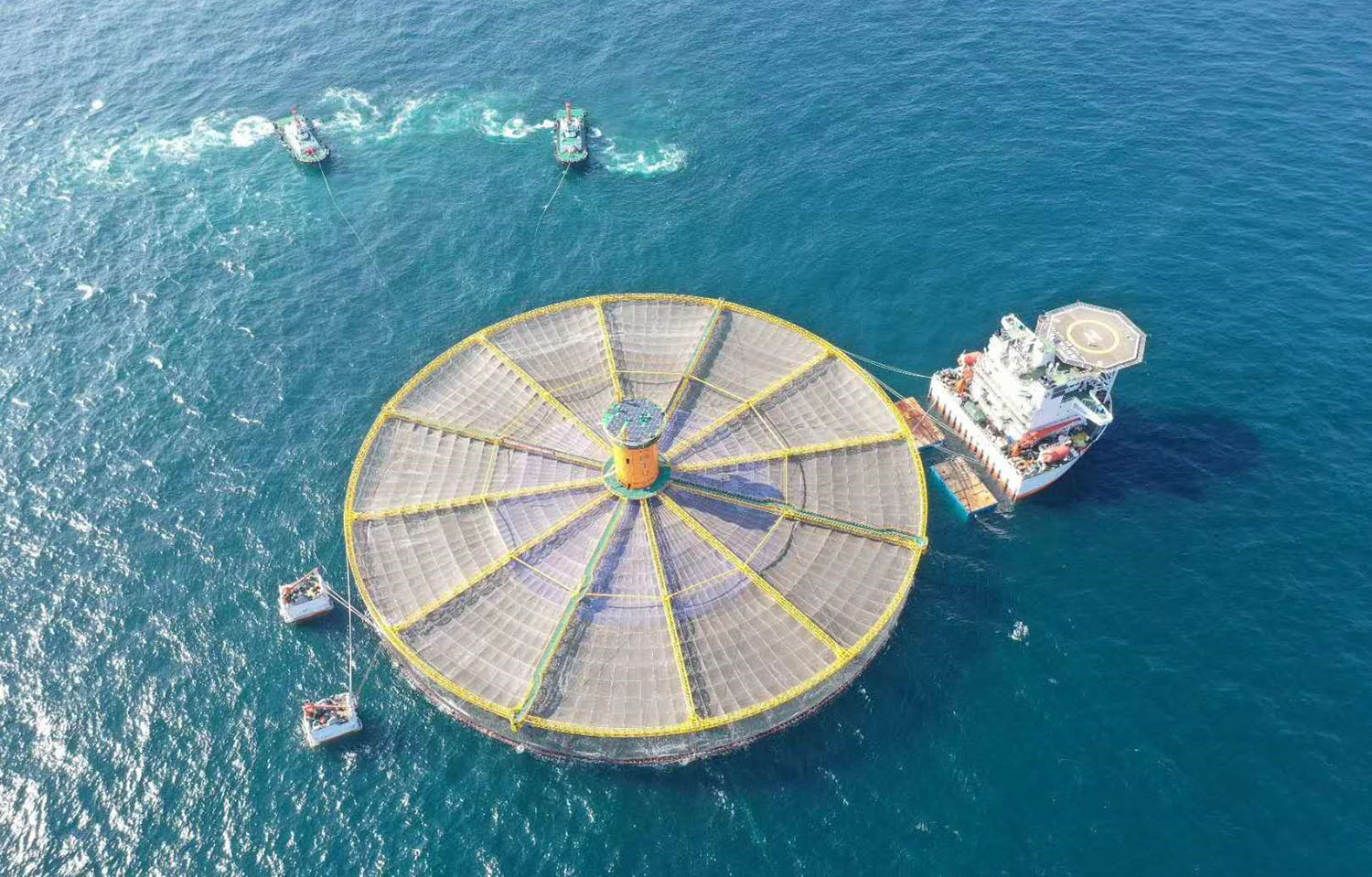
Dordrecht, Netherlands-based aquaculture technology firm Pan Ocean Aquaculture (POA) is in talks with authorities in Malta to construct a 4,000-metric-ton seriola farm using its semi-submersible fish farm (SSFF) design.
POA Co-Founder and Director Philip Schreven told SeafoodSource that since its inception, his company has given considerable thought and time toward developing a cost-effective fish farm and mooring design suitable for high-energy environments.
The result is its American Bureau of Shipping-certified SSFF technology that is fully independent, and capable of being operated entirely remotely. The facility houses feed, ballasting, monitoring, and control systems in a central submerged location, leaving nothing on the surface of the ocean to be damaged during rough weather.
“As designers, we looked at the offshore development ideas in Norway and realized that the figures did not stack up, so we worked on it from a viewpoint of affordability. Rather than just waiting for someone to snap up the idea, we decided to build one and prove the concept. But first, we had a lot to learn about legislation, regulations, and licensing,” he said. “The SSFF has been redesigned and improved several times since we built the prototype. The design is easily adapted for different species and can be used fully submerged for species such as seriola or partially submerged for salmonids,”
After POA’s initial planning Malta became a leading prospective location to put the technology into action when the island nation’s government released a plan in 2021 outlining its plans to develop its 200-mile coastal exclusive economic zone (EEZ) for renewable energy and aquaculture projects. Plans for the regulatory framework overseeing the EEZ are still being finalized, but are expected to be outlined in a bill for approval by the Maltese parliament in the near future.
“The Maltese government approached us, seeking companies to independently finance, operate, manage, and develop aquaculture operations within the new EEZ, declaring its intention to fast-track planning and environmental permitting,” Schreven said. “We found that the water temperatures and conditions there lined up well to farm seriola, and we now have our own fish biologists and aquaculturists on the team who specialize in this species.”
POA is currently seeking funding to build and deploy a farm and hatchery in Malta, but admitted that it has not been an easy project to get off the ground.
“Raising finance involves explaining the challenging nature of farming offshore to financiers but also educating them about the potential of this fish because it is not well known like salmon; however, there is good market demand in Southern Europe,” he said.
Malta is not the only spot where POA is looking to use its SSFF technology.
The company previously built a prototype offshore croaker farm for use in China in 2020, and also applied for a license to farm fish in Morocco, where the government announced it was interested in developing an offshore aquaculture industry. However, following protracted negotiations, the duration of the license offered there was only good for 10 years.
“This was not bankable. We couldn’t raise the considerable funds needed against a short-term license, so we are waiting on the slow process of changes being made to legislation in Morocco, which will enable longer terms to be offered,” he said.
POA is exploring opportunities in Mexico, Africa, Oceania, Iceland, and other greenfield offshore sites in Europe, as well as looking into the salmon market and investigating global government policies to track their shifting positions on moving such operations offshore.
“We see so much potential in Norway, as the country seems to be taking the lead again in opening up the process for offshore farming. We are keen to market our farming concept there, as we have a technologically advanced design ready to go,” he said.
Schreven is optimistic about the future of offshore fish farming and said he hopes that by getting in at the ground level, his company can build a successful future.
However, he said governments need to think carefully about putting all the pieces in place to enable offshore aquaculture to develop successfully, rather than continuing with the stop-start process that is currently the norm.
