





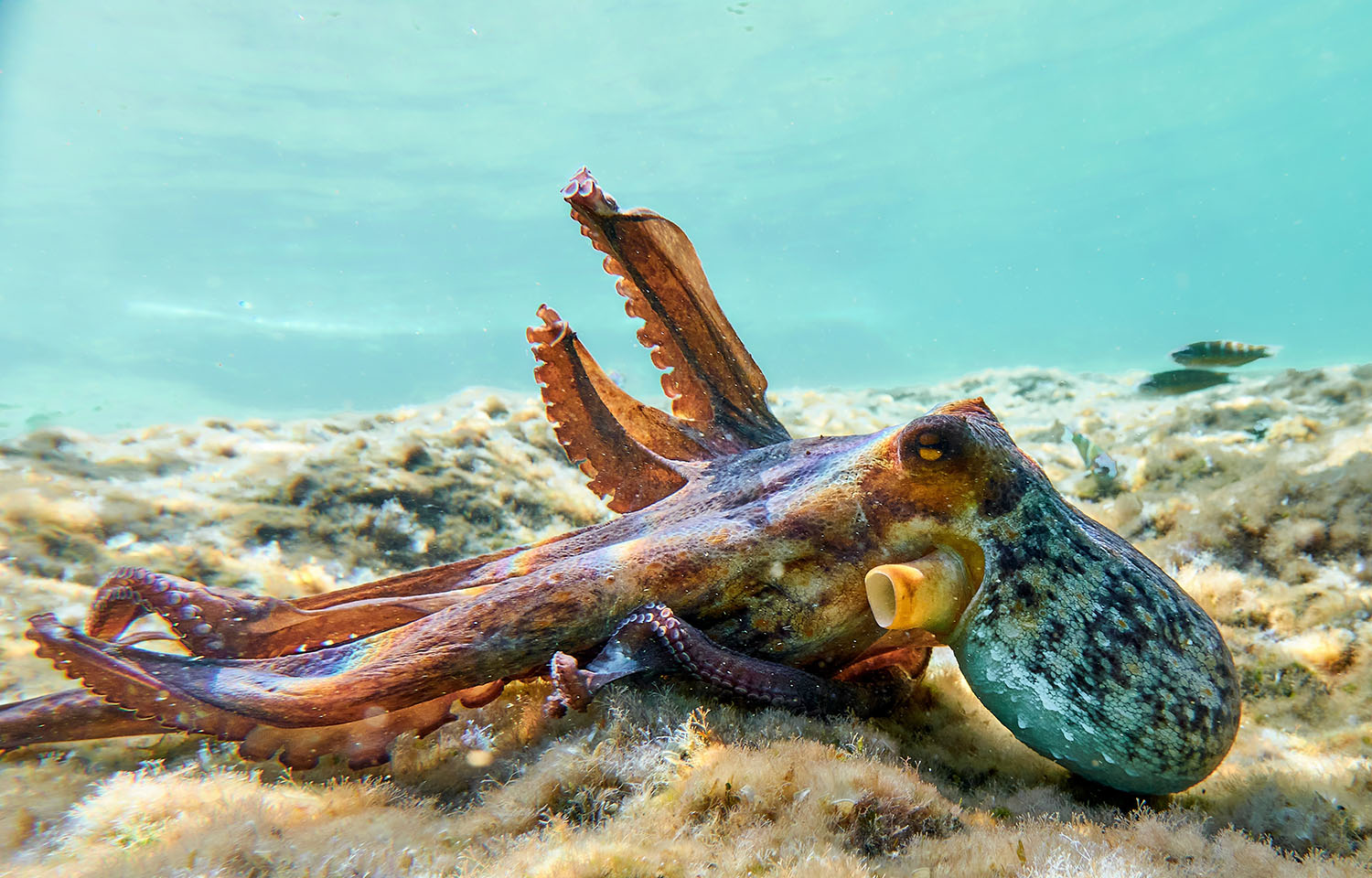
Legislators in the U.S. state of New Jersey are considering preemptively banning octopus farming, following in the footsteps of the West Coast states of California and Washington.
Animal welfare advocates have argued that because octopi possess advanced cognitive abilities, farming them would be inhumane.
“Octopuses are also solitary creatures, viewing other octopuses as a threat. On farms, octopuses would be cruelly overcrowded into small pools together, causing significant stress, aggression, and high mortality rates. Common, cruel methods of slaughtering octopuses include freezing and clubbing them to death,” the Animal Legal Defense Fund said in response to the bill.
As part of the growing recognition of octopi’s advanced cognition, animal rights organizations have pushed to have octopi farming ban.
While there are no octopus-farming operations currently in the United States, advocates say putting bans in place now will prevent any industry from building momentum.
The state of Washington already has such a ban in place, and California passed a ban in 2024. At the national level, U.S. Senator Sheldon Whitehouse (D-Rhode Island) and U.S. Senator Lisa Murkowski (R-Alaska) introduced the Opposing the Cultivation and Trade of Octopus Produced through Unethical Strategies (OCTOPUS) Act in 2024. That bill would have outlawed commercial octopus harvesting throughout the country; however, it was not passed by Congress before the end of the legislative session.
Now, animal welfare groups hope to make New Jersey the third state to outlaw the practice. In December 2024, the New Jersey office of the Animal Rights Initiative (ARI) sponsored New Jersy Bill S3914, which would ban any octopus aquaculture as well as the sale of any octopus raised via aquaculture.
“The science is clear: Octopus farming is unsustainable and poses catastrophic risks to New Jersey’s fragile marine ecosystem,” Animal Rights Initiative (ARI) New Jersey State Director Kerrie Espuga said in a statement. “This legislation ensures we are taking proactive measures to protect our marine habitats and the livelihoods that depend on them.”
In May, New Jersey senators finally held a hearing on the bill, with several organizations testifying in favor of the legislation. The bill largely drew supportive testimony, according to the New Jersey Monitor, although some representatives of the seafood sector strongly opposed the legislation.
“Why are we passing a law now to ban something which isn’t even happening in the state of New Jersey?” Garden State Seafood Association representative Scot Mackey told lawmakers, testifying in opposition to the bill.
“Slowly and surely, we are dying, the commercial fishing industry, from the death of 1,000 cuts,” Mackey said, according to the New Jersey Monitor. “As we continue down these paths of setting up these special rules and closing down these doors and windows of opportunity, you’re just making it harder and harder for hardworking people to make a living in the state of New Jersey.”
The committee did not vote on the bill after the hearing.
