




Rabobank’s RaboResearch unit is forecasting an increase in global aquaculture production in 2025, with increases seen in both farmed fish and shrimp volumes.
While increasing tariffs and trade restrictions may bring uncertainty or impede the industry, lower feed prices and rising demand should benefit producers, according to “Global Aquaculture Outlook 2025,” published by Rabobank’s Global Animal Protein Sector team. The publication projects that finfish production will see the most growth, while shrimp – which continues to be affected by low prices – will experience a more modest upturn.
The report’s author, RaboResearch Seafood Analyst Novel Sharma, advises that after two consecutive years of decline Atlantic salmon production is expected to achieve “mild growth” from 2024 to 2026. Norway will lead this trend, with year-on-year increases projected at 2.2 percent in 2025 and 5.3 percent in 2026, resulting in estimated outputs of 1.56 million and 1.64 million metric tons (MT), respectively. But Sharma predicts this growth is contingent on stable biological conditions and improving harvest weights.
Norway grappled with high lice loads and biological struggles in 2024, and the country also reported producing lower-grade salmon throughout the year due in part to those challenges.
Chile also had a difficult 2024, but RaboResearch predicts the country will gradually return to a growth trajectory, with a 1.4 percent year-on-year salmon production increase expected in 2025 (to 717,000 MT) and 3.2 percent in 2026 (totaling 740,000 MT). Sharma believes production volumes are unlikely to surpass 2020’s levels before 2026.
At the same time, it’s anticipated that Scotland’s salmon production will have risen by 15 percent in 2024 and that this will be followed by increases of 7 percent in 2025 and 6 percent in 2026, taking the country’s total to around 200,000 MT.
Canada’s production is forecast to have grown by 6 percent in 2024, with the expectation of rises of 1.4 percent in 2025 and 3.2 percent in 2026, with the latter taking the country’s volume to 124,000 MT.
Canada is currently facing an impending ban on open net-pen salmon farming in the province of British Columbia, which will hurt the country’s production levels. While production will increase in the short term, Rabobank predicts it won’t surpass peak production in 2021.
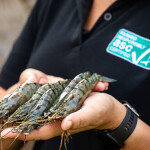
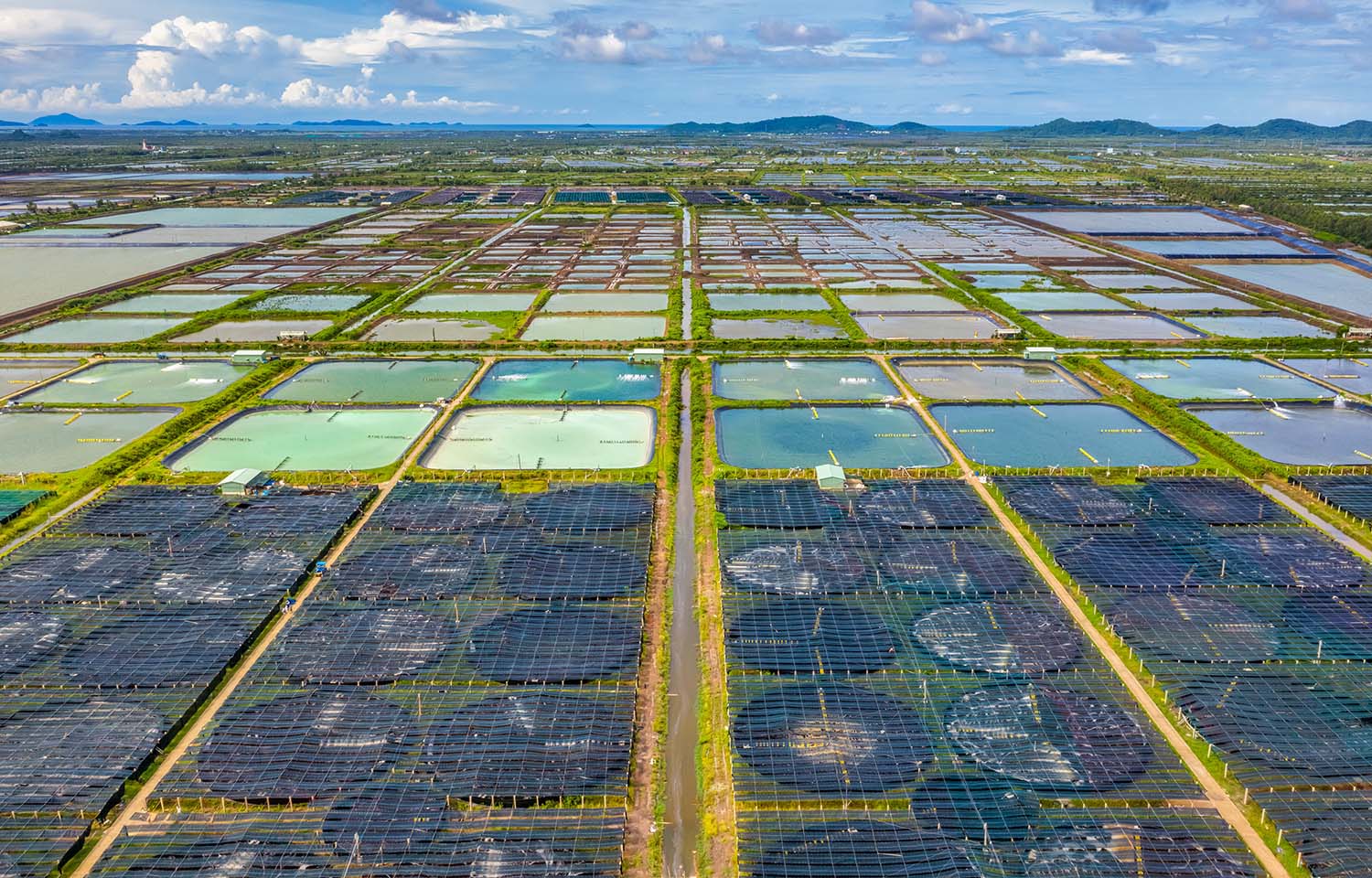
Rabobank also expects production growth for shrimp to remain positive in 2025 despite the industry’s price pressures, with volumes increasing by just 1 percent year-on-year in 2024 and 2 percent in 2025. Nevertheless, the latter rise will take the total volume above the 6 million MT mark for the first time.
Latin America’s shrimp production is forecast to slow, with growth rates slipping to 2 percent in 2024 due to the lower prices, and then to rebound 4 percent to 1.9 million MT in 2025 as the oversupply situation eases.
Ecuador’s shrimp production, the world’s fastest-growing major aquaculture industry, will also experience a slowdown, with growth of 4 percent expected for 2024 and 3 percent for 2025, resulting in 1.35 million MT of production. The report suggests some Ecuadorian exporters may diversify to reduce the dependency on the Chinese market.
The analysis further anticipates that China and India are poised for modest growth of 1.7 percent and 2 percent, respectively, resulting in 1.2 million MT and 1 million MT in 2025.
Vietnam’s production is forecast to grow by 4 percent to 732,000 MT in 2025, although the report suggests that disease management and high production costs continue to pose challenges.
Across all farmed production, freshwater seafood species are expected to experience the highest growth. Pangasius production is expected to grow by up to 7 percent year-on-year to 4 million MT, with Vietnam leading the way (up 8 percent to 2 million MT), bolstered by rising demand from China.
Global tilapia production is forecast to exceed 7 million MT, up 5 percent year-on-year, driven by strong growth in China and Indonesia. These two countries are expected to harvest 1.6 million MT and 1.8 million MT of the species, respectively.
Latin America’s tilapia production is expected to reach around 800,000 MT in 2025, which would represent a 6 percent year-on-year growth.
The Mediterranean seabass and seabream industry is also expected to grow in 2025 with production rises of 2 percent for Turkey and 4 percent for Greece – to 257,000 MT and 136,000 MT, respectively. Overall, the industry is expected to harvest 531,000 MT of fish, with the projection that this will rise a further 3 percent in 2026 to 545,000 MT.
With regards to trade uncertainties, Sharma noted that Donald Trump’s presidential victory in the United States could mean new import tariffs, and that this would be “especially significant for the seafood sector,” as the country is the world’s largest importer, relying on imports for over 80 percent of its seafood consumption.
“Moreover, the potential trade war is likely to involve China, the world’s largest seafood producer, exporter, and reprocessor,” he said.
Referring to findings from the latest RaboResearch annual aquaculture survey on finfish and shrimp production, conducted in cooperation with the Global Seafood Alliance (GSA), Sharma noted that going into the New Year, market prices were once again the top industry concern heading, followed by aquafeed costs and market access.
This, he said, was understandable, as 2024 had some of the lowest seafood prices seen in many years.
“Although demand has started to improve for many species, prices are increasing from a low point, and the improvement is tentative,” Sharma said. “Possible trade restrictions from the U.S. and the uncertain recovery of Chinese, Japanese, and European import demand in 2025 are clear concerns.”
