





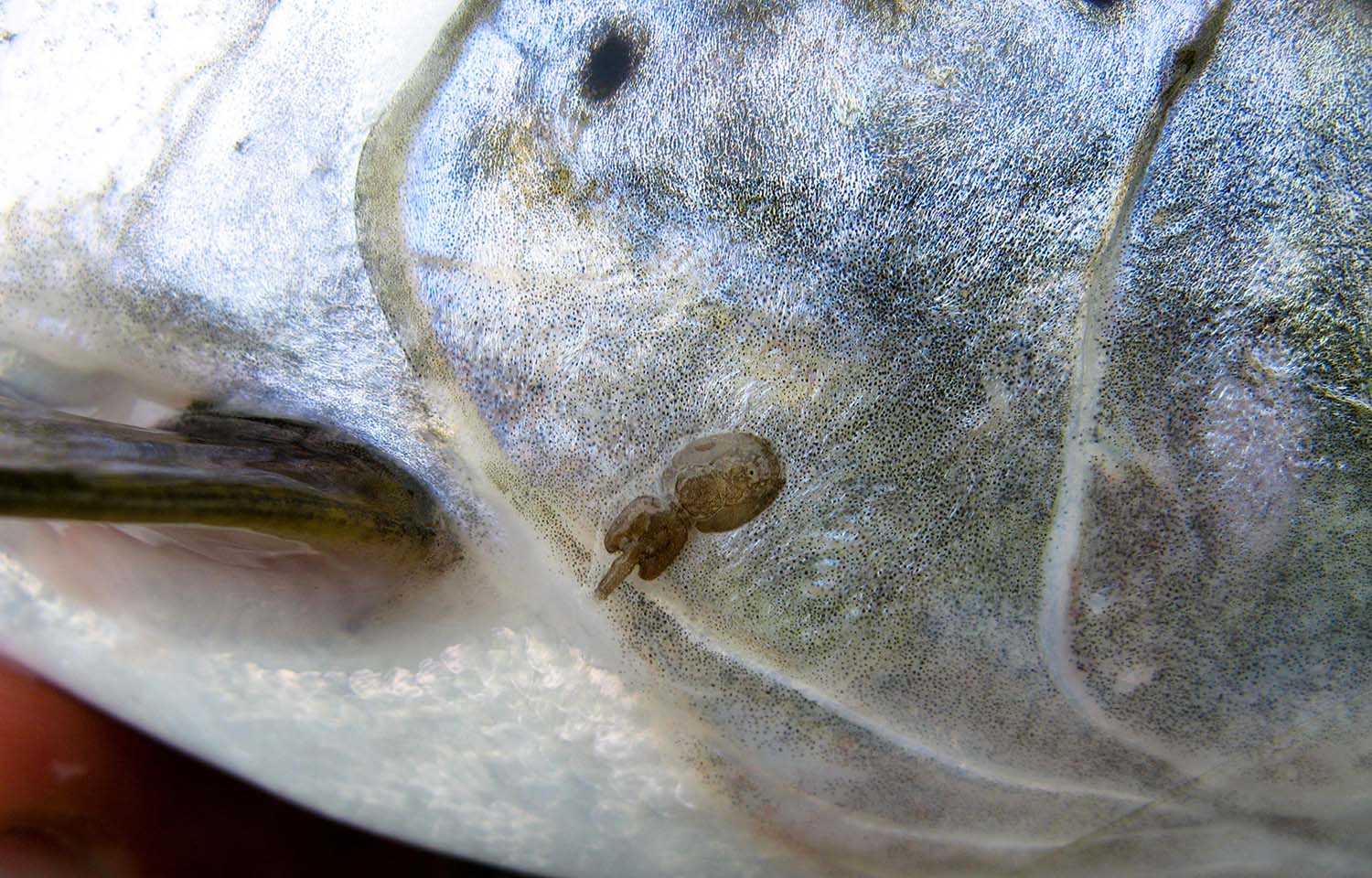
The University of Stirling in Scotland recently published a study analyzing the differences between lice in their larval stages and after they reach maturity in an attempt to develop strategies to control lice on farms.
In the study, researchers compared secretions released by lice that attach to salmon at the parasite’s young larval stage to the secretions found in adult lice.
More specifically, researchers took samples of larval salmon lice and incubated them in either filtered seawater or a combination of filtered seawater and a natural chemical found in Atlantic salmon mucus called isophorone. Then, researchers concentrated the secretion-containing solutions and analyzed the quality of the protein and the protein composition of the affected samples. Finally, researchers filtered the data, identified the proteins, and determined which were secretory in origin by comparing each sample.
Through this method, researchers found “considerable differences in proteins between the two life stages, which they believe could provide an important insight for successful early infection on susceptible hosts such as Atlantic salmon,” the university said in a release.
The study found that 143 secretory proteins that were found in copepodids, or young larvae, were not found in adult lice. Additionally, it found that salmon lice feed on the skin, mucus, and blood of their hosts, which causes open wounds that can, in turn, lead to infection. This reduces the host’s market value and increases the chances of a secondary infection or contraction of an additional disease.
“Because this is the very first stage of this parasite’s life cycle, it represents a vital linchpin in control strategies for this species,” the study’s lead author Alexander Dindial said.
The university said that treatments developed to mitigate sea lice infestations in aquaculture can be expensive, unreliable, and environmentally damaging while also negatively impacting animal welfare. So, the study aimed to serve as a supplementary tool to developing new treatments.
“This work better helps us understand salmon louse biology and could play a vital role in informing future research into control of this parasite, such as through the identification of vaccine targets, which ultimately promote the sustainable production of healthy salmon and enhance global food security,” Dindial said.
“This data provides key candidates for vaccines in the future,” co-supervisor of the study Sean Monaghan added. “We are currently exploring the genes of these secreted proteins as part of a large Biotechnology and Biological Sciences Research Council-funded project, GeNoLice, to determine if they are influenced by interactions with the host.”
