


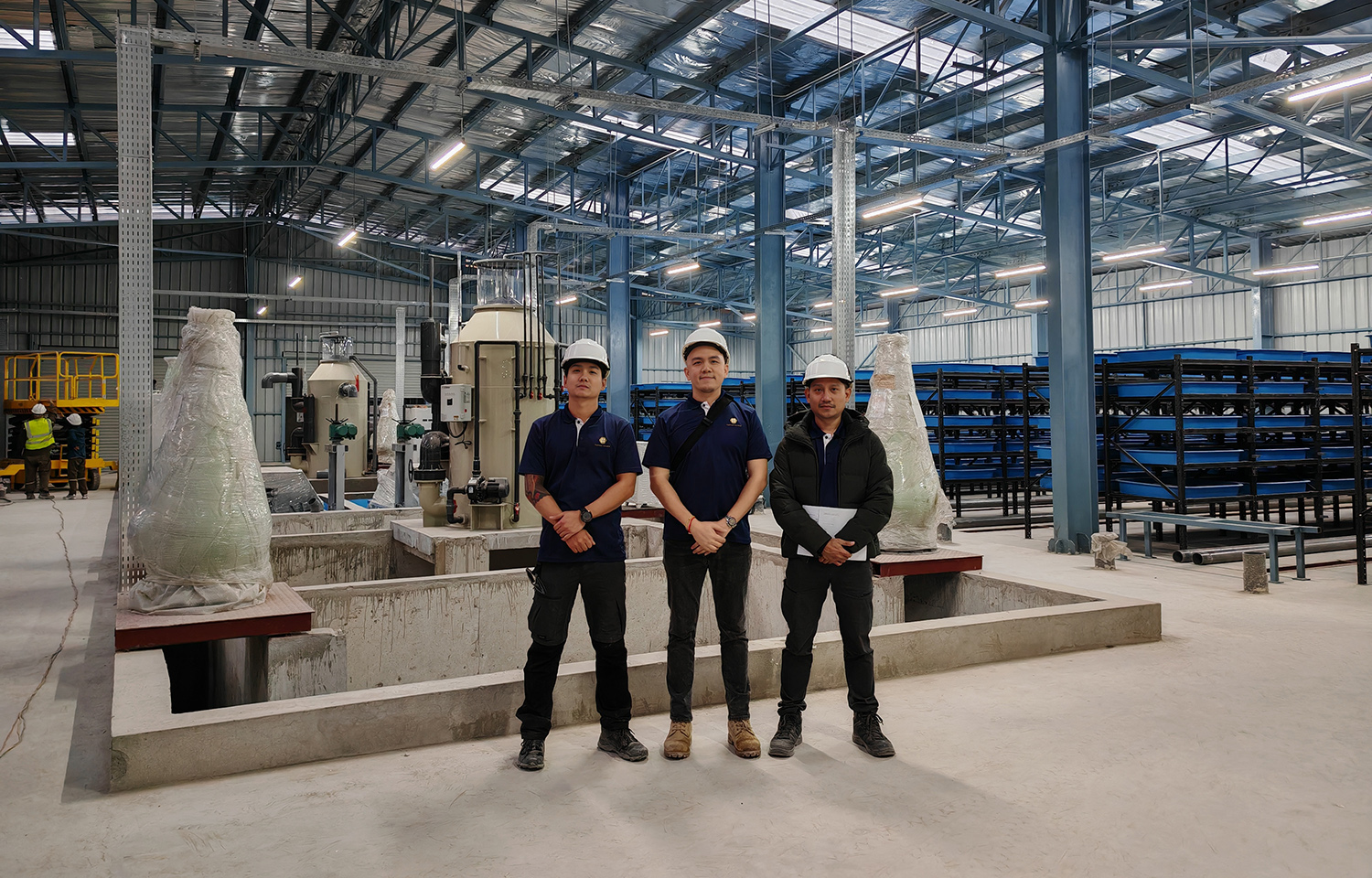
Singaporean aquaculture firm Singapore Crawfish has opened a hatchery in Bhutan, completing the first phase of a large expansion project aimed at enhancing food security and reducing waste in the mountainous South Asian nation.
Desmond Chow, the CEO of Singapore Crawfish, told SeafoodSource that the firm’s new state-of-the-art Red Claw Crawfish Hatchery, situated in the Himalayan highlands, has started production.
“We are producing 50,000 crayfish per day from our hatchery. We offload it to the farmers, and [they can] increase their income by [up to] 400 percent,” he said, explaining that local farmers can seamlessly add crayfish to their existing rice paddies and fish ponds to earn that extra income.
Chow described the Bhutan hatchery as a “milestone in modern aquaculture innovation” that will help ensure regional food security.
“This is just Phase 1 of our project. The next phase is complete food security, which involves agriculture, aquaculture, livestock and poultry, insect protein, and the creation of organic fertilizers and pesticides from byproducts and waste,” he said. “This complete food security zone will be able to supply food to a whole nation and, at the same time, ensure sustainability by reducing fertilizer usage by 40 percent, pesticides by 60 percent, and overall waste reduction by 80 percent.”
As part of the project, Singapore Crawfish has partnered with Bhutanese government-run Druk Holdings and Investment (DHI) to set up Crawfish Himalayan Limited, which “is dedicated to harnessing modern technology for sustainable aquaculture … [and] aspires to cultivate premium crawfish for both local and international markets, significantly contributing to Bhutan’s economic growth and sustainability.”
According to DHI, the global demand for crawfish “consistently outstrips supply each year.”
“While the U.S., Europe, and China dominate the international market, recent extreme winter conditions have disrupted supply chains, creating a significant opportunity for South Asia, where crawfish can thrive,” the firm said.
Chow told Seafoodsource in 2021 how this sort of model had helped raise the incomes of Indonesian farmers by introducing a multicropping model of crawfish farming that allowed rice farmers to increase their incomes.
