





Kaiseraugst, Switzerland-headquartered DSM-Firmenich Animal Nutrition & Health (ANH) has found that its essential oil solution for farm animals, Digestarom PEP MGE, can reduce sea lice attachment on Atlantic salmon by 68 percent, offering a natural alternative to traditional chemical treatments.
Louise Buttle, the aqua lead for DSM-Firmenich ANH’s sustainability service Sustell and a global key account manager at the firm, told SeafoodSource that Digestarom has been specifically formulated for use in aquafeed with essential oils that provide anti-inflammatory and antioxidant properties for fish. She also said it modulates gut microbials and strengthens mucosal protection.
“One of the key advantages of essential oil-based solutions is their multi-modal activity. Digestarom influences several biological pathways simultaneously, significantly reducing the likelihood of resistance development compared to single-mode chemical treatments,” she said. “In addition, this in-feed approach [could] be used as part of a sea lice management strategy where a combination of solutions is needed in a commercial situation.”
Early results have the company excited, Buttle said, and while in commercial settings, sea lice present a less predictable challenge and local legislation often mandates treatment at relatively low infestation levels, DSM-Firmenich ANH remains convinced that fish diets using Digestarom will have “a positive effect in the field,” she said.
However, in a commercial setting, the way Digestarom’s benefits are measured must differ from the laboratory approaches taken so far, Buttle explained.
In commercial conditions, long-term trials – even full production cycles – are required, but DSM-Firmenich is proposing leveraging new technology that enables continuous sea lice monitoring. This, she said, would greatly increase the sensitivity of field trials.
“Success would be measured not only by reduced lice counts but also by a decrease in the overall number of treatments required within a cycle,” Buttle said.
Therefore, to demonstrate the effectiveness of its new in-feed treatment, DSM-Firmenich is eager to establish partnerships for commercial-scale field work, she said.
“Because this solution is delivered through feed, it is fully scalable for commercial salmon aquaculture,” Buttle said. “In-feed treatments for sea lice, using a functional feed approach, represent an important tool within the broader treatment toolbox. However, it is essential to validate effectiveness across a full seawater production cycle, where a combination of methods will inevitably be required. Given the significant economic impact of sea lice on the industry, we expect that incorporating dietary Digesterom will provide a cost-effective component of an integrated sea lice management strategy.”
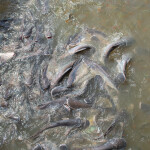
Buttle also confirmed that the firm’s innovation efforts now extend beyond salmon, with promising trials already conducted in tilapia. These studies demonstrated a 60 percent improvement in survival under Streptococcus, as well as a 10 percent biomass gain, improved feed conversion, and enhanced gut health.
“These results highlight the versatility of Digestarom in strengthening both performance and resilience across aquaculture species,” she said. “We continue to invest in research and development to address industry challenges and leverage our broad portfolio of nutritional solutions and digital technologies to support aquaculture producers worldwide.”
