



Chinese shrimp-farming firm Zhanjiang Guolian Aquatic Products has reported another quarter of heavy losses, continuing a long line of disappointing financial periods for the firm.
Over the first three quarters of 2025, the company has reported losses of CNY 800 million (USD 112 million, EUR 97 million) and revenue of CNY 2.58 billion (USD 360 million, EUR 310 million), with the latter metric marking a 14 percent drop year over year.
The latest report marks the continuation of poor financial performance for the company, which has now reported losses six years in a row.
Losses totaled CNY 464 million (USD 65 million, EUR 56 million) in 2019 and then dropped to CNY 269 million (USD 38 million, EUR 33 million) in 2020. Losses then eased to CNY 14 million (USD 2 million, EUR 1.7 million) in 2021 and CNY 6.25 million (USD 879,000, EUR 755,000) in 2022 but then soared again over the past two years, hitting CNY 532 million (USD 74.7 million, EUR 64.6 million) in 2023 and CNY 742 million (USD 90 million, EUR 104 million) in 2024.
Revenues have also declined each of the past three years for Guolian. The company reported revenues of CNY 3.4 billion (USD 476 million, EUR 408 million) in 2024, which was down from CNY 4.6 billion (USD 644 million, EUR 552 million) in 2023 and an even further drop from the CNY 5.1 billion (USD 714 million, EUR 612 million) reported for 2022.
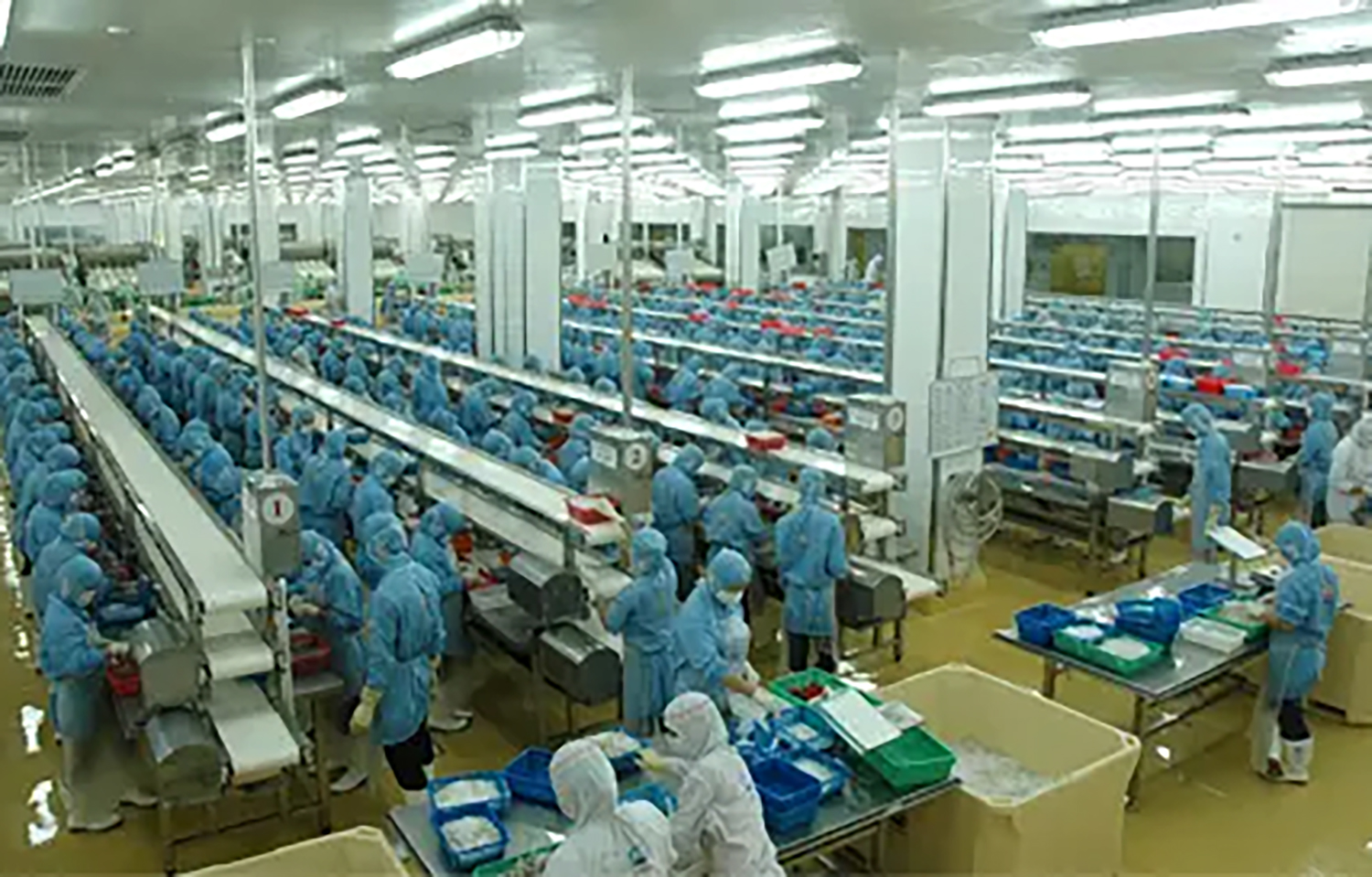
Earlier this year, the firm attributed some of its more recent struggles to increased competition, particularly in the processed shrimp sector. More competitors have turned to exports in the face of a weaker domestic economy, it said.
As the export market has become oversaturated and trade disruptions have made international commerce more difficult, Guolian has begun attempting to expand its distribution channels in the domestic market. As part of this goal, it signed an agreement earlier this year to supply tilapia to restaurant operator Yum China.
However, even domestically, intensified competition for Guolian is coming from aquaculture companies and processors that have contracted with aquaculture farmers to move up the value chain in both established and new species.
